Ampibanjinana Monastery - Madagascar
.webp)
.webp)
.webp)
.webp)
In Madagascar, the Cistercian community of Sisters at Masina Maria Ampibanjinana Monastery welcomes you with joy! Punctuated by work in the confectionery and community prayers, the days are joyful.
For an exceptional spiritual retreat, experience the calm and prayer with the Sisters, while enjoying the rice paddy landscapes and the Malagasy way of life!
Retreats organized by the community
The Masina Maria Ampibanjinana community of Madagascar
Masina Maria Ampibanjinana Monastery in Madagascar was founded in 1996 by Campénéac Abbey in Brittany.
In Malagasy, "Masina Maria Ampibanjinana" means Saint Mary of the place of contemplation. The monastery is located 10 miles north of the town of Fianarantsoa, in the countryside. A 50-acre forest extending in a bend of the Matsiatra River surrounds the buildings.
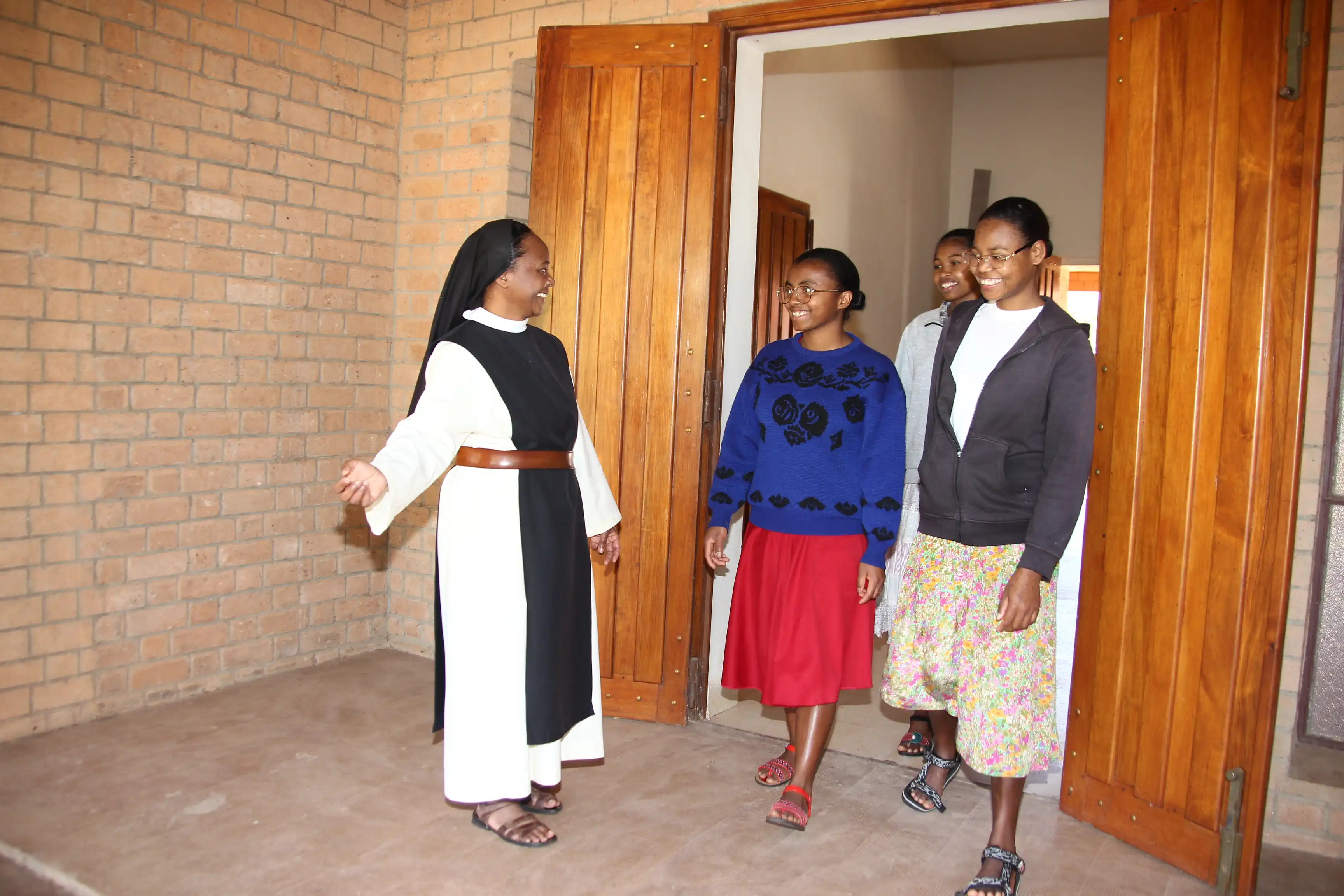
About fifteen Sisters live at Ampibanjinana, seven of whom are in formation. They are Cistercian nuns—their day of prayer is punctuated by the seven monastic offices that alternate with work in the biscuit and confectionery shop, the guest house, the garden, the farm, and various community services, not to mention the formation of the youngest members.
Like their brother monks at the nearby Maromby Monastery, the Sisters of Ampibanjinana are members of the Cistercian Order of the Strict Observance, which has its roots at the dawn of the 12th century in Burgundy, at Cîteaux Abbey, following the Rule of Saint Benedict.
.webp)
What to expect during your stay
Living a time of spiritual retreat at Ampibanjinana Monastery
The Sisters offer hospitality for silent retreats or for formation programs. Upon request, individual spiritual guidance is possible, either by the chaplain Father or by a Sister.
Guests are free to participate in the liturgy with the community and in various simple manual tasks (peeling vegetables, gardening).
- The liturgy is in Malagasy but bilingual office books (Malagasy-French) are available for guests who do not understand Malagasy.
- On weekdays, Mass is occasionally celebrated in French.
%2520(1).webp)
The warm welcome of the Cistercian Sisters of Ampibanjinana
Ampibanjinana Monastery has 20 rooms, including 3 doubles and one that can accommodate a family (bunk beds). The monastery provides sheets. There is hot water. The rooms are distributed in 2 buildings connected by a veranda on each side of the church.
There is a chapel at the guest house that can accommodate about thirty people and a large meeting room (60 people).
For meals, there are 2 refectories, one small and one large. Meals can be taken in silence or with conversation according to the guests' preferences. The Sisters prepare both Malagasy and European cuisine upon request.
The forest surrounding the monastery as well as the vegetable garden, adorned with a small gazebo, and the rice paddies are freely accessible to guests.
.webp)
Geography and activities
In Madagascar, Ampibanjinana Monastery and the surrounding wonders
Ampibanjinana is located in the countryside of Fianarantsoa, in Betsileo, renowned for rice cultivation, vineyards, and zebu cattle raising. The landscapes of terraced rice paddies on hillsides are typical of this region.
The town of Fianarantsoa is 10 miles to the south via RN7. Nearly 250 miles separate the monastery from the capital, Antananarivo. By taxi-brousse or by car, access is easy—when coming from the north or east, just stop at Andohasana (Ivoamba crossroads). The monastery is 300 meters from RN7 via a paved road.
.webp)
Stunning landscapes typical of the Betsileo region in Madagascar
Walking trails around Ampibanjinana are varied, either through the forest or along the Matsiatra River. The monastery sits at an altitude of 3,300 feet and the landscapes of hills stretching as far as the eye can see are splendid.
- 10 miles to the south via RN7, the town of Fianarantsoa with its large zoma market.
- 40 minutes by car from Ampibanjinana, the Trappist monastery of Maromby, its beautifully inculturated church, and its vineyards.
- 31 miles to the east, Ranomafana is a very popular tourist destination for its natural park, a tropical forest where lemurs can be observed, and its hot springs.
- A small train connects Fianarantsoa to Manakara on the East coast. It takes a full day to make the trip (it's not exactly a bullet train), but the scenery and passage through villages are worth the effort.
- 31 miles to the south, another natural park, Andringitra in Ambalavao. There you can also visit antemoro paper workshops, with flower inlays, and silk fabric workshops. Ambalavao hosts a very large weekly zebu market.
.webp)