Azille Monastery
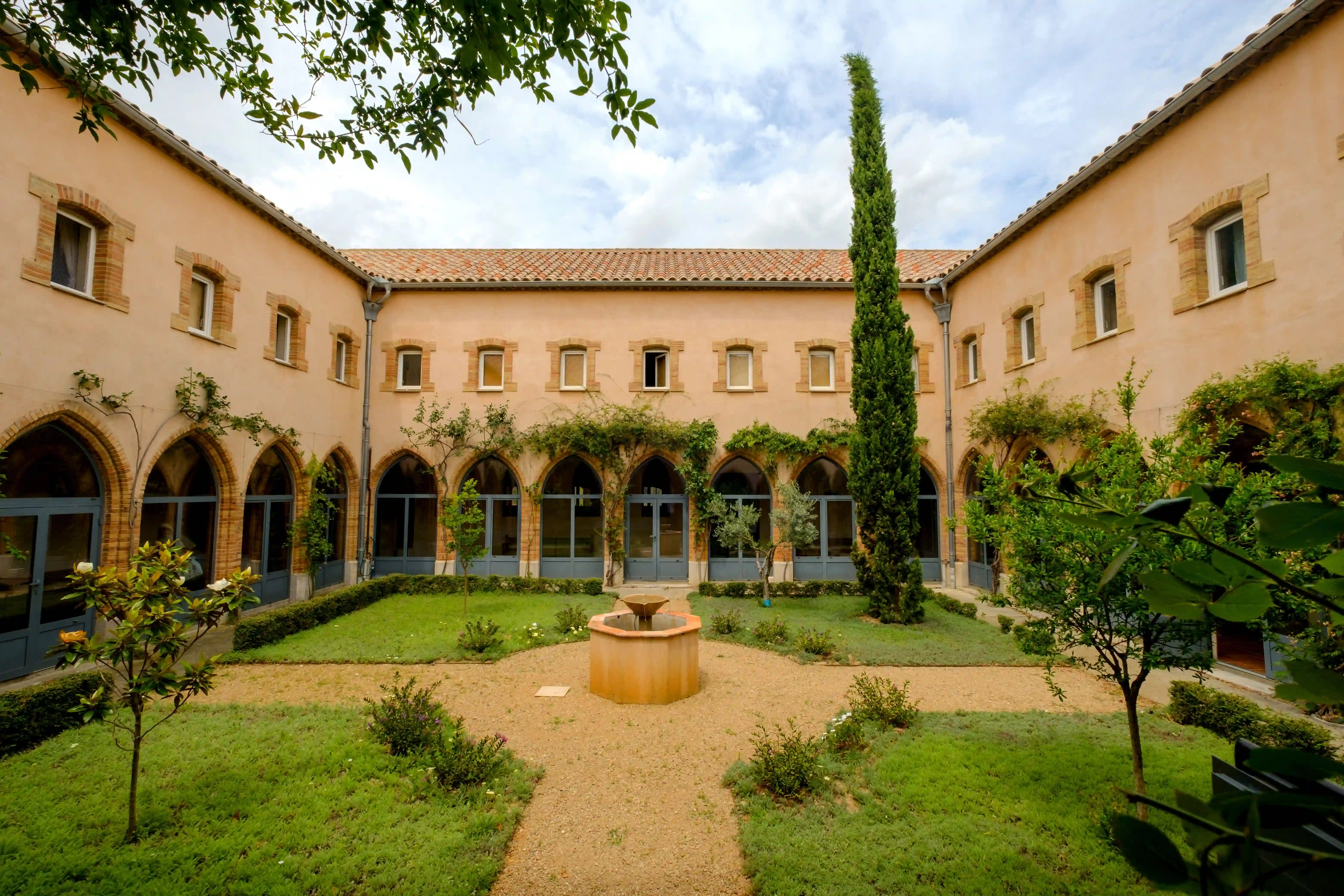
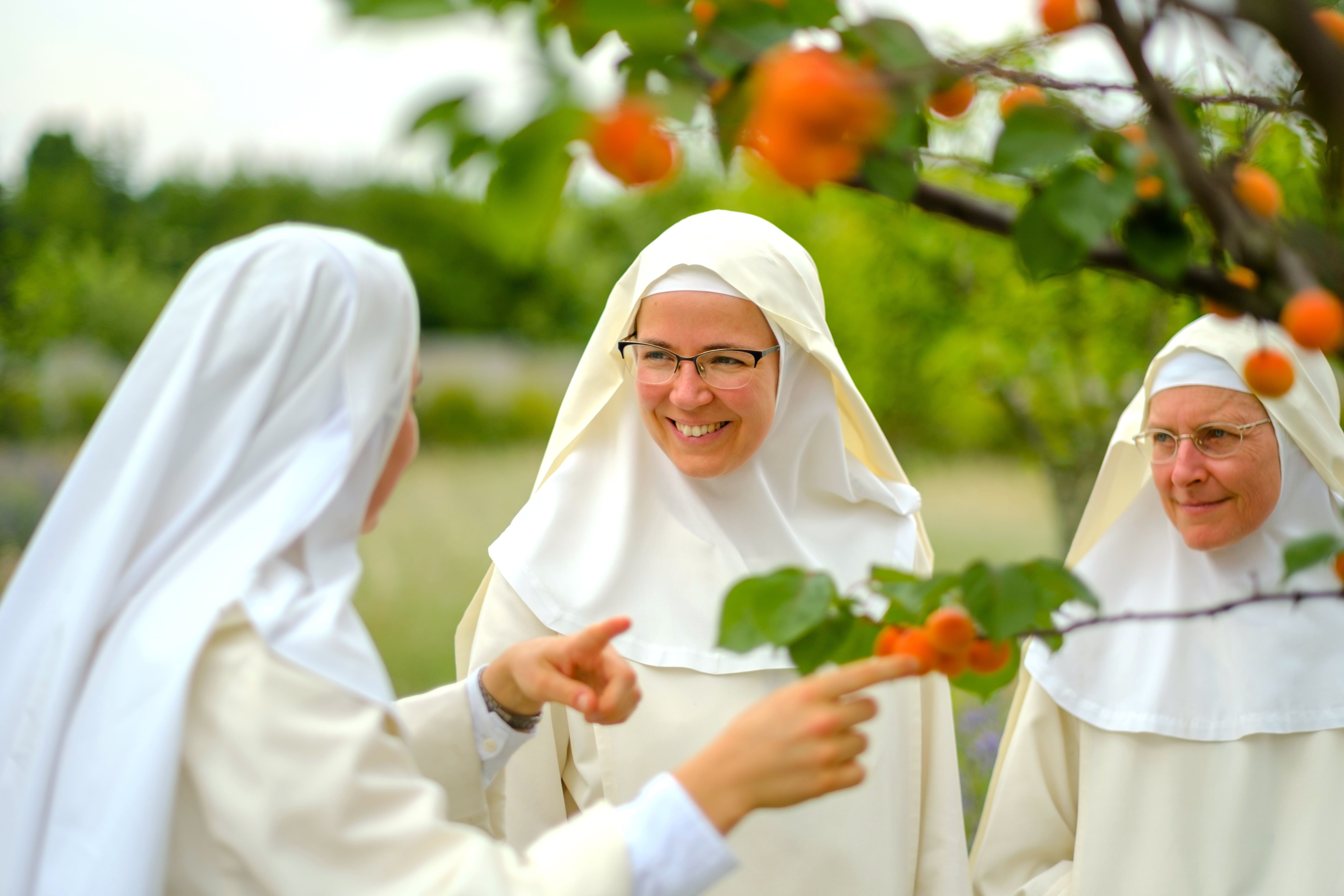
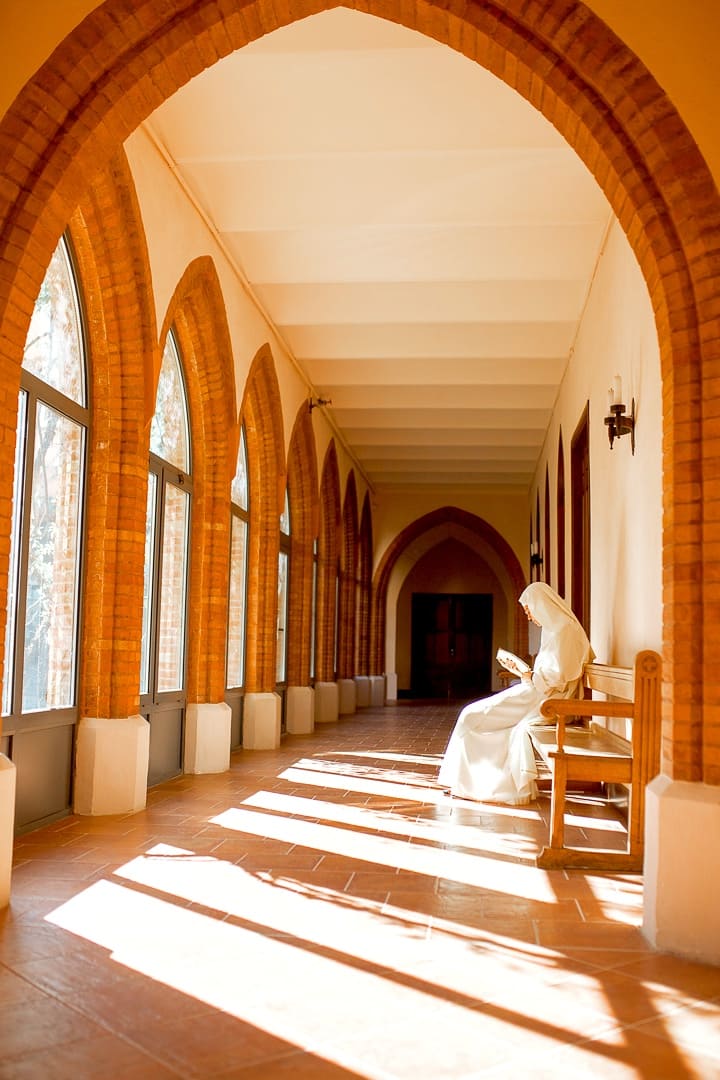
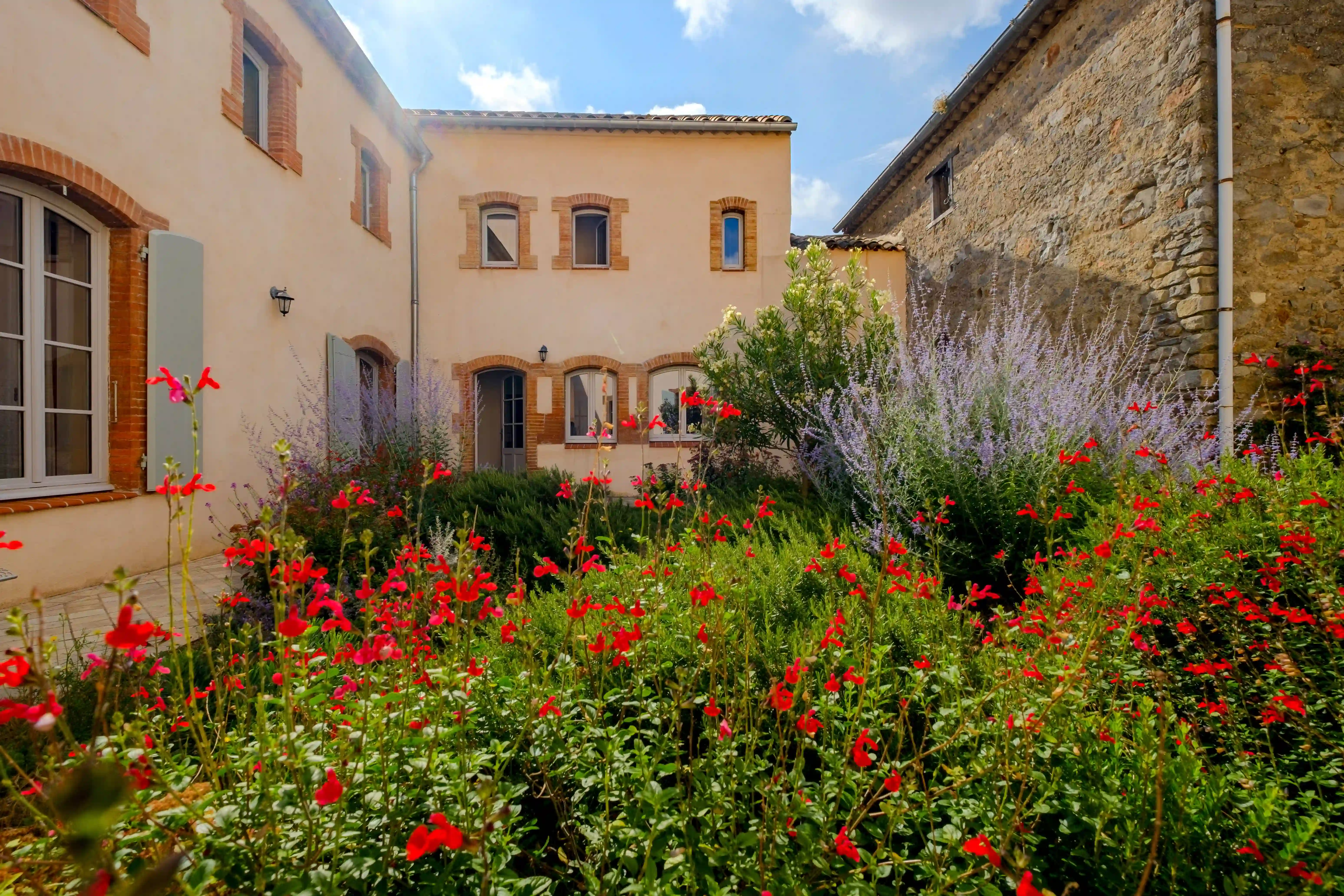
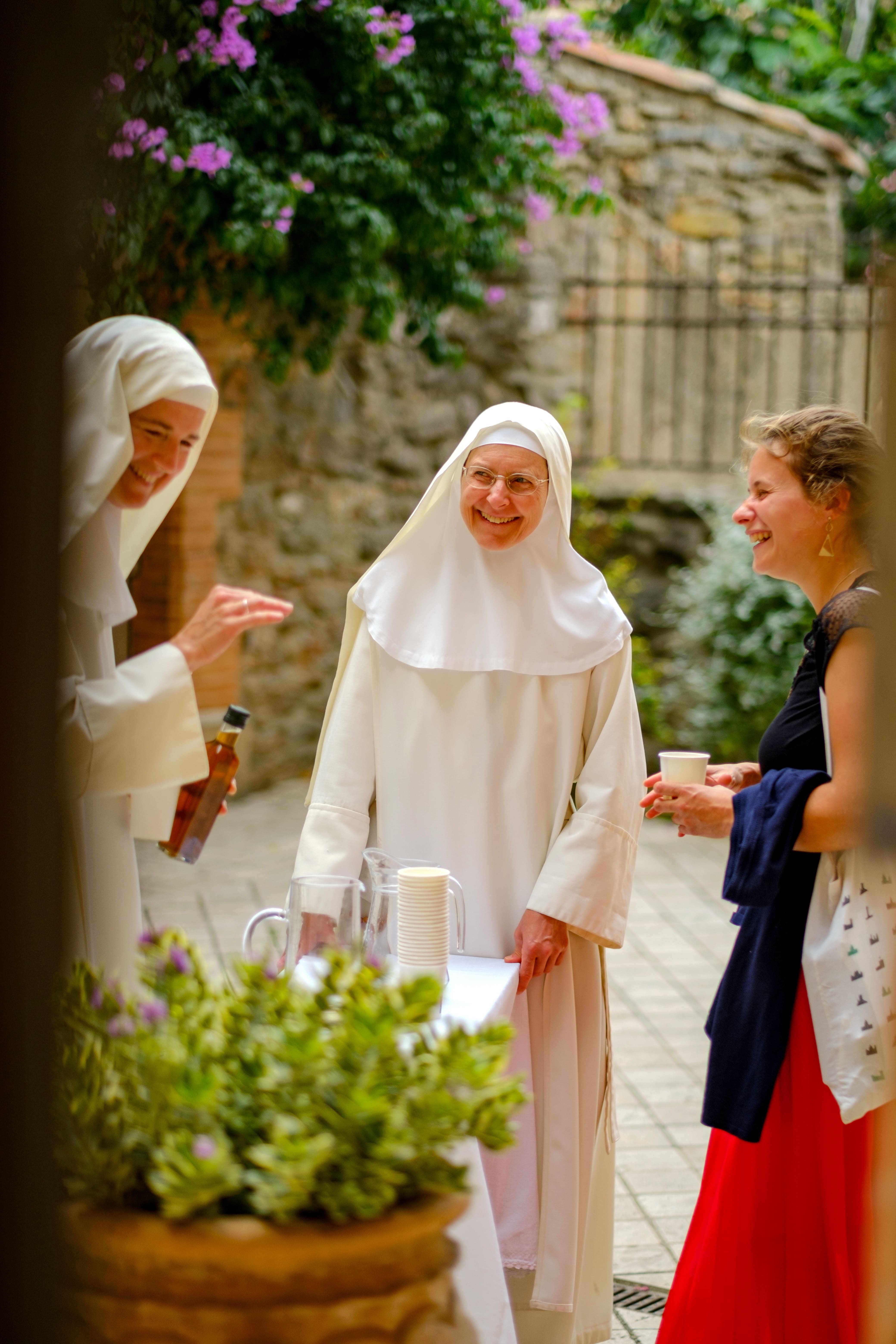
Near Narbonne, in the heart of a region steeped in history, between medieval villages and thousand-year-old abbeys, the Canonesses of the Mother of God fill the walls of Azille Monastery with the melodious sound of their voices.
They welcome anyone seeking a time of spiritual retreat!
Retreats organized by the community
The Poor Clares before the Canonesses: the history of Saint Clare Monastery
The history of Azille Monastery dates back to 1361, when Isabelle de Lévis-Mirepoix, an important figure in the Languedoc region, resolved to found a monastic community in a context of religious renewal and the development of monastic orders in Europe. She immediately entrusted it to the Poor Clares order, a Franciscan women's order devoted to poverty and contemplation. Following the Rule of Saint Francis of Assisi, the Poor Clares had an essential social role as they were responsible for the education of many young girls in the region. But their role was also economic: the monastery owned lands and vineyards. Finally, it was through their charity that they brought aid to the poor and the sick. In 1477, the Poor Clares of Carcassonne joined the Azille community.
The wars of religion and the economic crisis that struck France in the 16th century precipitated the monastery onto a path of decline, with the number of religious gradually decreasing. The French Revolution would be the monastery's downfall: in 1792, the Poor Clares were dispersed, in 1793, the monastery was sold at auction as national property, and the other conventual assets were degraded and pillaged. In 1891, the Poor Clares regained possession of the monastery.
It was in 1947 that the monastery church was classified as a historic monument, the main vestige of the entire complex of buildings. It was in 2008 that the Canonesses of the Mother of God, belonging to the same family as the Canons of the Mother of God of the nearby abbey of Lagrasse, settled in Azille.
.jpeg)
The Canonesses: a community, a family
The community of Canonesses of the Mother of God settled in Azille, in the Diocese of Carcassonne and Narbonne. The sisters live under the Rule of Saint Augustine, according to the canonical charism which is expressed through fraternal life, contemplative life, and missionary service. The community has been recognized under pontifical right since 2000 and currently has 22 members.
"One heart, one soul, oriented toward God": the opening words of the Rule invite the Canonesses, according to Saint Augustine's design when he founded his community of clerics in the 4th century, on the one hand to live in unity, in the image of the Trinity, model of all family, and on the other hand, to devote themselves to seeking God, especially in communal prayer around the altar and silent prayer. Indeed, a Canoness dedicates herself first to the liturgy, at the center of which is the Mass. She brings life and song to her church through praise. And it is from there that her apostolate springs forth. Whether it is to walk in Christ's footsteps or to give Him to the people of our time, solid formation is also necessary: study therefore takes a notable place in the life of each sister and of the community.
The Canonesses also place themselves at the service of the Church. In the Augustinian perspective, it is first the community, as such, that as a whole is missionary, through the outpouring of its life of charity to the outside world, in the maternal manner of Mary, "figure and model of the Church." While the monastery has an internal enclosure that both protects and strengthens it, it is also a place of welcome for all those who wish to come and find renewal: retreats, individual or group, times of rest in a conducive environment, in the shadow of community life. Furthermore, the community remains available to the various needs of the Church, in the diocese or beyond: the sisters can be sent to young people, children, families, elderly people, through camps, pilgrimages, catechism classes, family sessions, etc. This missionary dimension through works of apostolate is meant to continue growing. It develops as the Lord brings workers to his harvest.
The Canonesses devote a large part of their time to manual work, particularly to making cassocks, bottling honey produced locally, and preparing other monastic products including various syrups (thyme, rosemary, dill, and mint). And, more recently, a rosé wine in collaboration with a local winemaker, called "Parcelle de Joie" (Plot of Joy).
Finally, an art they apply themselves to cultivating is that of their voices: the Canonesses apply themselves to mastering Gregorian chant, regularly participating in Solesmes school sessions. They also readily sing in polyphony. They have thus produced a CD of their own composition: Saint Augustin, à la recherche du bonheur (Saint Augustine, in search of happiness), to make known this great saint so suited to our time.
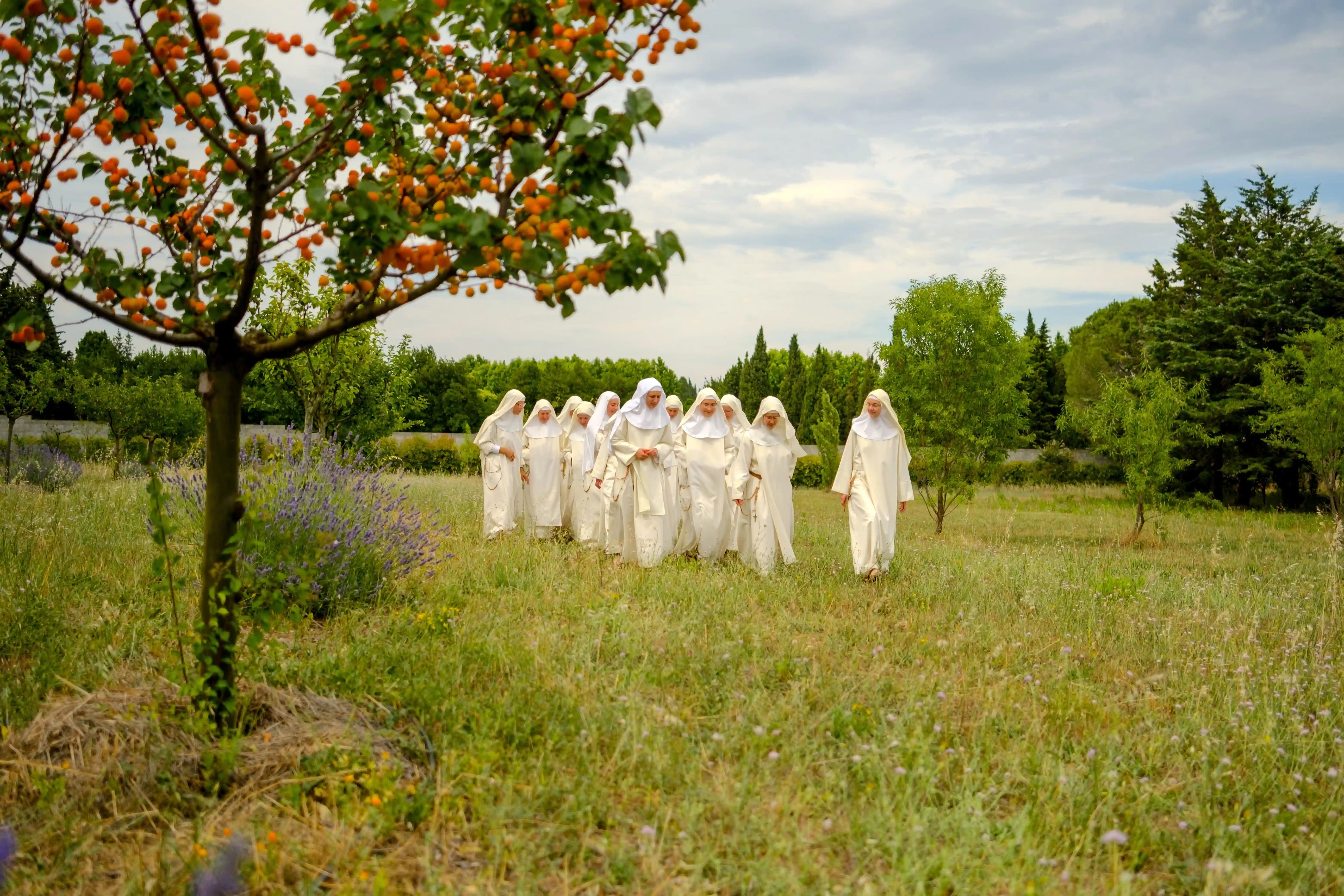
What to expect during your stay
Retreats at Azille
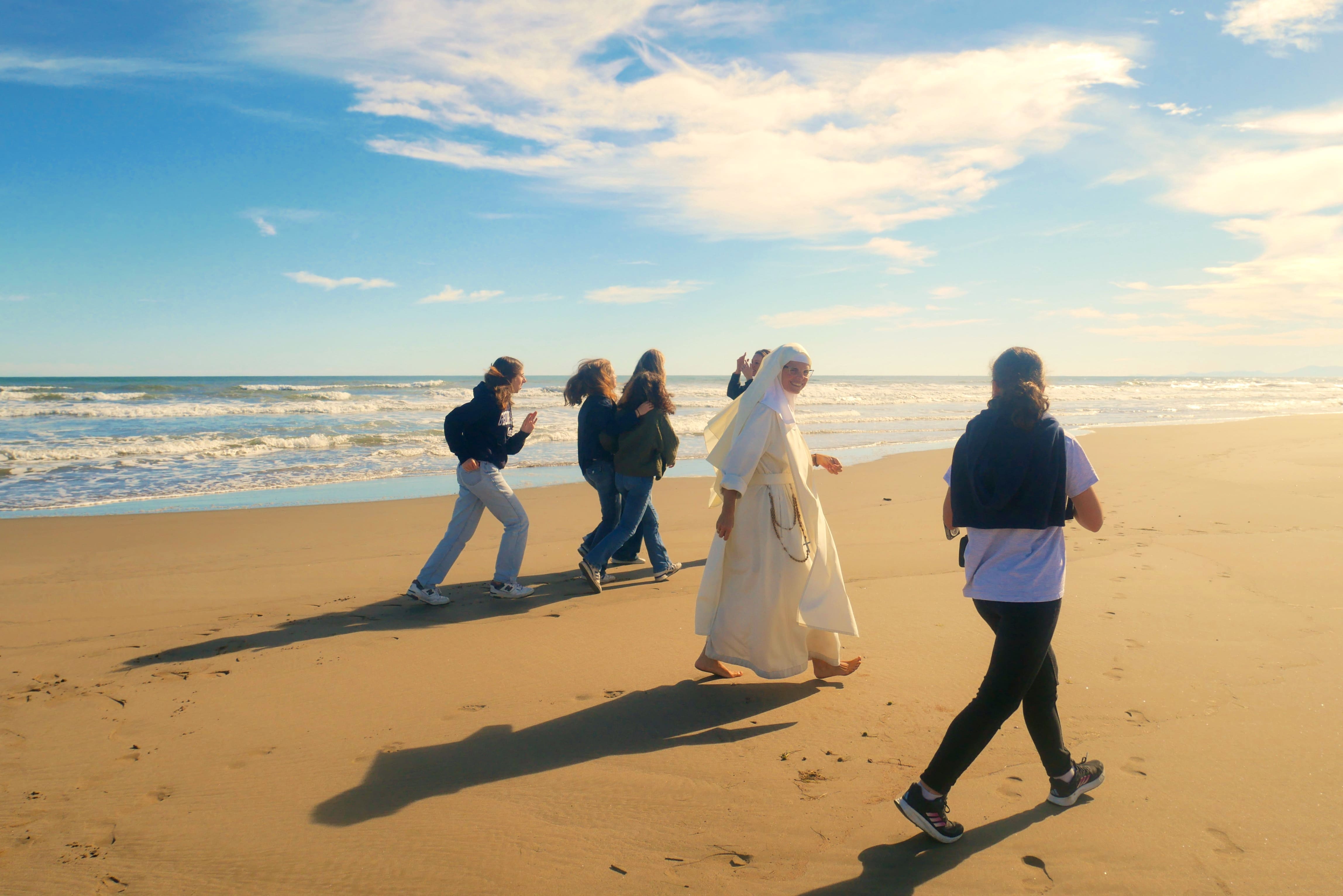
The Canonesses are enthusiastic hosts for whom hospitality is an important dimension of their missionary charism. They therefore welcome different types of retreats, designed for different profiles:
- Customized retreats for women.
- Study retreats for successful exam preparation for female students or mixed groups.
- Stays for families, engaged couples, and mixed groups.
- Themed stays throughout the year.
.jpeg)
What your next retreat destination looks like
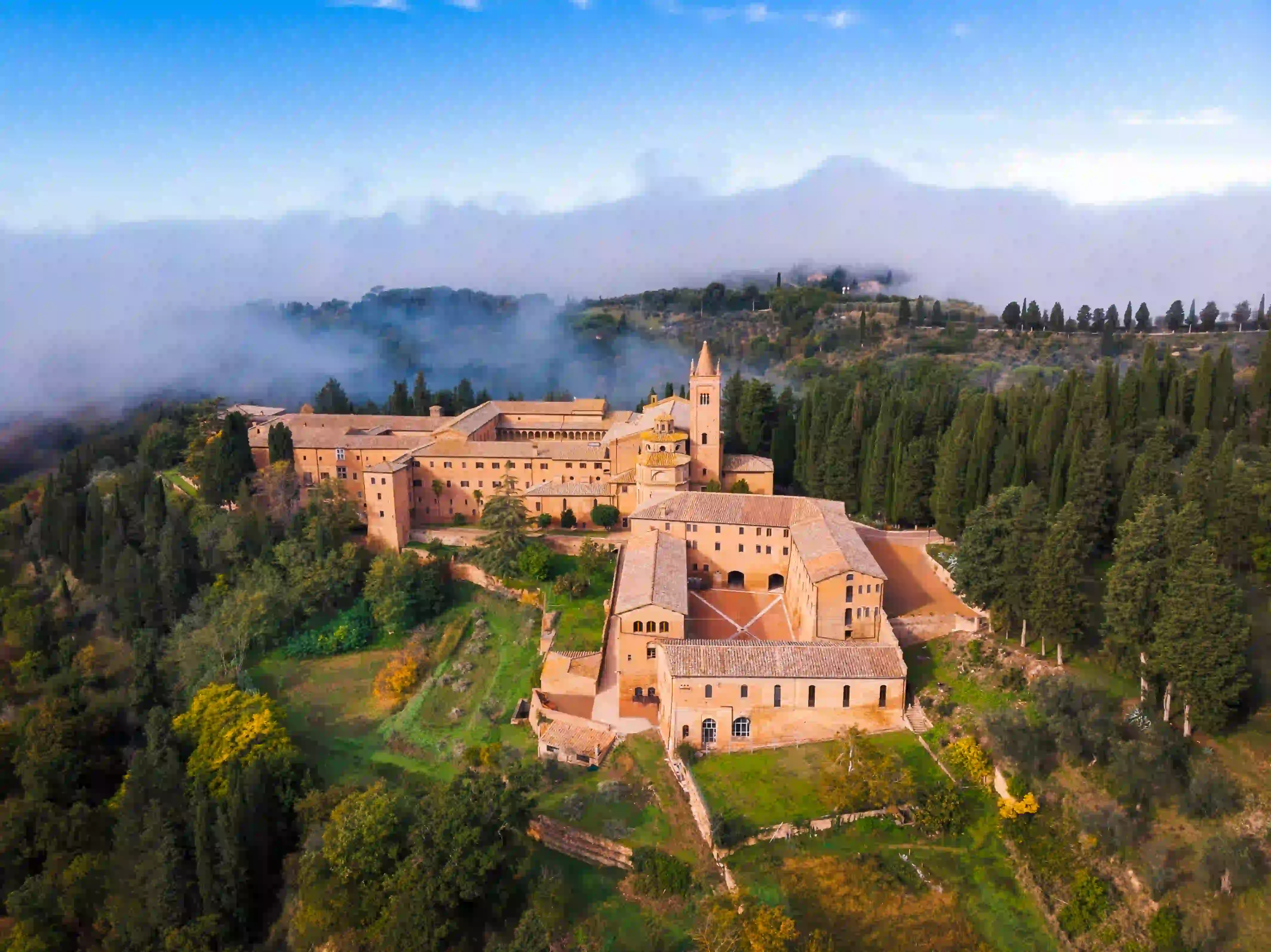
Located on the edge of a village in the Minervois, with a Tuscan atmosphere, the monastery is arranged in such a way that you wouldn't guess its three hectares of property. In the 19th century, the Poor Clares built it on the exact model of the Assisi monastery, according to their poor and cloistered vocation. While the building does not have the transcendent beauty of the medieval type, its secluded character, and therefore peaceful and secure, is appreciated by all our visitors.
Moreover, the restoration work continued since 2008 is gradually restoring a fresh beauty to it. The guest house buildings, well-maintained, welcoming and comfortable, while remaining simple, evoke an oasis in the midst of our turbulent world.
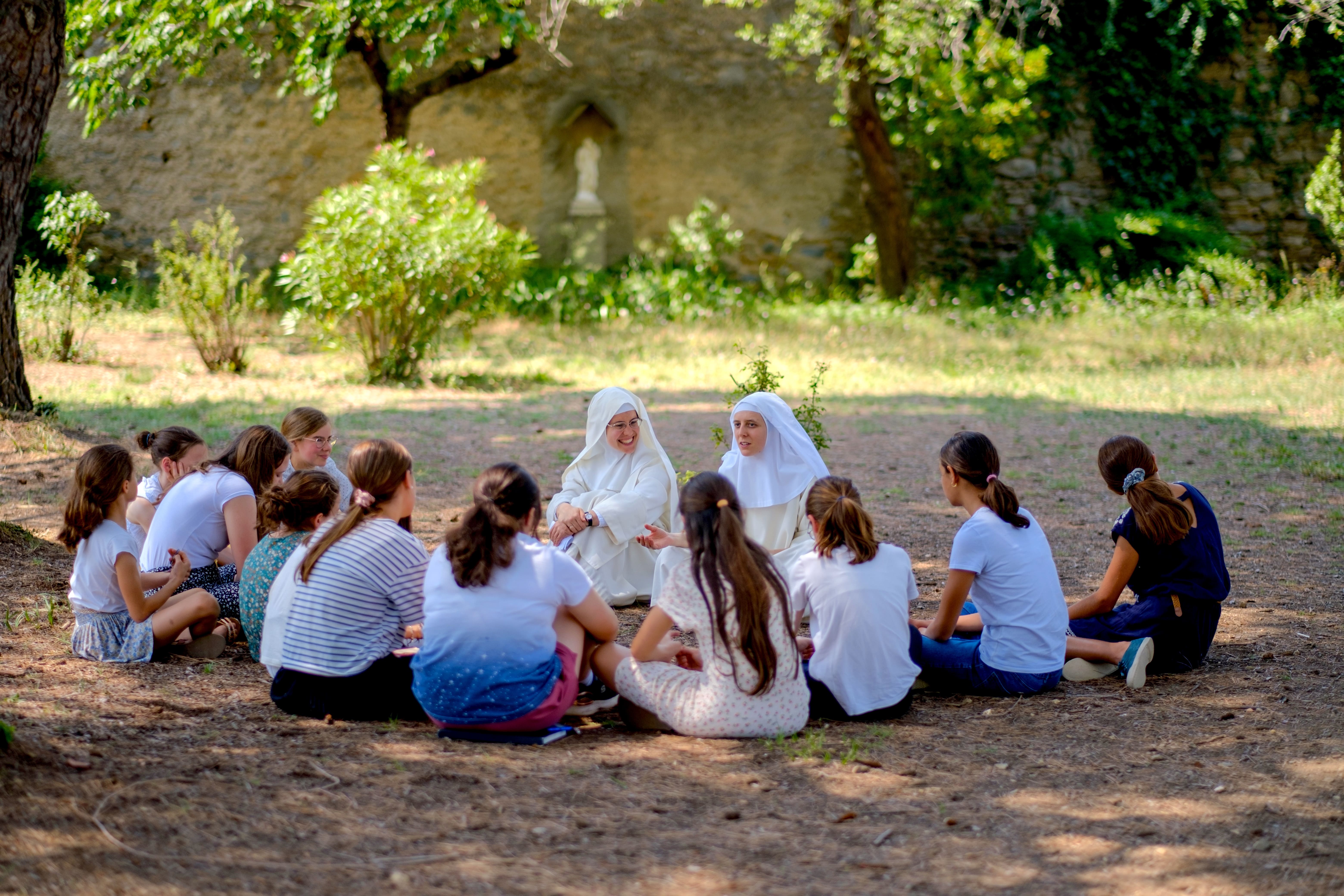
A large park, adorned with pine trees, is reserved for our guests, where everyone can find a place conducive to reading, prayer, conversations, or even outdoor games! The Virgin Mary watches maternally over it.
Geography and activities
Azille and its surroundings
Nestled in the heart of Languedoc, Azille is surrounded by vineyards. The monastery itself stands on a hill, overlooking the surrounding valley. Its simple and elegant architecture reflects the spirituality of the Canonesses who live there.
The architectural heritage is a strong witness to the very rich history of the region: ruins of the royal abbey of Saint Clare and of the former Cordeliers convent, as well as those of the ramparts. The town has a strong wine-making dynamism and counts numerous vineyards including the estates of Floris, Massiac, Vaissière and Château-Guéry. Finally, Lake Jouarres is a popular spot for locals, especially for the possibility of swimming there.
Around the village, you can enjoy numerous hiking trails that wind through the vineyards. The region is also renowned for its many historic sites, among which you can discover:
- The heptagonal church of Sainte-Marie de Rieux-Minervois, a Romanesque church from the 12th century, 10 minutes away by car.
- The village of Caunes-Minervois, an icon of Renaissance architecture with its colossal abbey, its ramparts, private mansions, and the marble quarries that supplied the construction of the Trianon, 15 minutes away by car.
- The giant chasm of Cabrespine, which is one of the ten most beautiful caverns in Europe and displays a depth of 250 meters, 30 minutes away by car.
- The unmissable medieval city of Carcassonne, classified as UNESCO World Heritage, marked by 2,000 years of history, between Catharism and crusades, 30 minutes away by car.
- The village of Lagrasse, one of the "Most Beautiful Villages," its Roman bridge, its private mansions and medieval houses, not to mention its famous abbey, sister to Azille Monastery, 35 minutes away by car.
- The numerous fine sandy beaches of Aude, beyond Narbonne, less than an hour away by car.