Clervaux Abbey
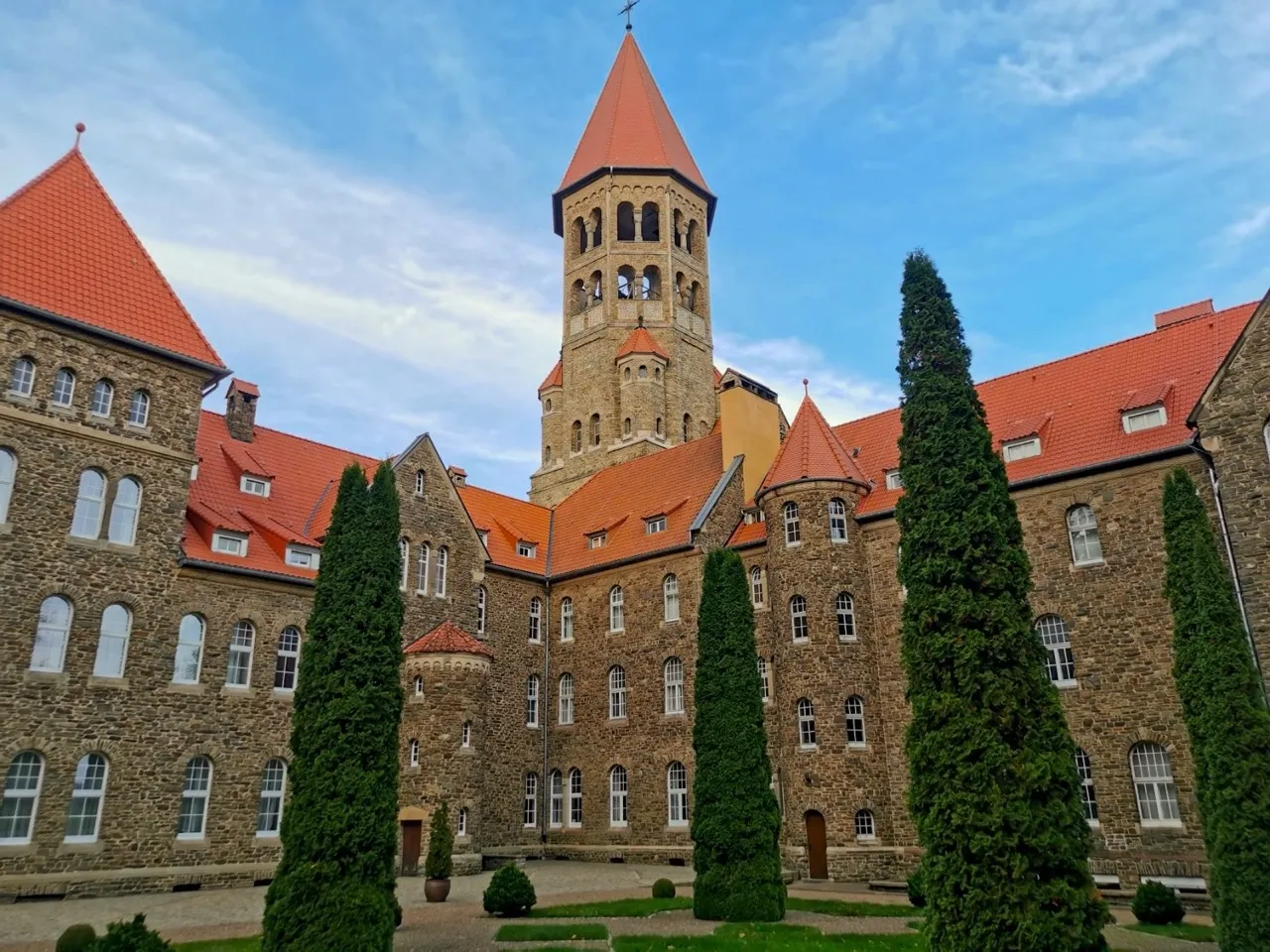
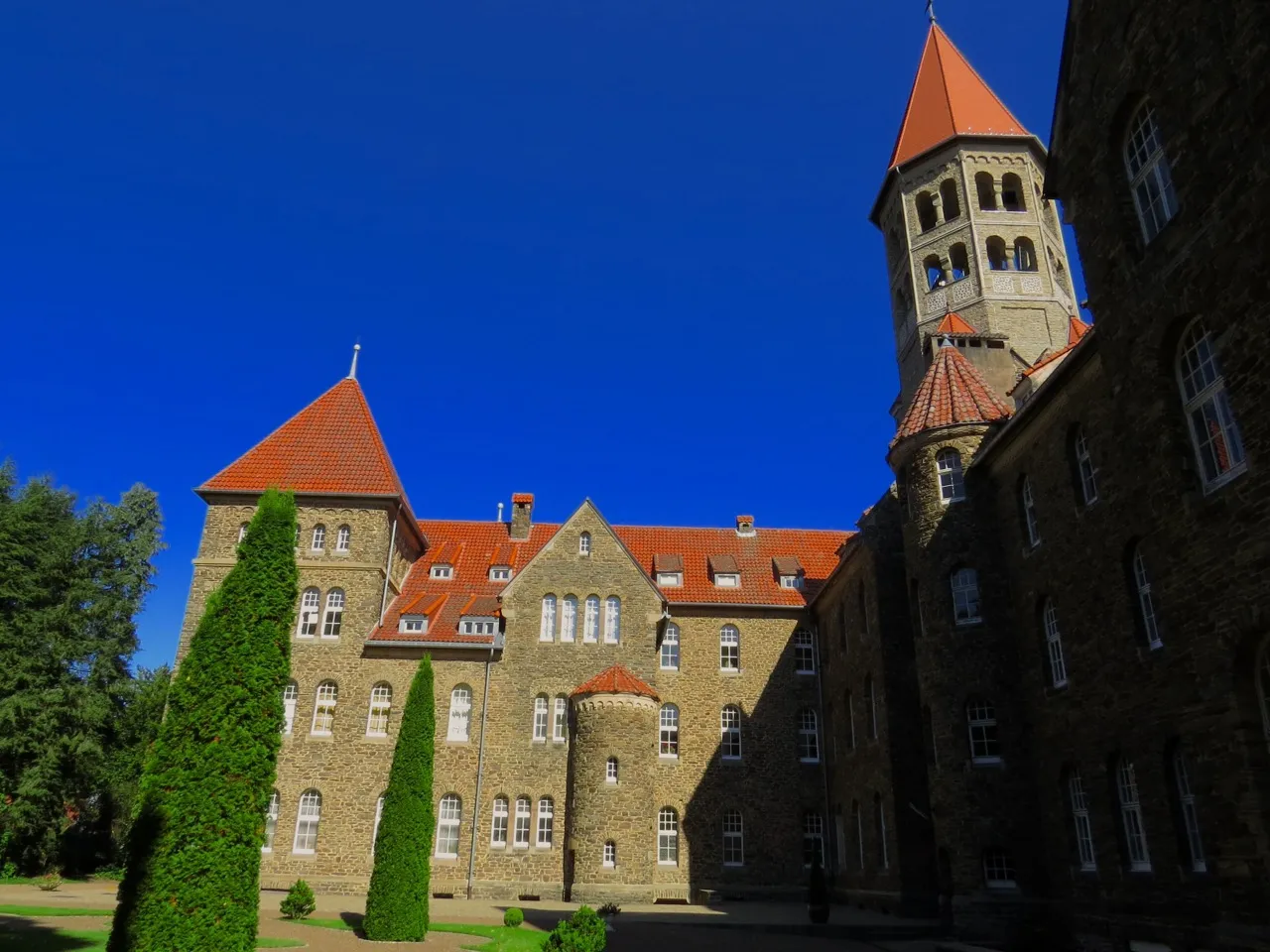
Clervaux Abbey, part of the Solesmes congregation (and therefore Benedictine), is one of the few religious communities in the Grand Duchy of Luxembourg. Its neo-Romanesque style is characterized by majestic architecture.
Not to be confused with the famous French abbey of Clairvaux!
Retreats organized by the community
Clervaux, or the story of a French community in exile
Like many other religious communities, the monks of the abbey of Saint-Maur de Glanfeuil in Anjou, founded in 1890, were forced into exile following the law of July 1, 1901.
Temporarily taking refuge in Baronville, Belgium, Dom Édouard du Coëtlosquet, the community's Father Abbot, and then Dom Paul Renaudin, his successor, explored every possible opportunity to find a more permanent place to house their community. Their search would last several years, taking them between the Netherlands, Switzerland, and Luxembourg.
Given the community's modest resources, it was the contribution of the du Coëtlosquet family that would largely provide for the construction of the current Clervaux Abbey. The abbey would take the name Saint-Maurice in honor of the father of Dom Édouard and his benefactor siblings. The support of Émile Prüm, mayor of Clervaux and head of the Catholic party in the Chamber of Deputies, was invaluable to the community's establishment.
On March 3, 1909, Pope Pius X officially recognized the new abbey through a papal brief, thanks to the perseverance of Émile Prüm and Grand Duchess Marie-Anne of Luxembourg. In May of the same year, the first stone was laid, and in August 1910, the first monks settled there.
In January 1941, the monks suffered a new expulsion from their abbey. The Nazis occupied the premises throughout the war and even transformed the abbey into a Hitler Youth training center. In 1947, at the end of the war, the Benedictines were able to reclaim the premises. They found their abbey in a pitiful state, referred to as a martyred abbey.
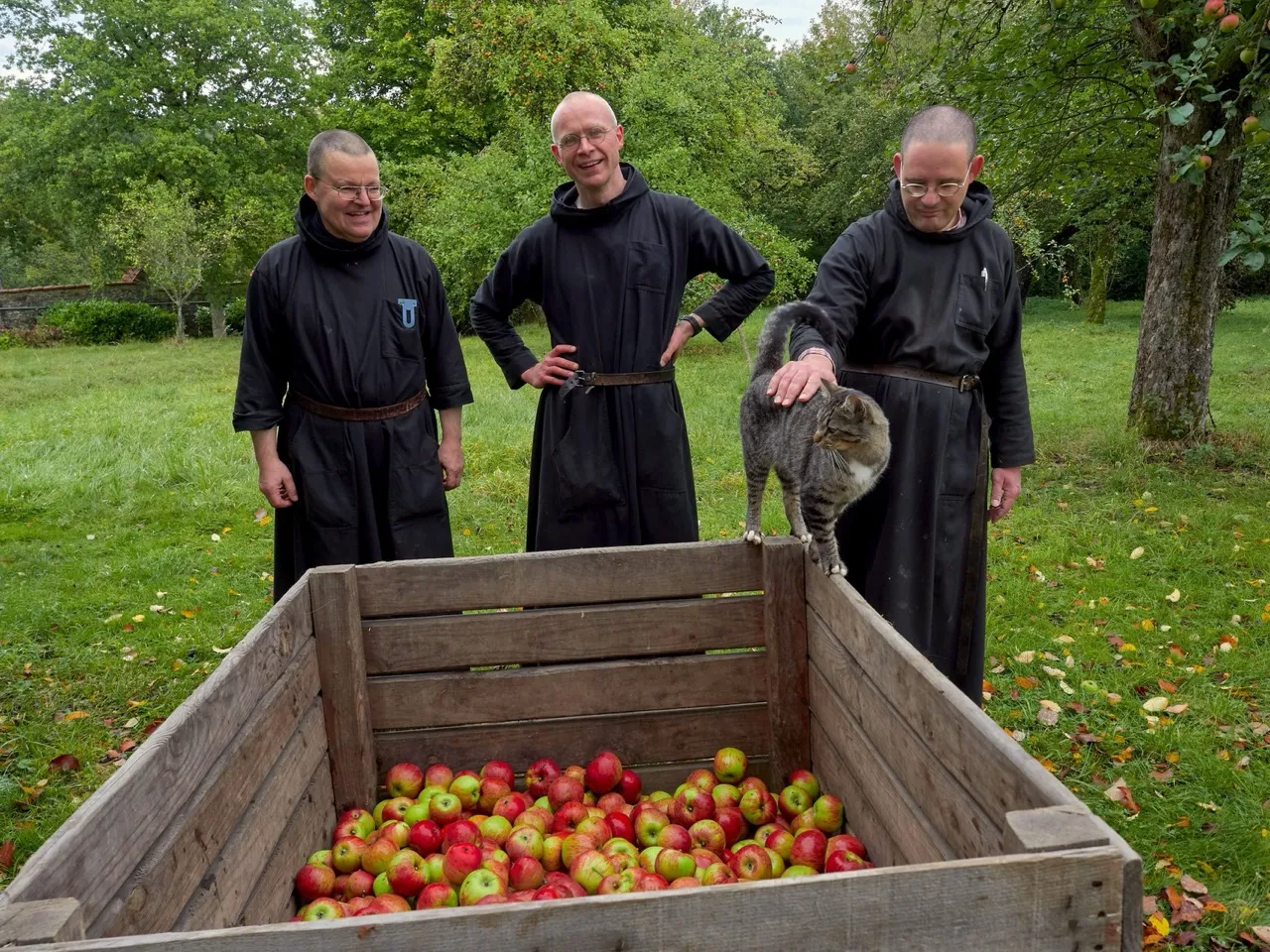
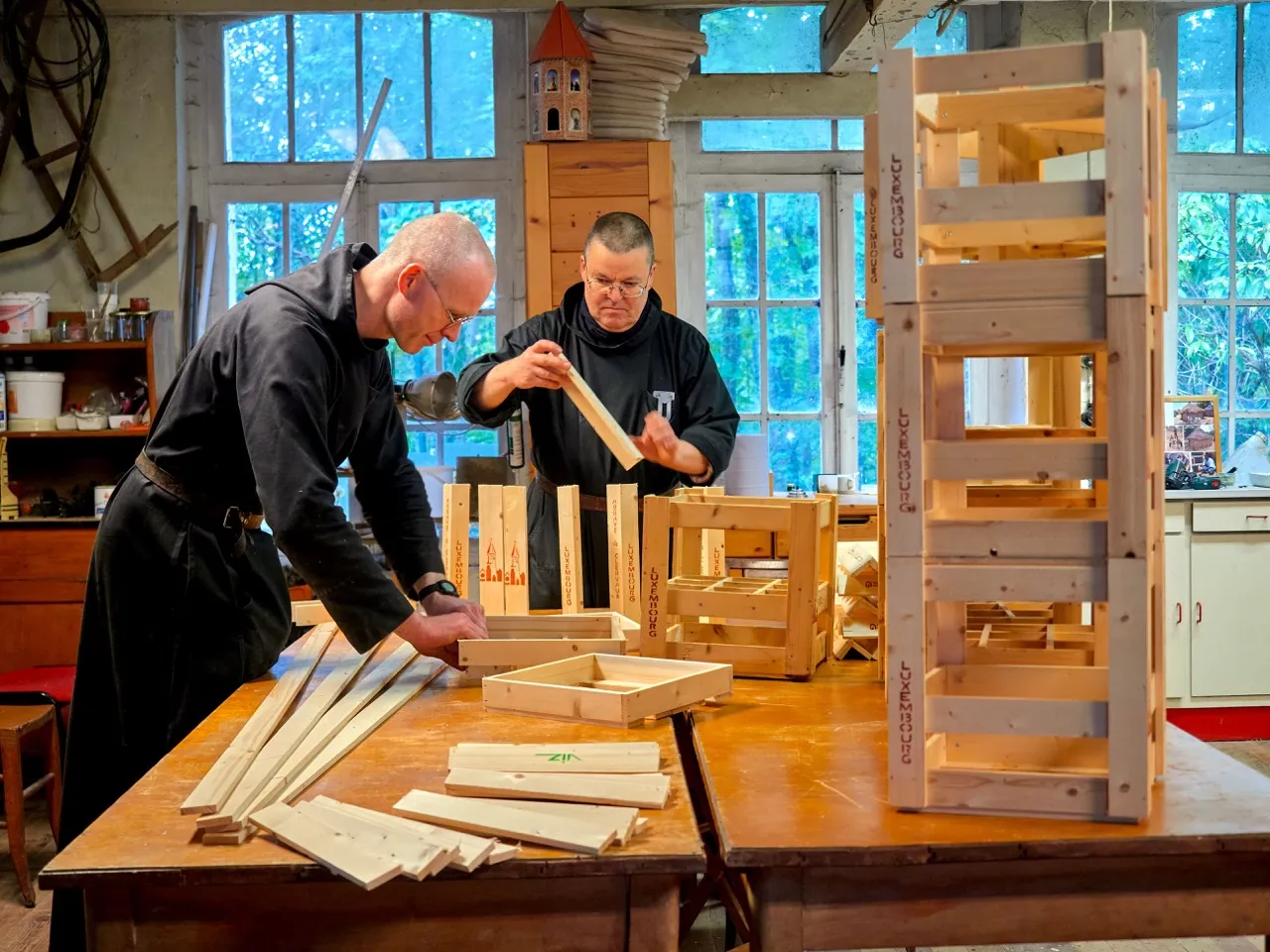
Today, the smooth operation of the abbey as a common house is ensured by the daily activities of the Benedictine brothers. The eleven current members of the community are distributed among the sacristy, the library, formation in the novitiate, the shop selling books, religious items, and monastic products, as well as various manual tasks and services for general maintenance. Without forgetting, of course, the hospitality of guests!
The new apple juice production workshop fits perfectly into the practice of work beneficial to the community while being mindful of providing assistance to a small Senegalese company through a portion of proceeds.
The Solesmes congregation, a younger branch of the great Benedictine family
Clervaux Abbey is part of the Solesmes congregation, located in Sarthe, and therefore, by extension, the Benedictine congregation.
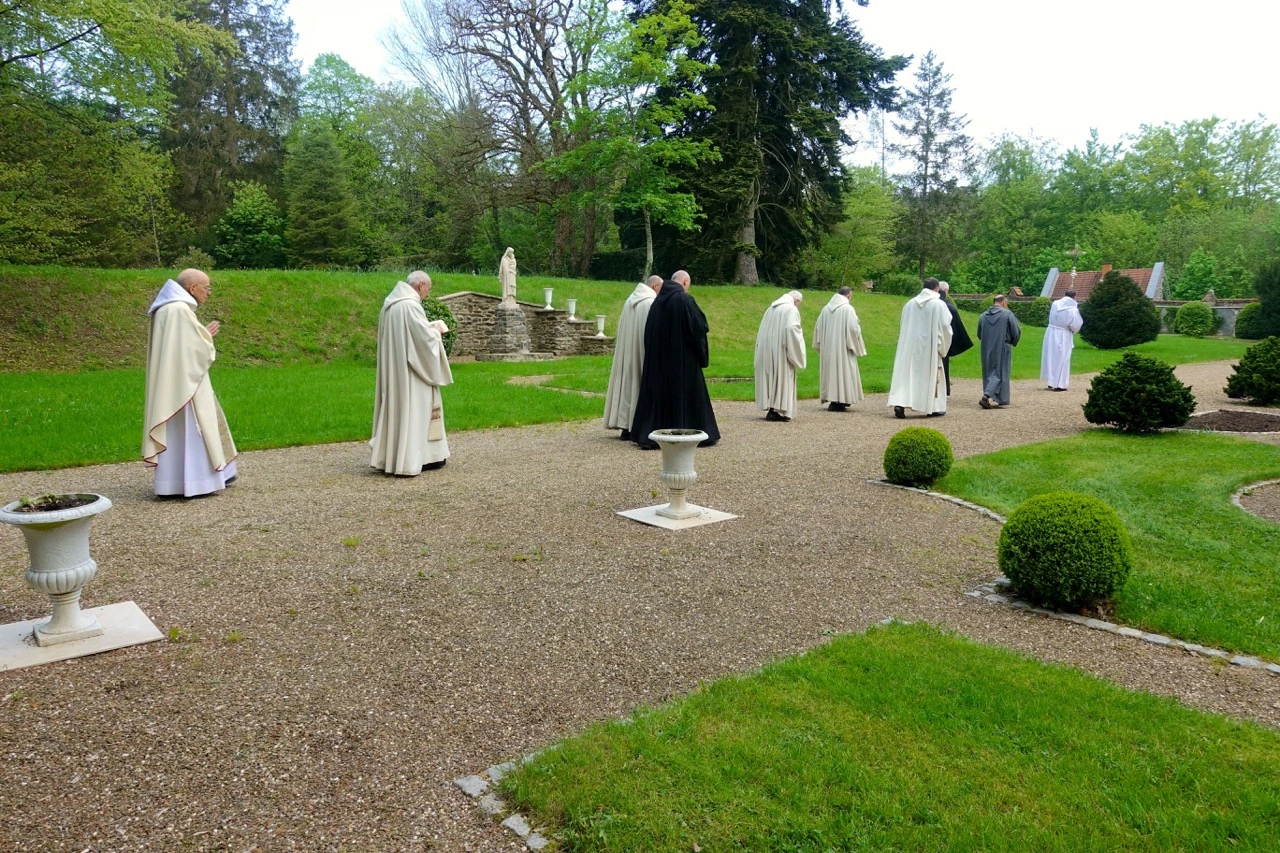
As such, the monks of Clervaux follow the contemplative life outlined in the Rule of Saint Benedict (480-547). This rhythm of life centers the community on the practice of liturgical prayer and fraternal life, seeking a balance among prayer, study, and manual work under the motto: "Pax" (meaning "Peace").
The community's days revolve around the divine offices and the daily Mass, forming the spiritual heart of the monastery.
The Father Abbot who governs the community of Saint-Pierre-de-Solesmes presides over the Solesmes Congregation, which includes a total of twenty-three monasteries of monks, with eight monasteries of nuns attached, in France and around the world.
What to expect during your stay
At Clervaux, spiritual retreats are customized and for everyone!
The abbey is open to anyone wishing to experience a time of prayer, a time of reflection and introspection, or simply wanting to enjoy a time of study.
The types of retreats are therefore very diverse. Retreatants of all ages are welcome, as are groups and individuals.
On site, you can benefit from personal spiritual guidance (in the parlors for women retreatants and more freely in the abbey for men retreatants).
All can participate in the community's prayer life, including the various offices and the daily Mass, celebrated at 10:00 a.m.
Male retreatants have the opportunity to help the monks with manual tasks at the abbey and can also enjoy the garden where there are small horses, completely domesticated.
Perched above the town of Clervaux in Luxembourg, a place of tranquility
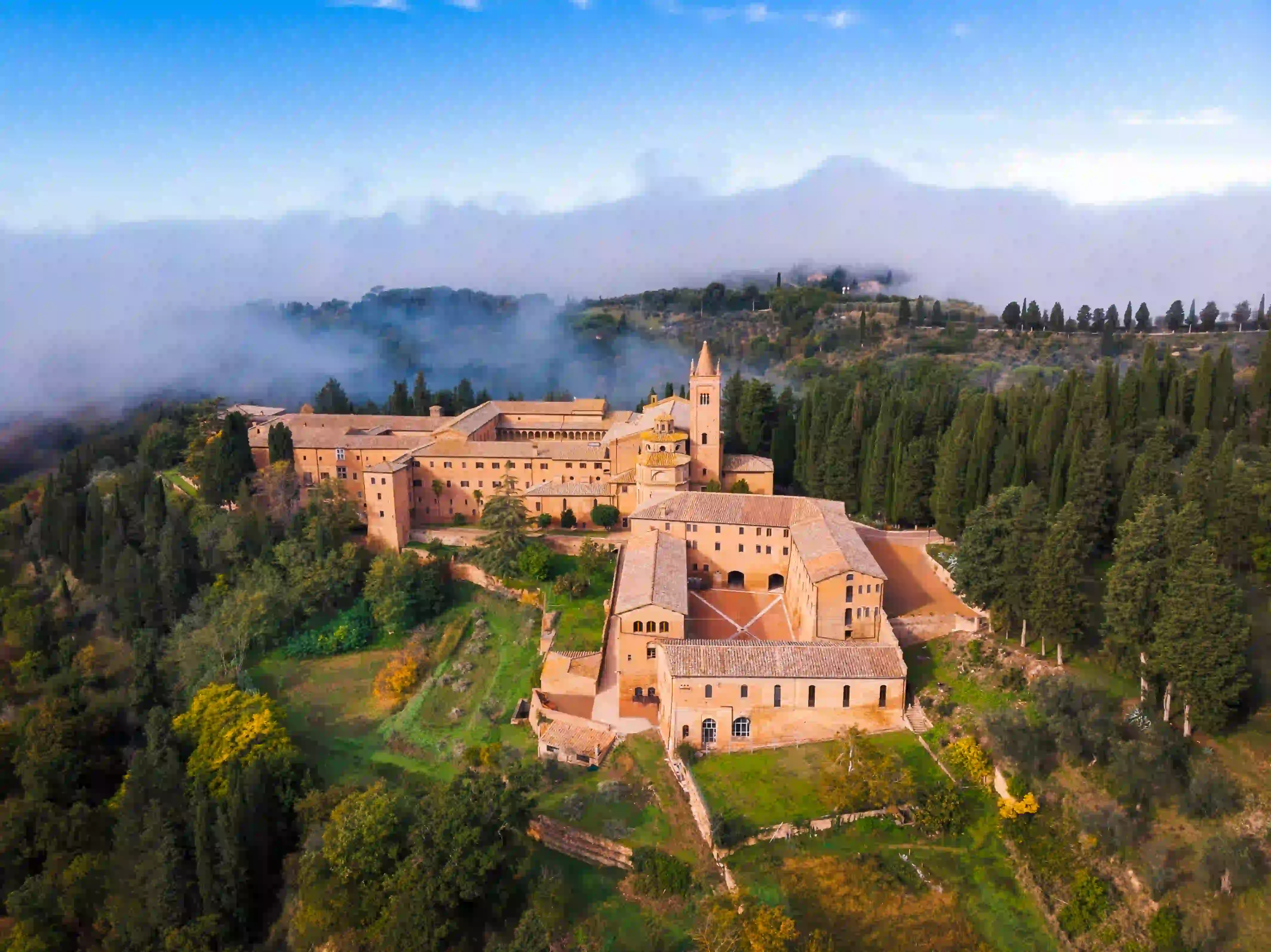
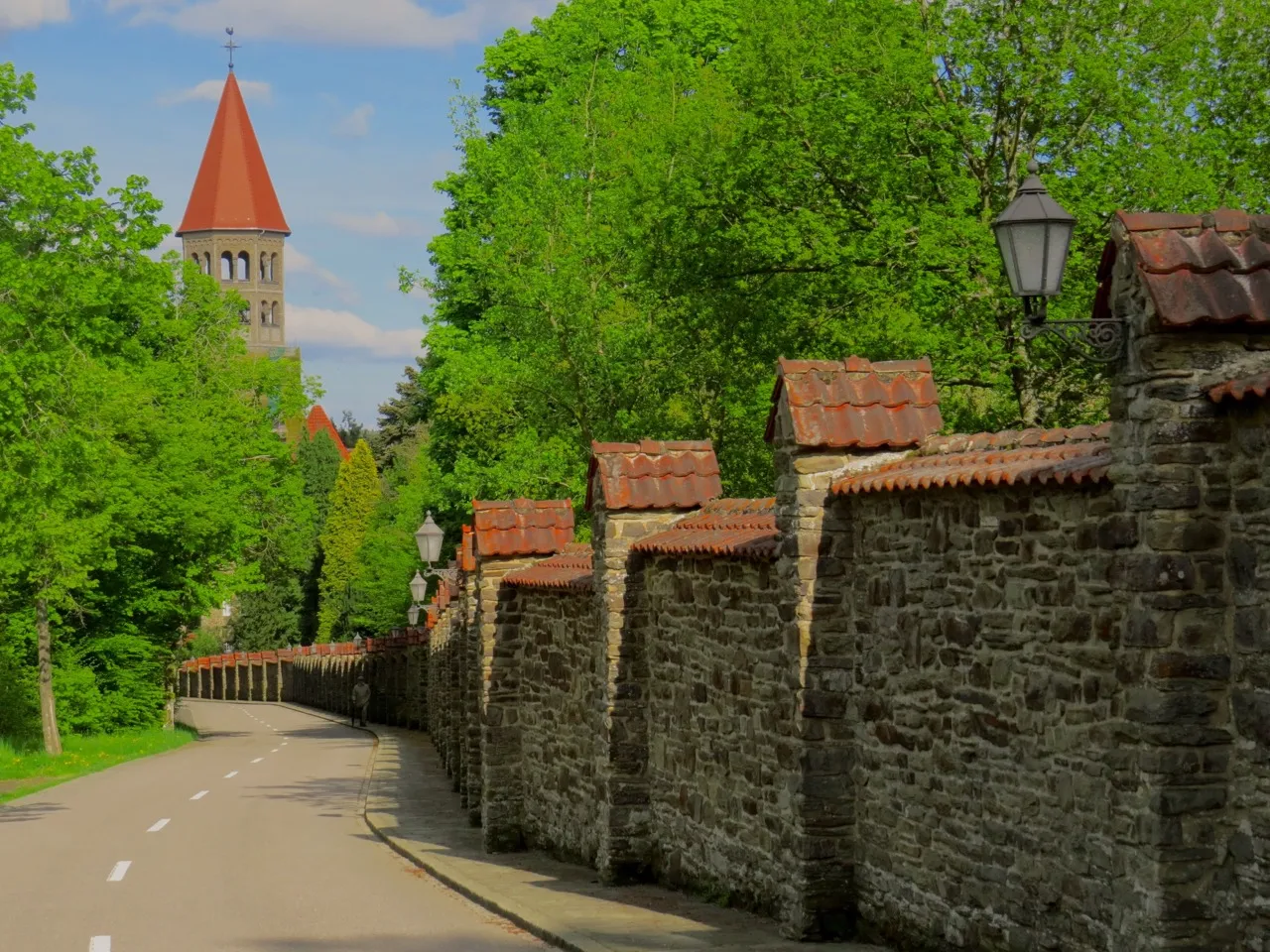
Above the ocher stone walls of the abbey rises a wide and elegant octagonal tower, red in color like all the roofs of the buildings. The bright colors stand out against the surrounding forest with its green and darker hues.
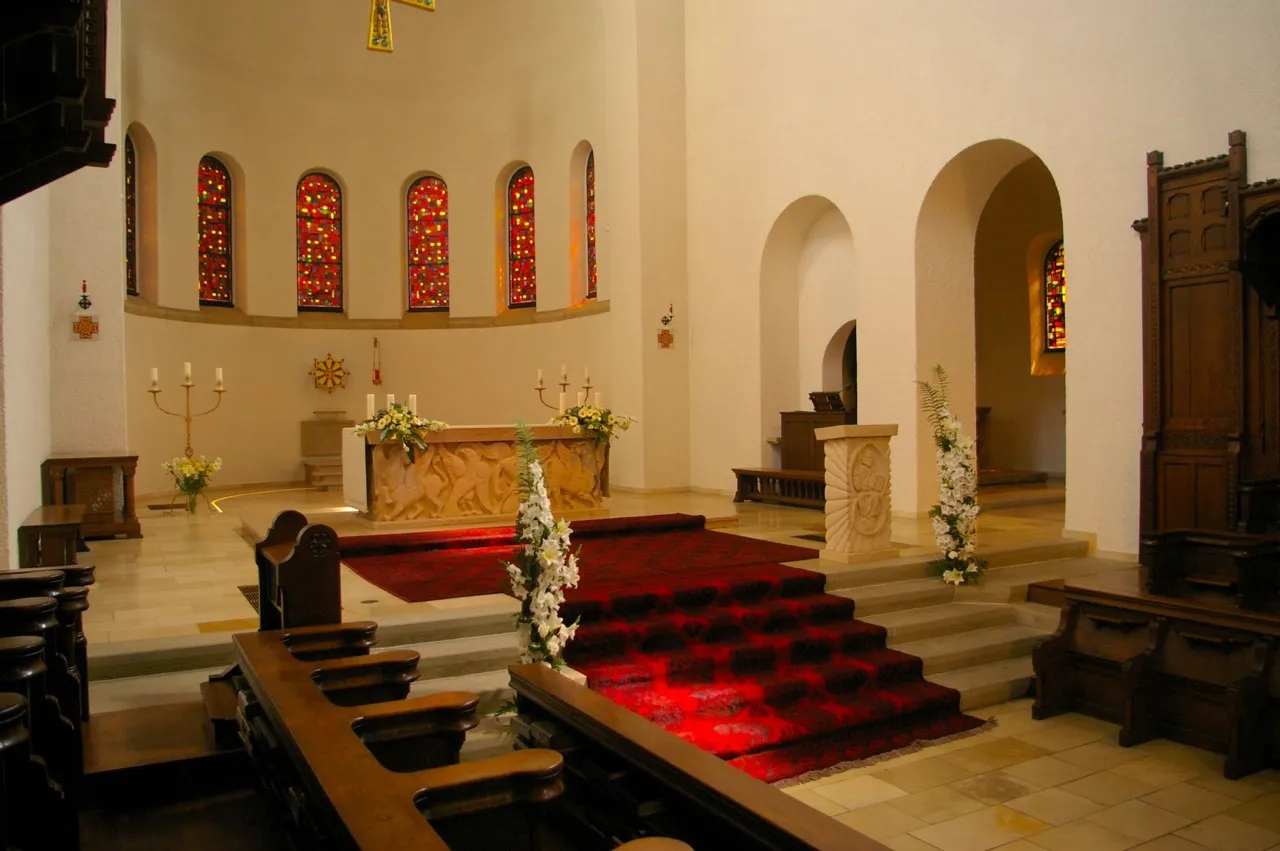
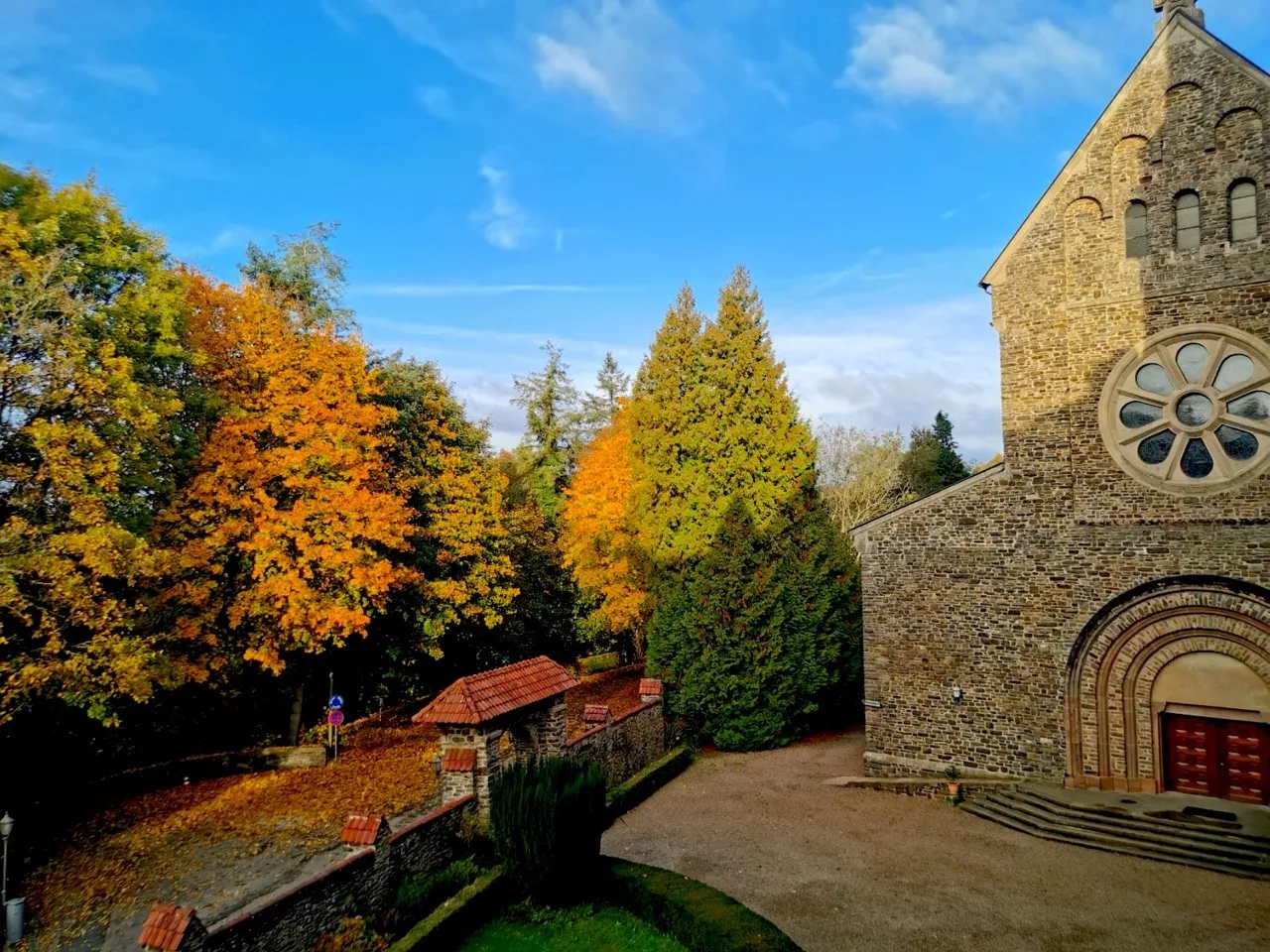
The abbey consists of various buildings arranged in the form of a quadrilateral surrounding a cloister bathed in light. To the north stands the sumptuous abbey church, restored for the first centenary in 2010. On the south side, the refectory is topped by two floors of cells. To the east is the large library, composed of three floors and containing more than 120,000 volumes! The chapter house, infirmary, and novitiate are also located in this wing. To the west, the kitchens and two more floors of cells complete the original abbey buildings, overlooking a carefully designed garden.
On this side (west) is the guest house, dating from 1932 and recently renovated in 2018. It includes 22 rooms (8 with private bathrooms and 14 simple rooms), as well as parlors and the abbey shop on the ground floor. The guest house also has a library and two meeting rooms for retreatants.
The garden, orchard, and upper part of the park are accessible to male retreatants, who take their meals with the community. Women, on the other hand, are served in the guest dining room (lunch at 1:00 p.m. and dinner at 7:30 p.m.). Breakfast and afternoon tea are shared by everyone.
Under the church, in the crypt, an exhibition traces the history of the abbey and the essentials of monastic life. A remarkable fresco depicts the life of Saint Benedict according to Pope Saint Gregory the Great.
Geography and activities
Clervaux Abbey, an extension of the Belgian Ardennes
The Clervaux region is part of the geographical continuation of the Belgian Ardennes. Its proximity to Belgium means that a major railway line connecting Liège to Luxembourg City runs through the valley overlooked by Clervaux Abbey.
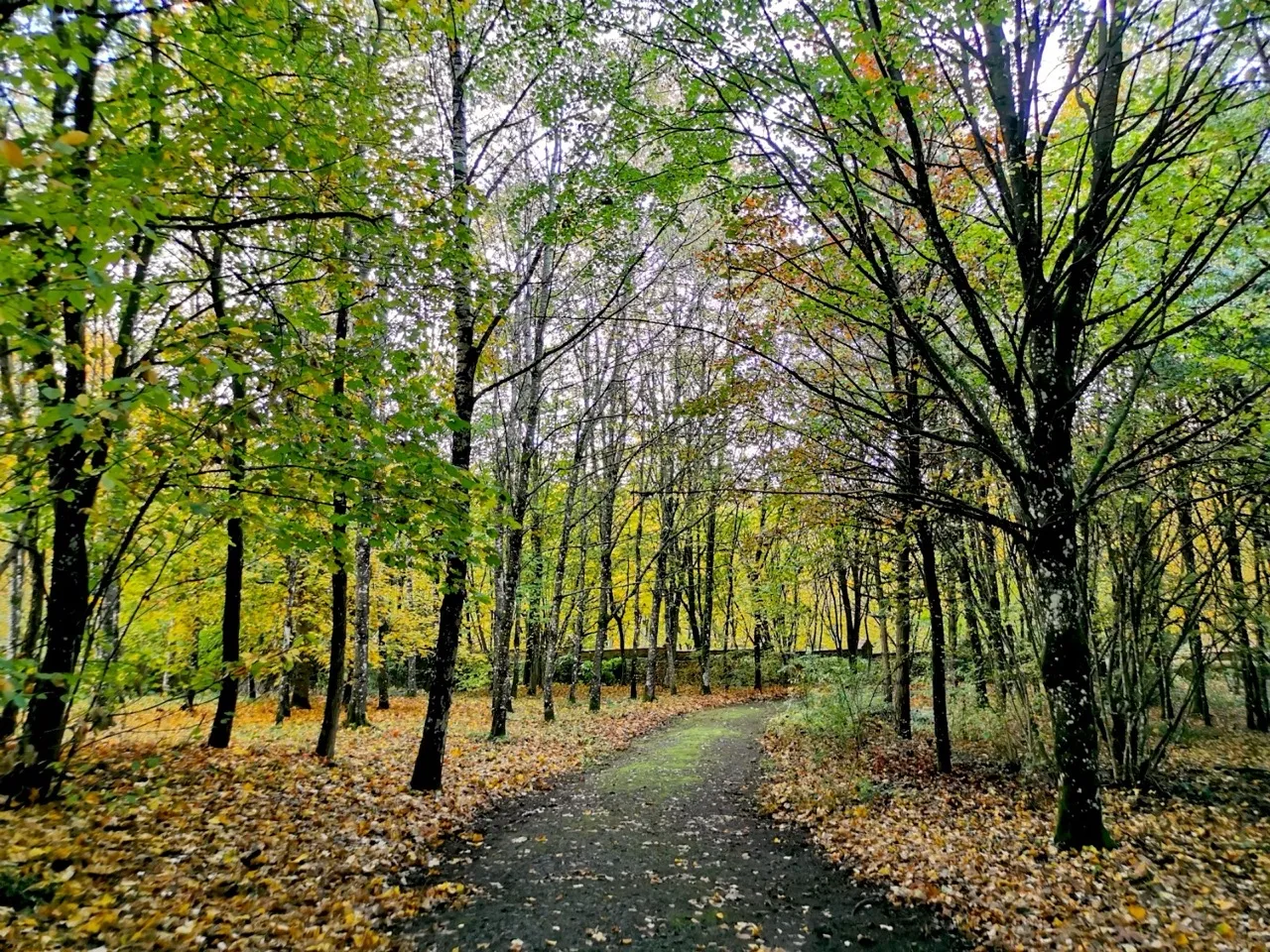
The surrounding countryside is crisscrossed with cultivated fields but also vast forests whose enchanting hiking trails traverse both valleys and plateaus. The many small villages, well-maintained and absolutely charming, make the Canton of Clervaux a popular tourist destination. The Clerve, a modest river, flows through the region and gave its name to the town of Clervaux before flowing, a few kilometers away, into the Sûre.
The town of Clervaux is home to a medieval castle (rebuilt after 1945) that today houses The Family of Man, a permanent exhibition featuring more than 500 photographs by 273 different artists, originally assembled in 1955 by Edward Steichen for the Museum of Modern Art in New York. This collection represents human life through a multitude of perspectives.