Notre-Dame de la Paix Abbey - Chimay
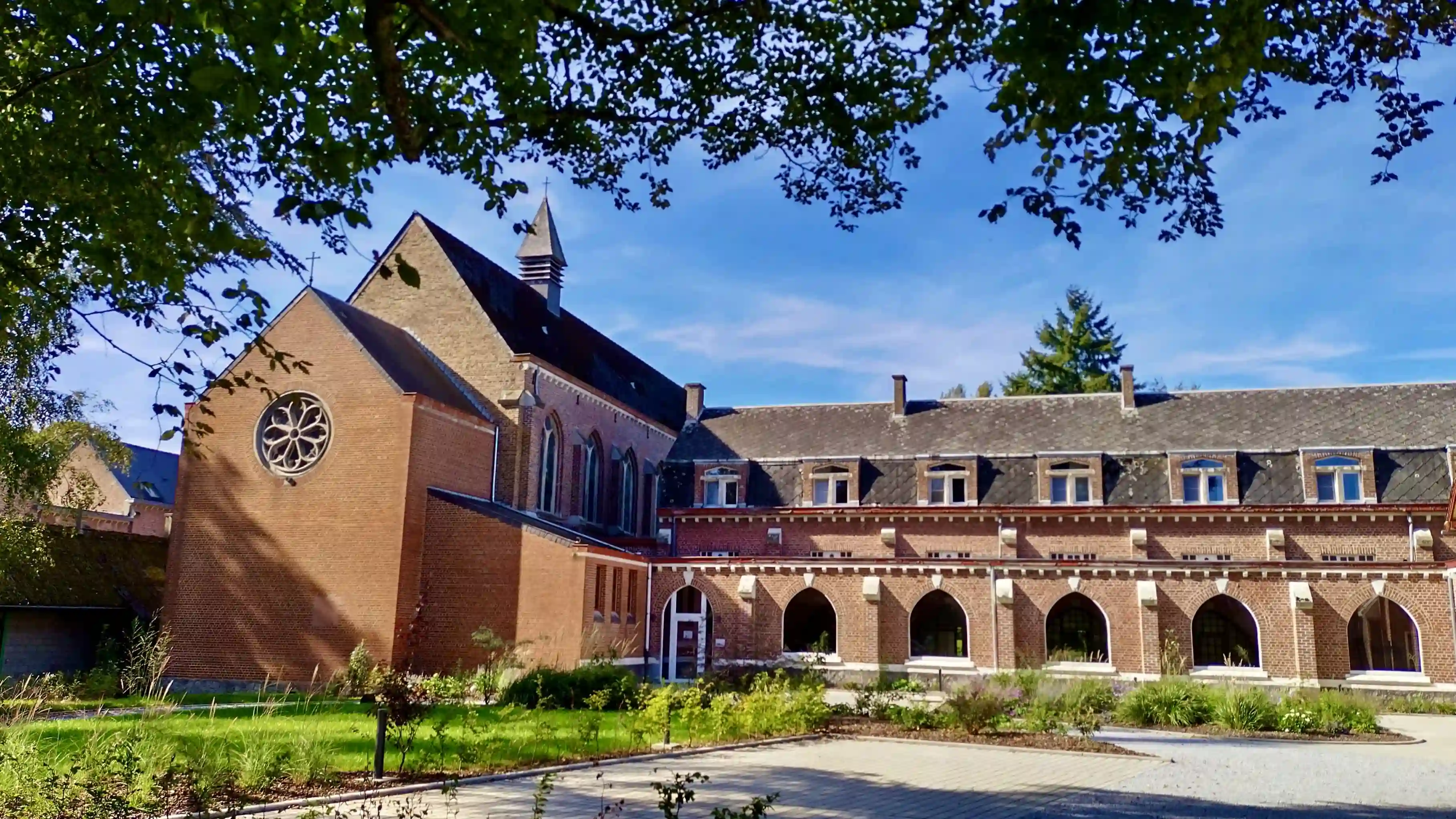
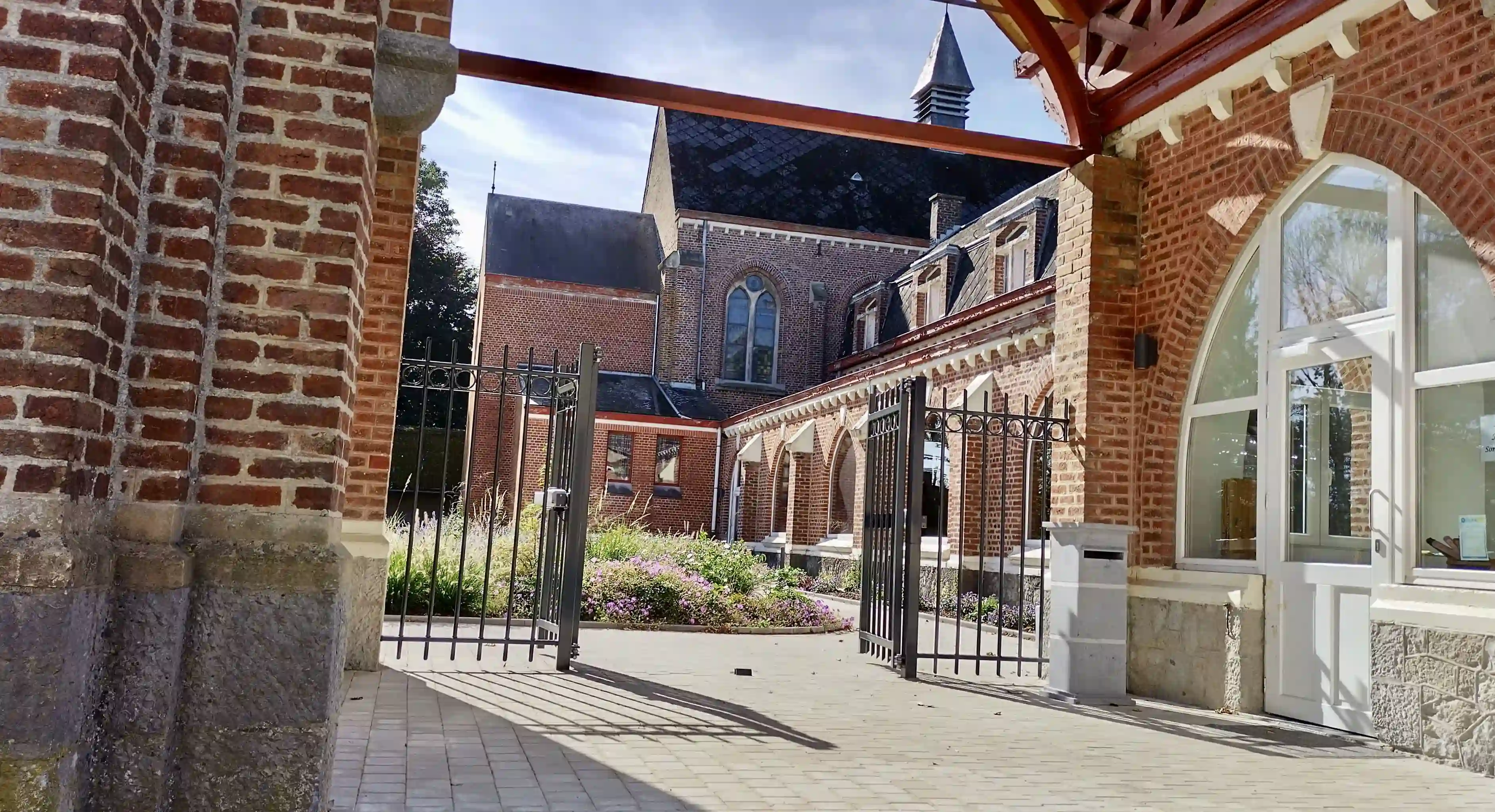
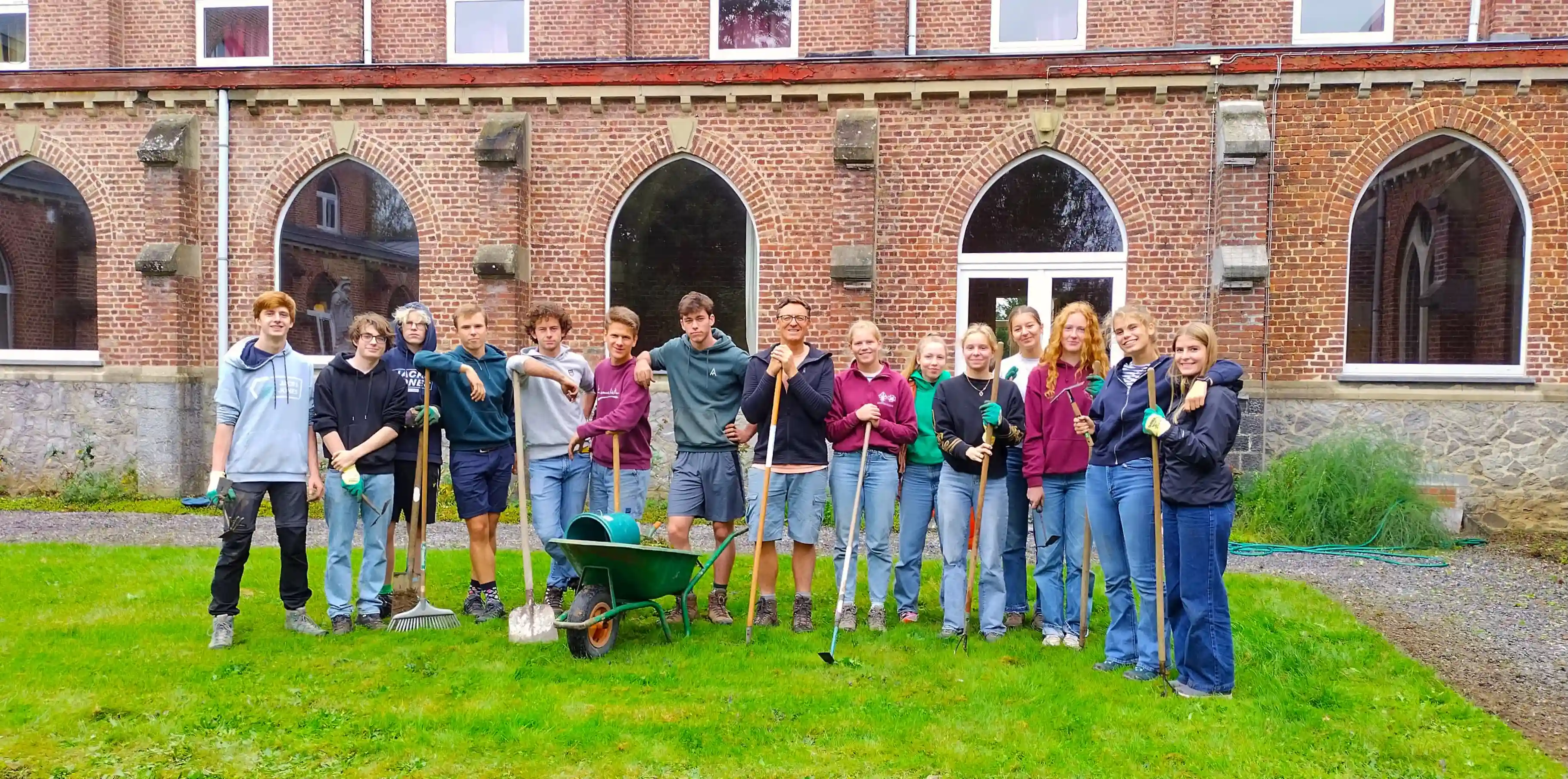
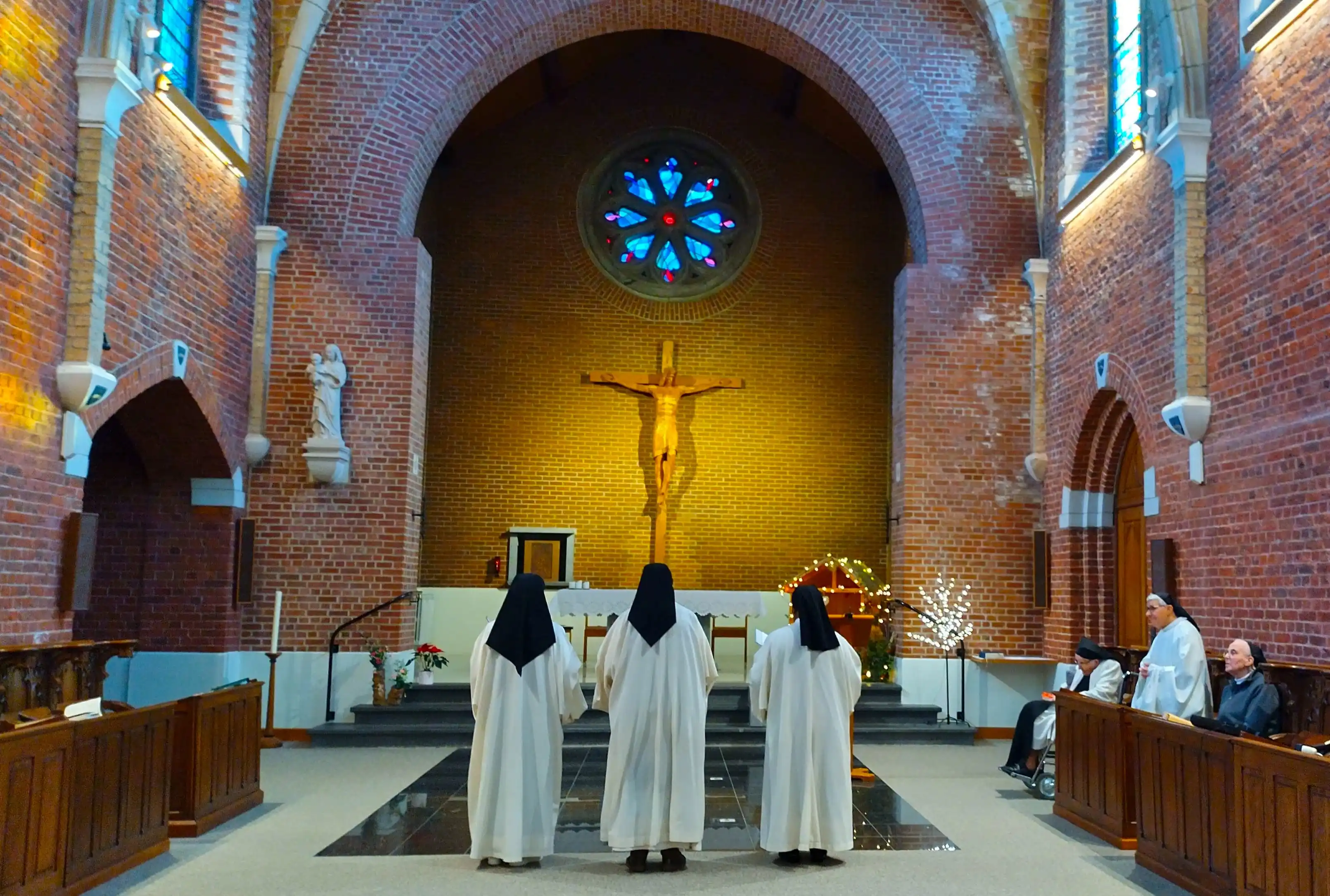
A stone's throw from the well-known Scourmont Abbey, in the small Walloon town of Chimay, lives a community of Trappistine nuns whose cookies, hospitality, and above all, prayer command admiration.
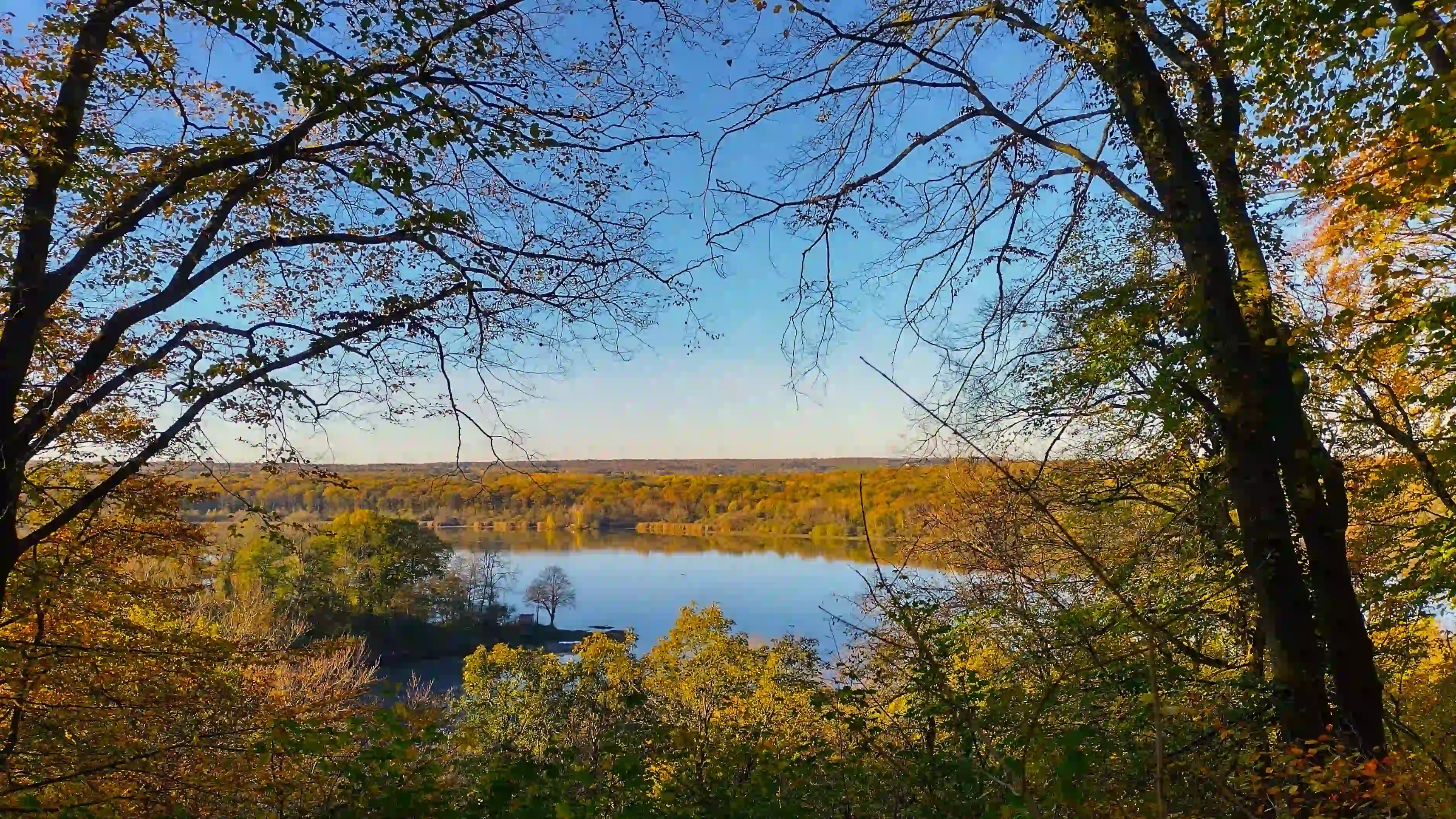
Don't hesitate to visit. Take time to meditate and find renewal. Discover the joy of experiencing a spiritual retreat in an abbey that everyone praises for its peaceful and harmonious character. Set on the edge of a small medieval town, it offers surrounding forests, lakes, and green spaces!
Retreats organized by the community
From France to Belgium: the remarkable story of a community that crosses borders
The Trappistine community of Chimay is very old, has wandered, crossed borders, and sent out new foundations. An uncommon experience!
Notre-Dame de la Paix Abbey is the direct continuation of the ancient Gomerfontaine Abbey, founded in 1205 in the French Vexin region, on the border of Normandy, 55 miles northwest of Paris. It was founded by a noble couple, Hugues and Pétronille de Chaumont, parents of six boys and one daughter, who, naturally, became a nun.
Unlike most monastic communities that disappeared during the French Revolution, there was no break between the community of the ancien régime and the current community, only an interruption of about twelve years, from 1792 to 1804, followed by a long journey. A former nun of Gomerfontaine, Pauline Ducastel, a direct descendant of Christine de Pisan, obtained the support of the former abbess and, with four religious from various origins, took up the challenge of reviving Cistercian monastic life as it was at Gomerfontaine (Oise department).
This small group settled in Nesles (Somme department), then in Saint-Paul-aux-Bois (Aisne department). The community then devoted itself to teaching, the only means it found to ensure its subsistence. Necessity makes law! In 1877, it obtained affiliation with the Trappist order.
Then, the National Assembly invited thousands of religious to exile. It led the "Bernardines of Saint-Paul-aux-Bois" from French Picardy to Belgium. The sisters first settled in a refuge they had prepared in Fourbechies, a small village in Belgian Hainaut. There, in a former brewery built on two floors (yes, indeed!), they lived poorly, faithfully followed the Benedictine rule, and prayed with great fervor. They attracted many vocations.
In 1919, with the help of the monks of Scourmont, they acquired a property in Chimay where a teacher training college called "Institut de France" had previously been located. They occupied it and quickly, again thanks to the monks, a new monastery was built there. The abbey church was consecrated in 1925, on October 13 precisely, in memory of the dedication of the church of Gomerfontaine which took place on October 13, 1266. From then on, the nuns would no longer move, except for a brief exile to Sainte-Anne-d'Auray when in 1940, the Nazis forced all residents of the region to evacuate toward France. The wandering ended.
Not surprisingly, however, the community maintained and accentuated its international character. In 1928, a young Dutch woman entered the nuns' abbey in Chimay to train for monastic life. She was followed by dozens of others. In 1937, the abbess and 45 religious left La Paix to found Koningsoord Abbey in the Netherlands. From there, three foundations would be born: two in Germany and one in Uganda.
Then, a long decline began that seemed to condemn the abbey to disappear. In 2011, Mother Catherine Pagano, of Italian nationality, in Belgium since the age of ten, was given responsibility for the abbey, with the mission of accompanying the last sisters toward closure. In 2016, part of the monastery was therefore leased for 30 years to two associations that care for disabled children.
But a spirit of spring and openness began to blow and reversed the movement: liturgical singing was renewed, the offices of Vigils, then those of None were restored, major renovation work was carried out at the guest house, guided tours were organized, a conference room was set up, a cookie bakery was started, the vegetable garden once again produced fruits and vegetables...
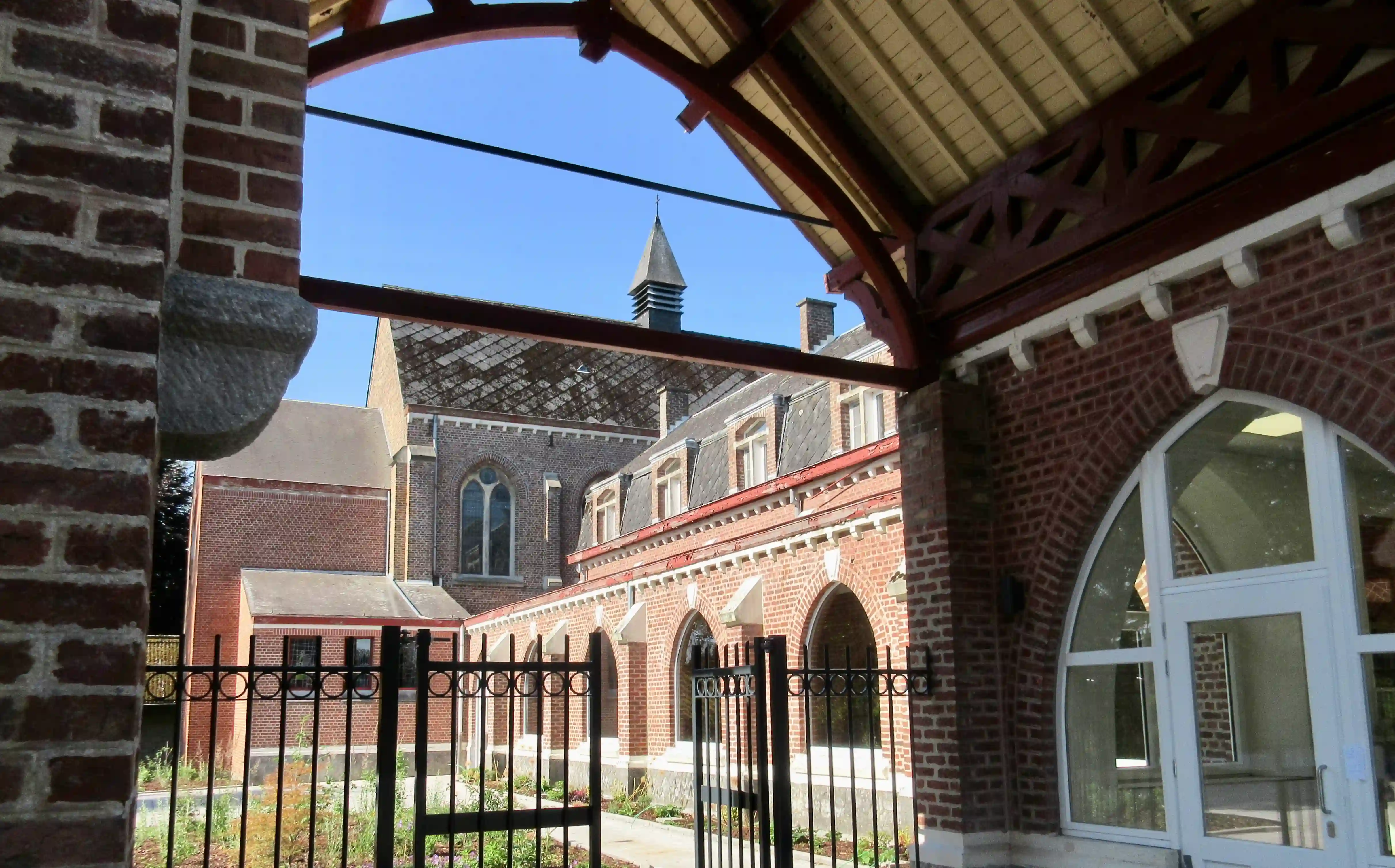
An international Cistercian community and a peaceful abbey church
The community of nuns of Chimay belongs to the Cistercian Order of the Strict Observance, also known as the Trappist Order (admittedly, cheese and beer are not unrelated to its reputation). The monastery of Cîteaux and more particularly Abbot Robert of Molesmes are at the origin of the Cistercian Order. Its communities are autonomous but united by the Charter of Charity, which means they help each other mutually.
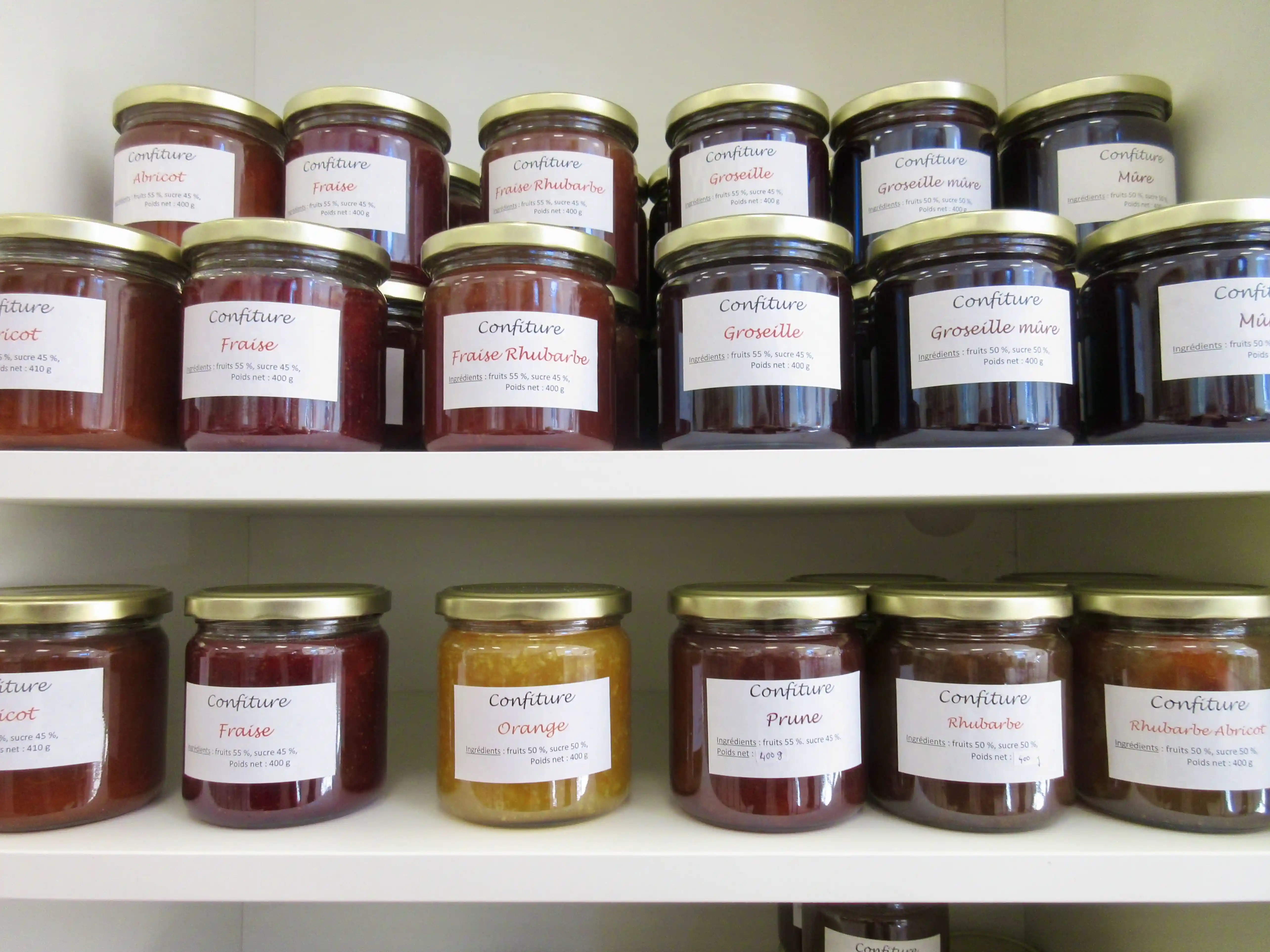
The Cistercians want to live with great authenticity the Rule of Saint Benedict which is summed up by these two Latin words "ora et labora" which mean "pray and work". Among them, sobriety and manual labor are particularly honored. In Chimay, the nuns make liturgical vestments and garments (a very old tradition) as well as various textile items. They make bread, jams, and delicious almond paste cookies (lactose-free and gluten-free). In their shop, they sell many quality monastic products.
In 1927, the young priory of Chimay received the title of Notre-Dame de la Paix Abbey. Currently, in these troubled times, prayers are offered there each month for peace. Many visitors, believers or not, feel a great sense of peace in the abbey church.
The community is composed of five nuns of five different nationalities, from three continents. This gives it an international character.
In 1804, there were five religious, in 1937, ninety-nine. Today, there are also five, but in a few years, the average age has become younger! Three nuns from other abbeys have chosen to make their promise of stability at Chimay Abbey where French, Dutch, Italian, Swahili, Hindi, Malayalam, and English are spoken...
ritrit gives the abbey new visibility: guests and visitors are more numerous and younger each year. They are also very diverse: they are of all ages, from all backgrounds, come from all continents and all religious and philosophical horizons. Students who wish to prepare for their exams are welcome.
What to expect during your stay
Making a spiritual retreat at Notre-Dame de la Paix Abbey in Chimay
The small Trappistine community of Chimay welcomes retreatants for a time of letting go and rest. In meditation and contemplative prayer, each person can awaken their inner life, (re)discover within themselves their space of peace and gratuitousness, to then serenely resume their journey amid the noises of the world.
Community retreats are open to all. Groups that organize their own retreat time are also welcomed.
Likewise, families, couples, and students are welcome for a time of personal or family renewal, for study time or internships.
Would you like to embark on a "digital fast" to disconnect from digital devices and reconnect with yourself and others? Simply leave your mobile phone at the Abbey entrance and pick it up when you leave!
Your stay with the Trappistines of Chimay Abbey
Are you looking for a venue to organize a seminar? The Abbey offers for rent a meeting room that can accommodate about sixty attendees!
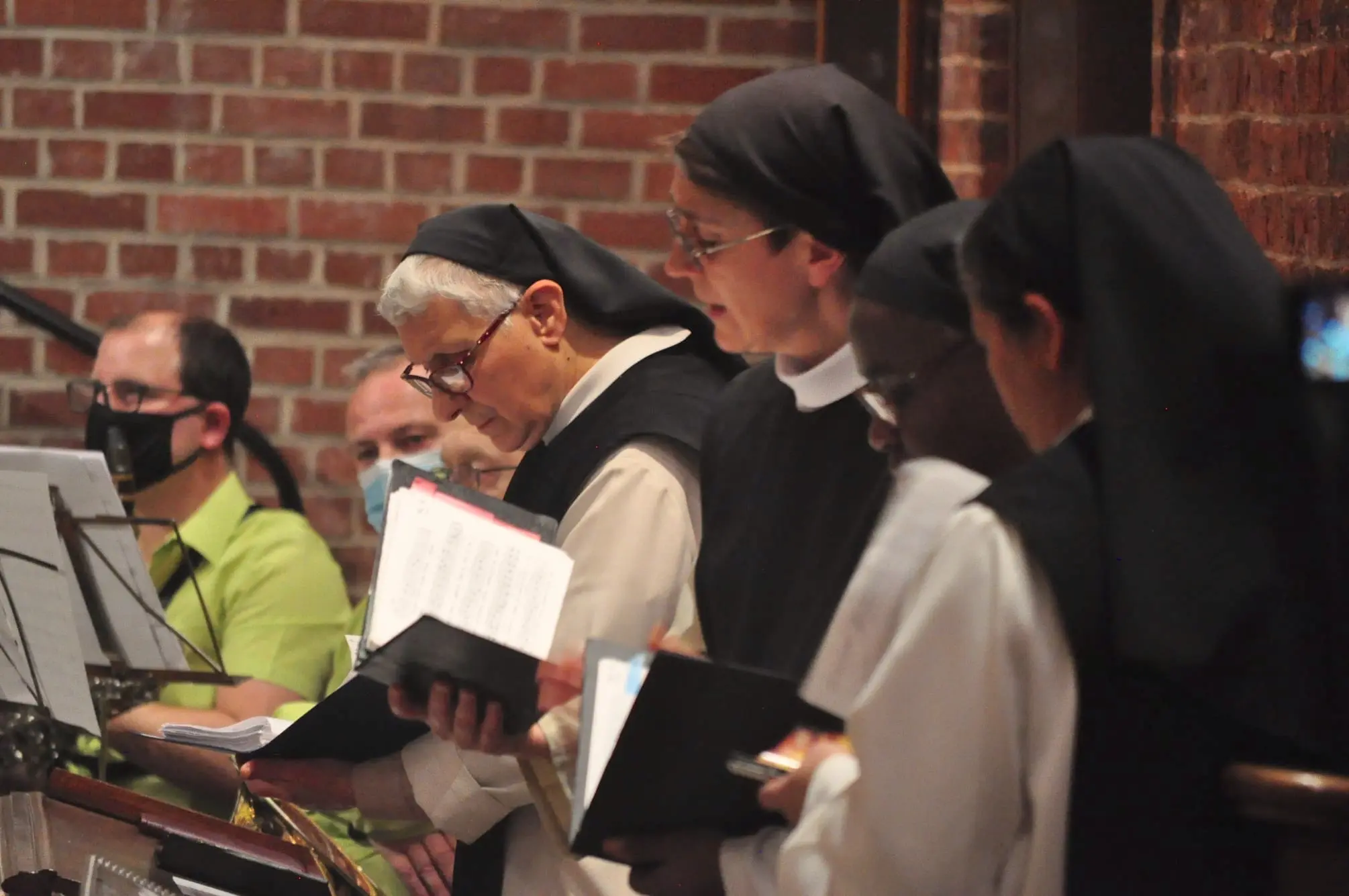
Without this being a condition for going there, guests have the opportunity to join the community for prayer and are welcome at all the offices offered. On weekdays, they begin at 5:30 in the morning with Vigils and end at 8:00 PM with Compline. The Eucharist is celebrated on Sundays at 10:15 AM and every other day of the week at 9:00 AM. In addition, retreatants will appreciate the nuns' singing and the extraordinary acoustics of the abbey church!
During the stay, guests can purchase monastic craft products, discover, through a guided tour, the main aspects of Western monasticism and Cistercian art as well as the remarkable and rare history of a community over 800 years old, the architecture and layout of a typically Cistercian monastery, and finally, a contemporary (1997) "Christ the King" by artist Yves Bosquet.
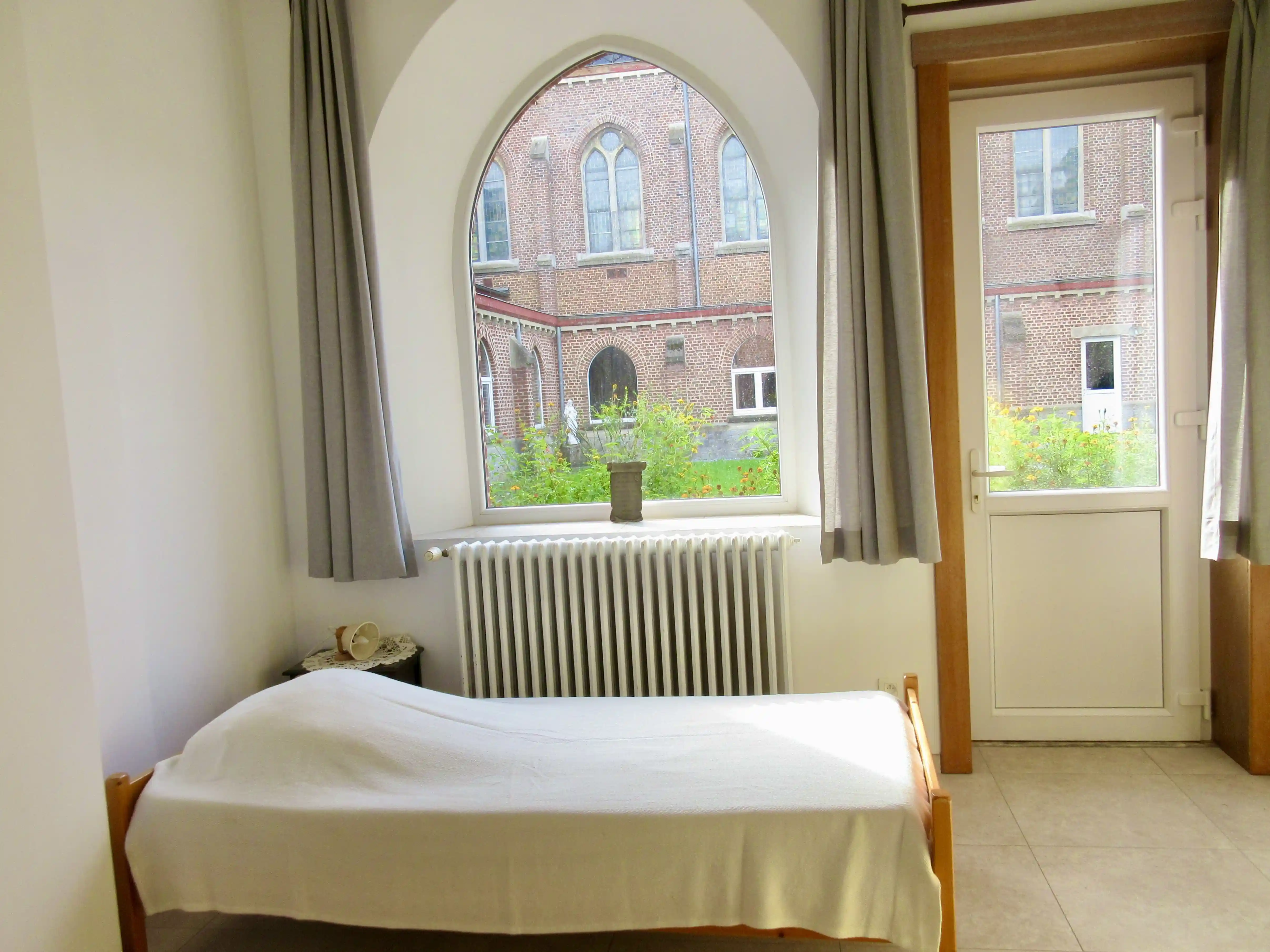
Practically speaking, the guest house has 10 rooms including two twin rooms and one accessible room. It is also possible to add cots in some rooms. A large meeting room and two other rooms (where it is possible to chat) are freely available to retreatants. Meals are taken together and everyone participates in serving and doing dishes. A park is also accessible.
The surroundings of the abbey have become welcoming, harmoniously lit in the evening, with a flowered and tree-lined parking area. A shop, now bright and attractive, allows you to stock up on monastic products and religious books and items.
Geography and activities
What to do and visit around Notre-Dame de la Paix Abbey?
Notre-Dame de la Paix Abbey is located at the Franco-Belgian border, on the edge of the medieval town of Chimay, in a region of forests, lakes, and green spaces! The region is also called "Botte du Hainaut" and more broadly "Pays des Lacs" (Lake Country). It is crisscrossed with hiking trails for walkers and cyclists. Partially enclosed within France, Chimay is equidistant from Mons and Charleroi, about an hour's drive. It is less than two hours from Brussels, Liège, and Reims and three hours from Paris.
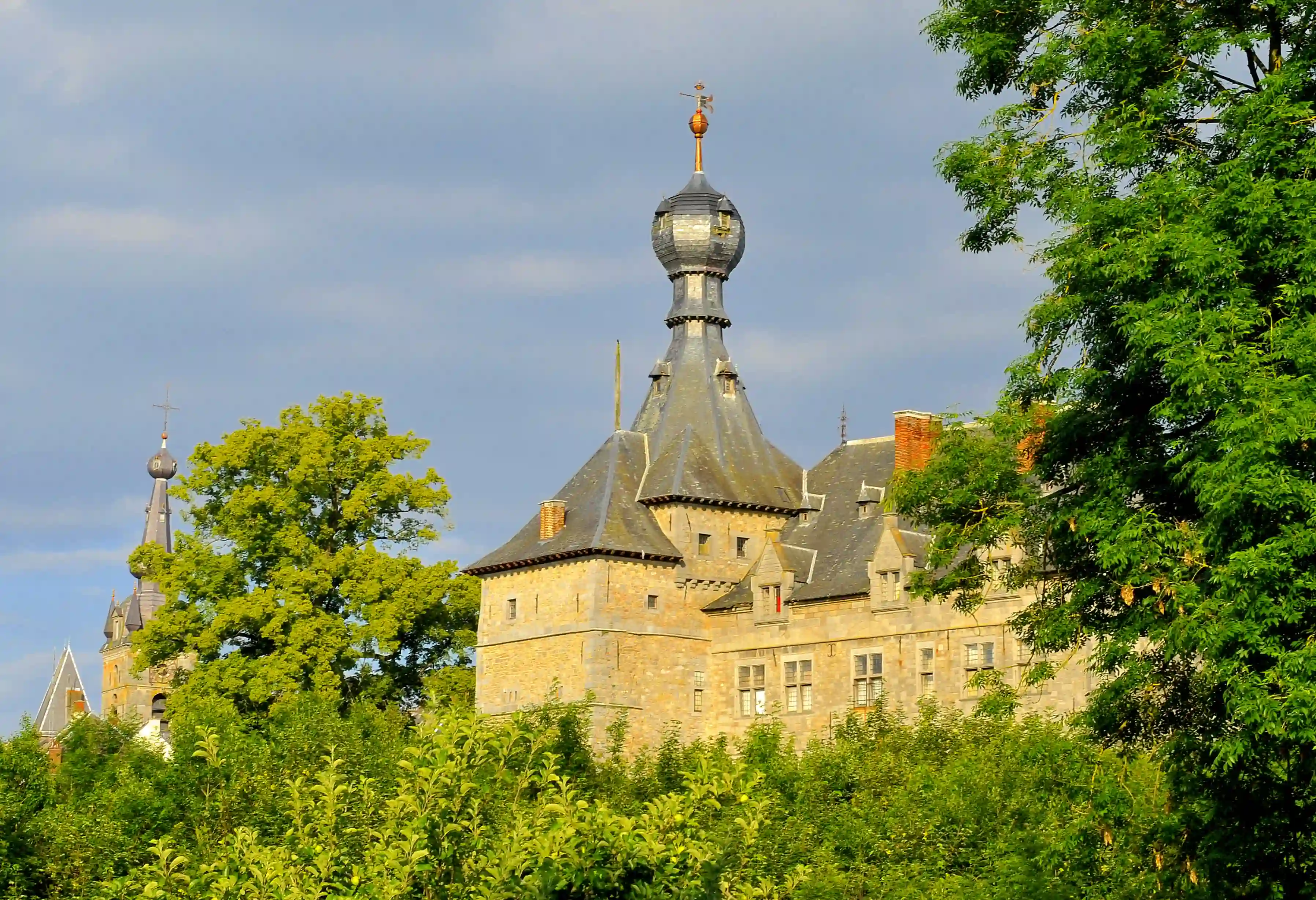
Chimay is a small town that has been home since the 9th century to a castle located on a rocky spur. This castle, still inhabited today by the princes of Caraman-Chimay, has been destroyed and rebuilt many times. It currently constitutes a major tourist attraction.
The Collegiate Church of Saints Peter and Paul of Chimay also attracts many visitors. In Gothic style, it houses the remarkable tomb effigy of Charles de Croÿ, first Prince of Chimay, Knight of the Golden Fleece, and godfather of Charles V. No less! The main square, the princely monument, the triumphal gate, pretty canonical houses, and old washhouses add to the charm of this small town perched on the heights of a modest river called the Eau Blanche.
For nature lovers, it should be noted that geologically, the north of the Chimay commune is situated on the Calestienne, a long and narrow limestone band that crosses Belgium from east to west. The south of its territory occupies the shale terrain on the edges of the Ardennes. The relief is therefore rugged and the flora rich and varied. Chimay is also divided between two watersheds: Notre-Dame de la Paix is part of the Meuse basin and near Lake Virelles, and Notre-Dame de Scourmont is anchored at the sources of the Oise, a tributary of the Seine.