Novalesa Abbey

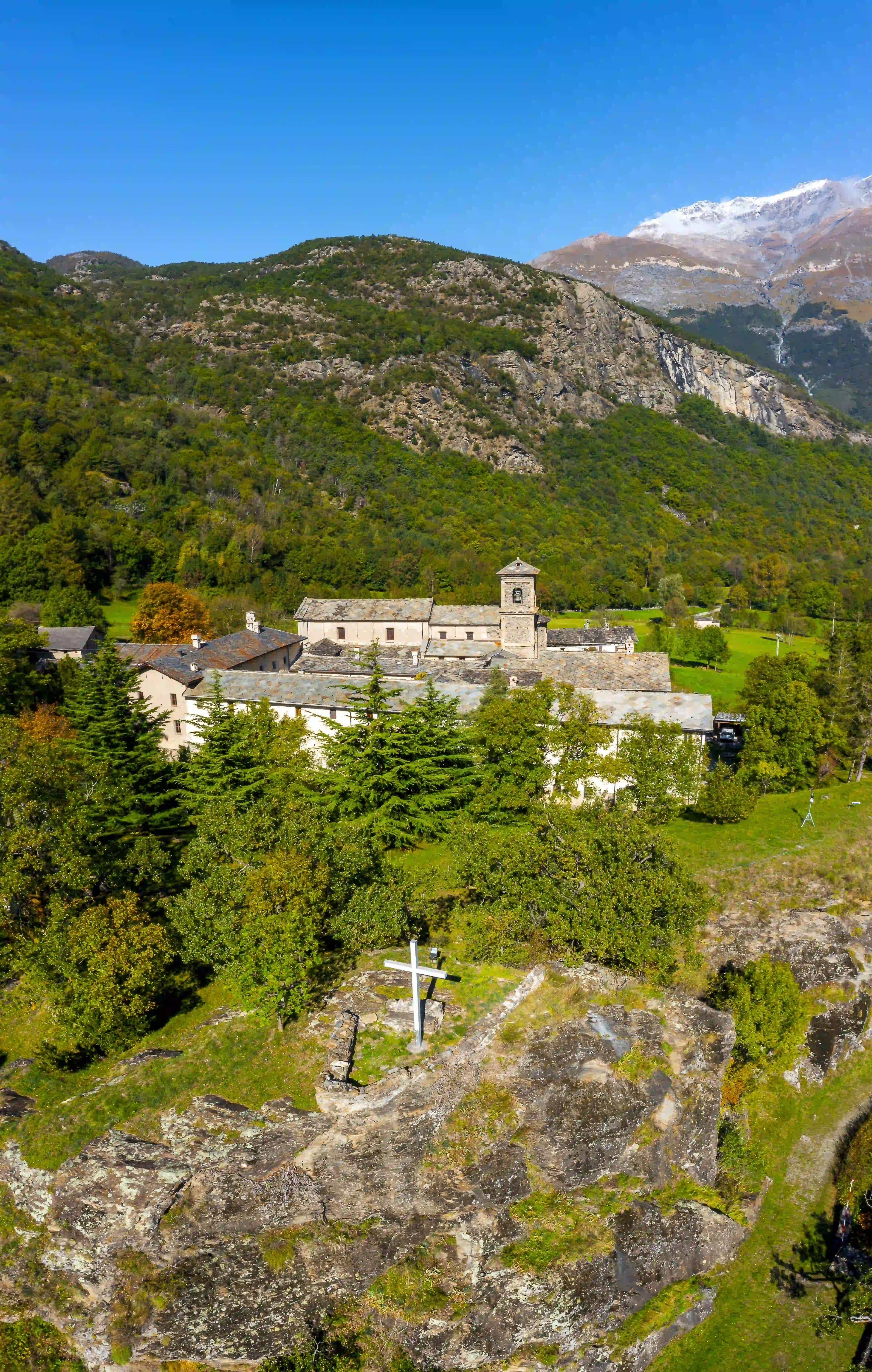

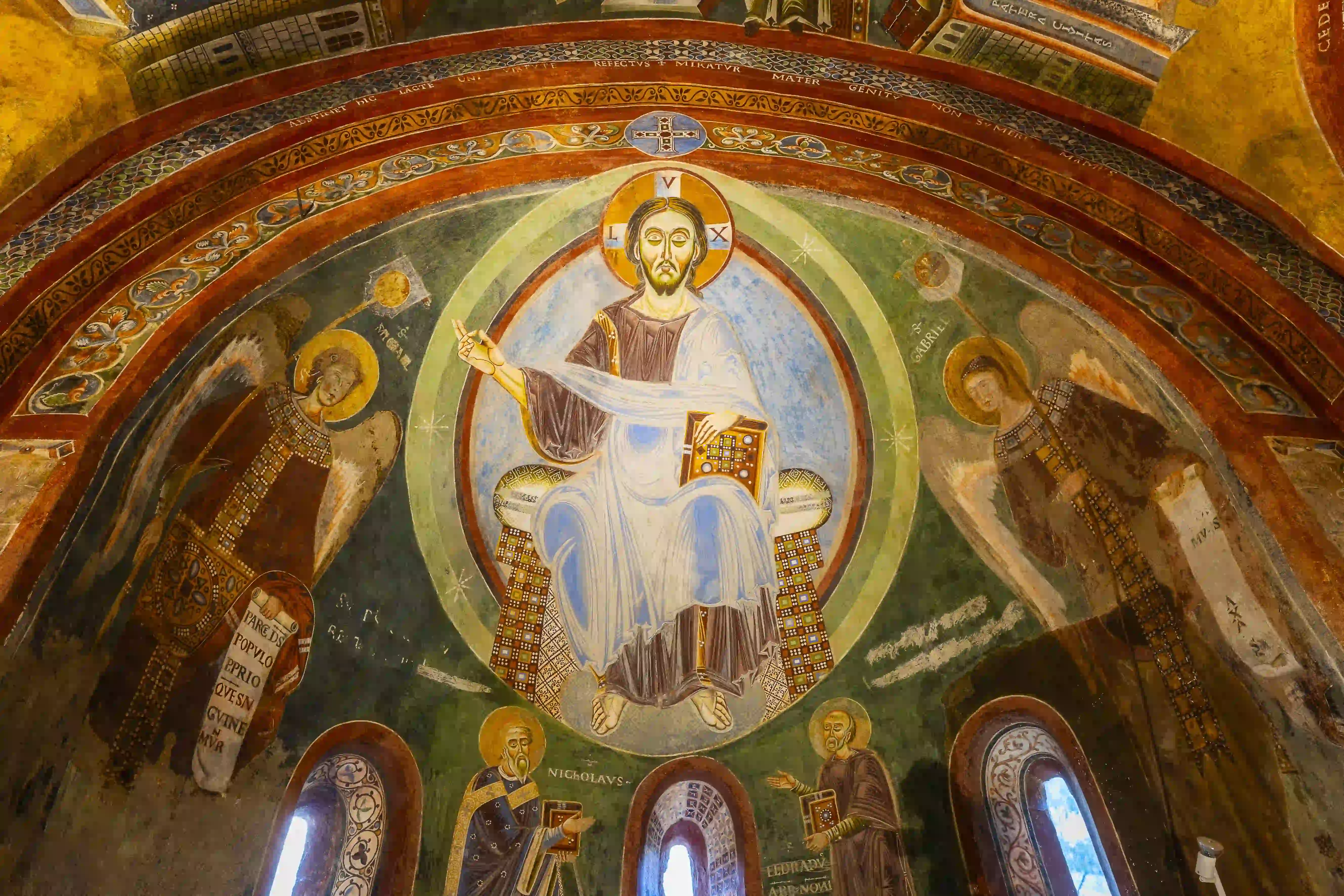
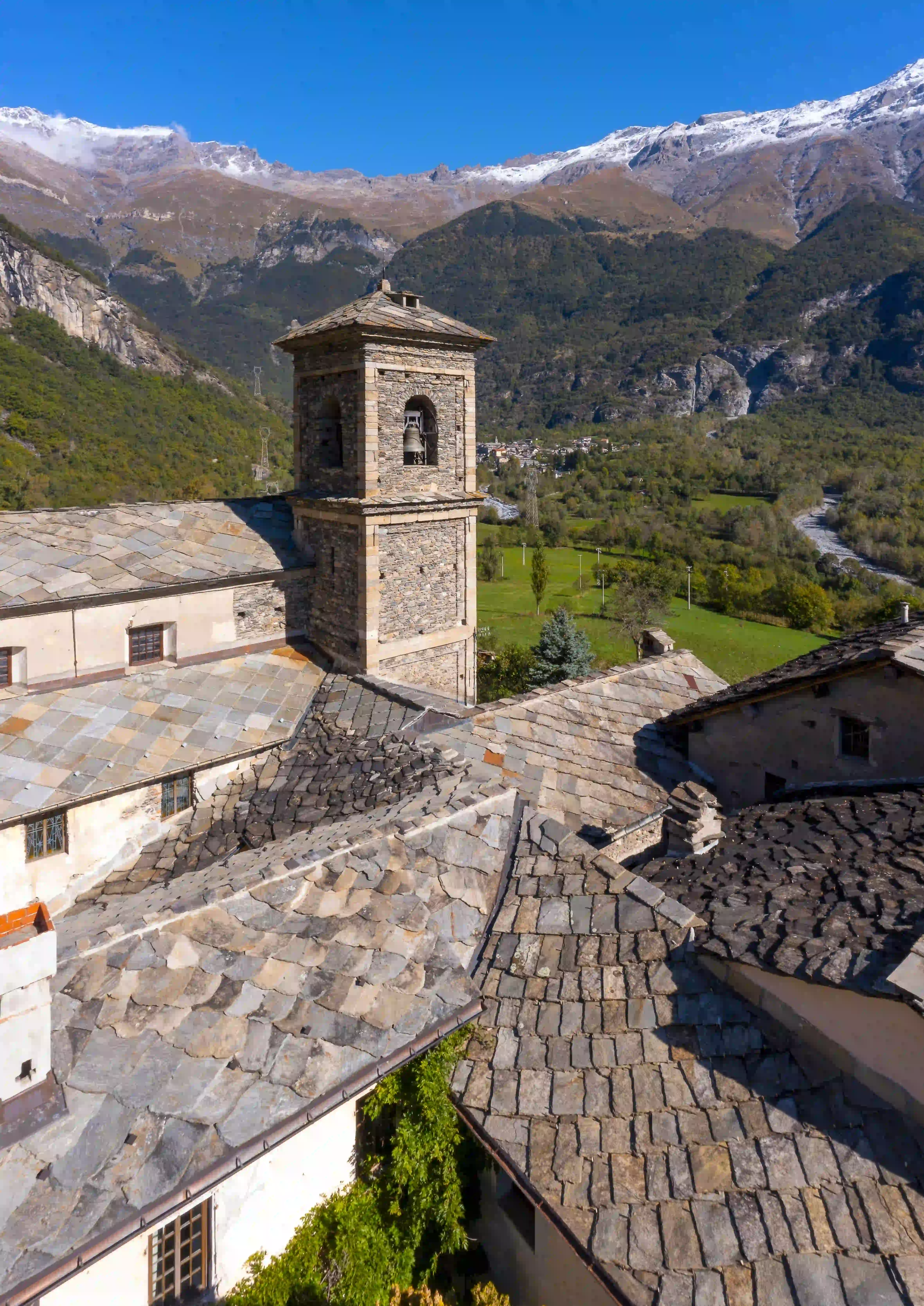
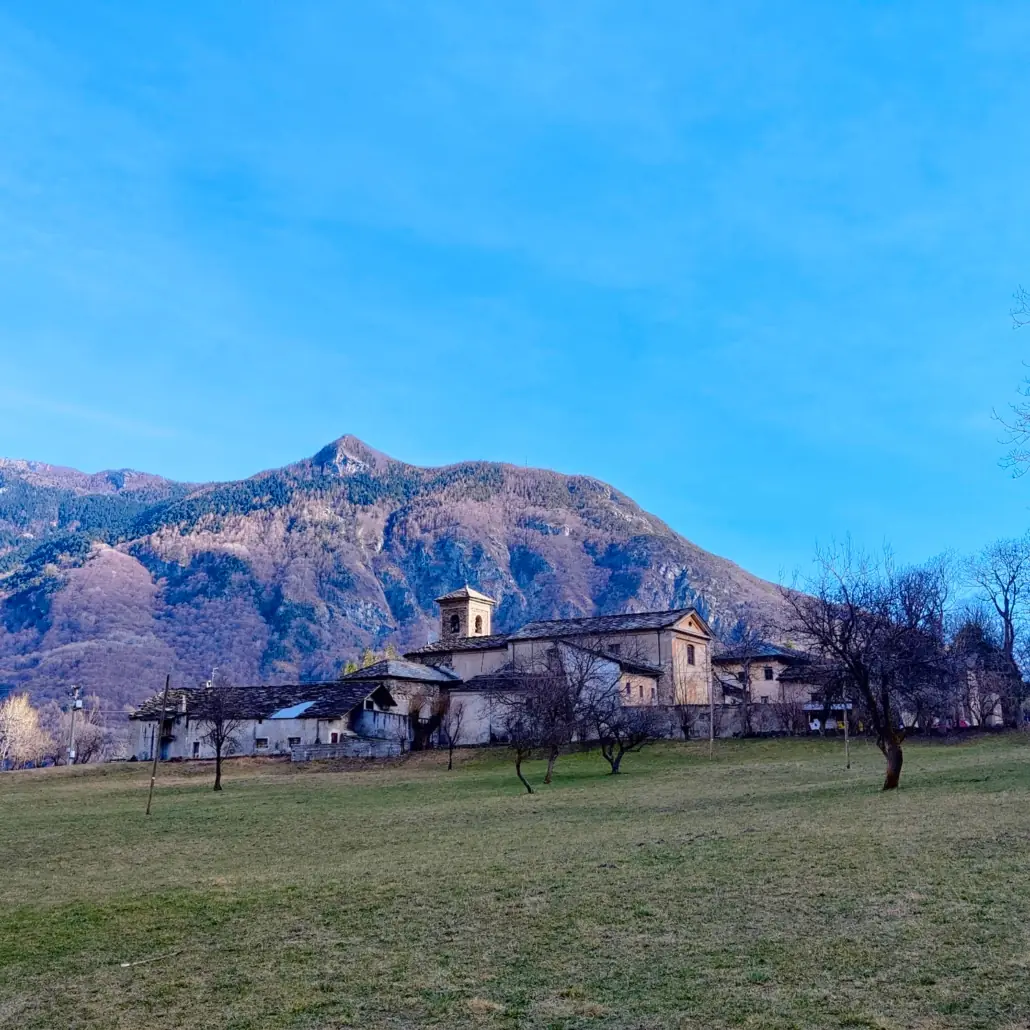
The Abbey of Saints Peter and Andrew of Novalesa is located in the Susa Valley, just below the French border at Mont Cenis Pass. A small community of Benedictine monks leads a life of prayer, work, and hospitality for those seeking peace and meaning in their life journey.
Retreats organized by the community
Novalesa Abbey: a Benedictine jewel in the heart of the Alps
Immerse yourself in the heart of the Alps, in the picturesque Susa Valley, where the Abbey of Saints Peter and Andrew of Novalesa stands majestically, a stone's throw from the French border, nestled just below the legendary Mont Cenis Pass.
This sacred place is the refuge of a small but fervent community of Benedictine monks who perpetuate an ancestral way of life, punctuated by prayer, work, and warm hospitality.
The monks open their doors to all those who, in search of inner peace or profound meaning in their existence, come seeking comfort in this haven of serenity and peace. It is here, within this monastic jewel, that every visitor can hope to find a moment of respite and inspiration for their personal journey.

A thousand-year history: from ancient roots to rebirths
The founding charter of Novalesa Abbey dates from January 30, 726. The monastery is dedicated to Saints Peter and Andrew, at a time when the Eastern and Western Churches were not yet separated. The monks of Novalesa followed a "regula mixta" (of Saint Columban and Saint Benedict).
It was from Novalesa, where he became abbot in 817, that Benedict of Aniane began the work of unifying the monasteries of the empire, imposing the Benedictine Rule at the request of Louis the Pious. This makes Novalesa the driving center of the beginning of the Benedictine era that would mark the Middle Ages.
Under Eldrado, who was abbot of Novalesa from 820 to 845, the community experienced its greatest moment of spiritual flourishing. In 906, the monks fled to Turin to escape the Saracen raids, to what is today the Sanctuary of Consolata. The surviving monks later founded the monastery of Breme, from which a few monks came in the 11th century to repopulate the abbey.
The Benedictines were replaced by the Cistercians from 1646 to 1798, when they were expelled by the provisional Piedmontese government. It was Napoleon who entrusted the monastery of Novalesa to the monks of the Trappist Abbey of Tamié to manage the Mont Cenis hospice.
After Napoleon's fall, the monastery was repopulated by a few Benedictine monks who joined the Cassinese Congregation of Italy in 1821. The quiet did not last long because with the suppression laws of May 29, 1855 of the Piedmontese government, the monastery was sold at auction and transformed into a thermal spa hotel.
In 1972, the complex was acquired by the Province of Turin and in 1973 entrusted to the care of the Sublacense Benedictine monks.

What to expect during your stay
A spiritual retreat between sharing and contemplation
During their spiritual retreat, guests are warmly invited to fully immerse themselves in the spiritual and daily life of the monastic community. They have the precious opportunity to share in the liturgical life, to participate in the divine offices and celebrations that punctuate the monks' days.
Meals, privileged moments of communion and contemplation, are taken in silence in the monastic refectory, fostering deep introspection and mutual respect.
Furthermore, for those who wish to go beyond observation and actively participate, it is possible to offer help with the various tasks and work that animate the life of the abbey.
Finally, an essential dimension of hospitality lies in the possibility for people seeking meaning to be personally accompanied by a brother of the community in their spiritual search, thus offering tailored support to each person.

Comfort and serenity at Novalesa
To ensure a stay that is both comfortable and conducive to contemplation, the abbey offers carefully arranged accommodation spaces.
- The interior guest house, dedicated to individual stays or couples, offers ten elegant rooms, all equipped with a private bathroom, providing privacy and convenience to residents.
- For groups, whether on spiritual retreat or pilgrimage, a specific guest house is available, capable of accommodating a maximum of 20 people in optimal conditions.
Beyond the rooms, guests benefit from privileged access to various common spaces conducive to relaxation and study:
- the monastery park, a haven of greenery inviting contemplation and meditative walks,
- the library, rich with numerous books, offering a quiet place for reflection,
- a common room is also available, fostering discreet exchanges and rest.
Meals, essential moments of monastic life, are carefully served in the monastery refectory. This space, imbued with a peaceful atmosphere, is a place where silence is strictly respected, allowing everyone to recenter themselves.
Geography and activities
A natural setting of beauty and harmony
Ideally nestled in the heart of a preserved environment, the abbey enjoys a privileged geographic location of rare beauty. It is set in a place of great tranquility, in perfect harmony with the surrounding nature.
Completely enveloped by the majestic setting of the Alpine mountains, it offers breathtaking panoramas and an atmosphere conducive to renewal. While benefiting from this beneficial isolation, the abbey remains easily accessible.
- The nearest town, Susa, with its rich heritage and amenities, is just a short distance away, allowing for easy excursions for guests.
- The major city of Turin is located about an hour's drive away, whether by car for more flexibility or by train, offering a practical connection to national transportation networks.
The exceptional natural setting also invites exploration and outdoor relaxation. Multiple marked walks and paths stretch through the surrounding woods, offering opportunities to discover local flora and fauna in a soothing silence.
One of the natural wonders not to be missed during these walks is the presence of superb waterfalls that punctuate the landscape, adding a touch of magic and freshness to the visitors' experience.

The treasures of the Susa Valley
Beyond the centuries-old walls of the abbey, the surroundings are filled with cultural and spiritual treasures that invite discovery and personal enrichment.
Just a few kilometers away, the charming town of Susa welcomes visitors, where you can:
- wander through its streets and explore its remarkably preserved Roman-era monuments, witnesses to a significant ancient presence and a glorious past,
- visit the Diocesan Museum of Susa, which houses fascinating collections and offers an in-depth glimpse into the religious and artistic history of the region.
For a spiritual and architectural experience, the majestic Sacra di San Michele stands a little over an hour's drive away. Perched on a steep mountain, this thousand-year-old abbey, an emblematic historical and spiritual site of the region, offers not only panoramic views over the surrounding valleys, but also a deep immersion into medieval history and devotion. Its imposing architecture and serene atmosphere make it an essential destination for pilgrims, hikers, and history enthusiasts.
An hour's drive away, Turin is a city full of activities, where you can:
- Visit the Egyptian Museum of Turin (Museo Egizio): it is one of the most important and oldest Egyptian museums in the world, after Cairo's. It houses an impressive collection of artifacts, mummies, and sarcophagi, offering a fascinating journey through the history of ancient Egypt.
- Explore the Royal Palace of Turin and its surroundings (Palazzo Reale di Torino): former residence of the sovereigns of the House of Savoy, this palace is listed as a UNESCO World Heritage site. You can discover sumptuous rooms, the Royal Gardens, the Chapel of the Holy Shroud, and the Royal Armory, bearing witness to the history and opulence of the Italian monarchy.
- Stroll under the porticoes and discover baroque architecture: Turin is famous for its kilometers of elegant porticoes that house historic cafés, shops, and galleries. It's the perfect opportunity to walk sheltered from the elements, admire the city's baroque architecture and soak up the Turin atmosphere, perhaps while savoring a "bicerin", the local drink.