Saint-Rambert Abbey Guest House
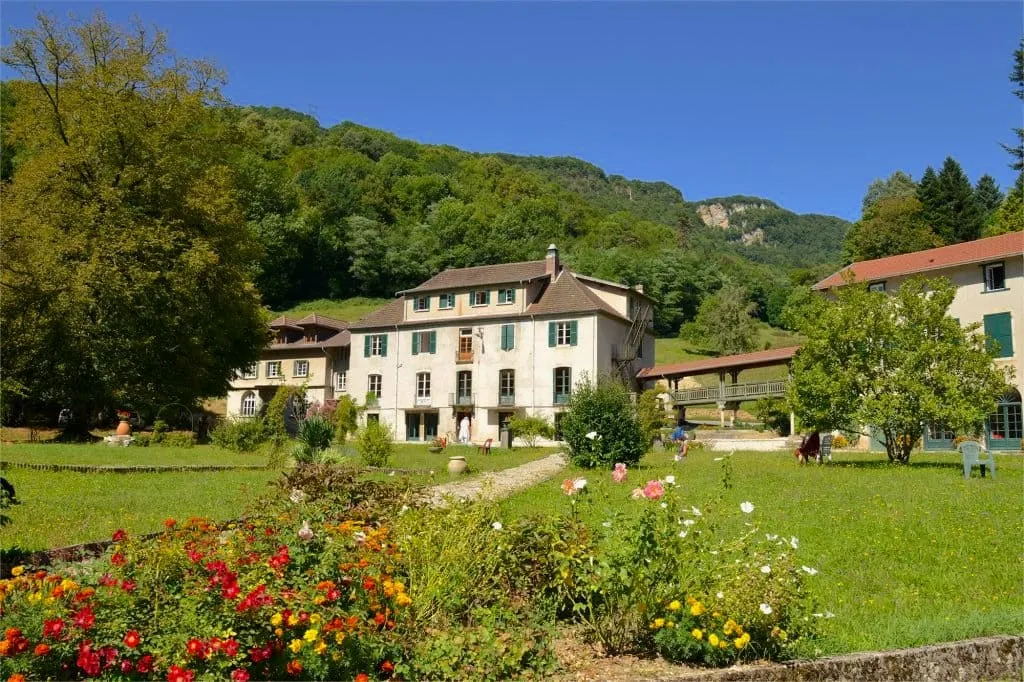
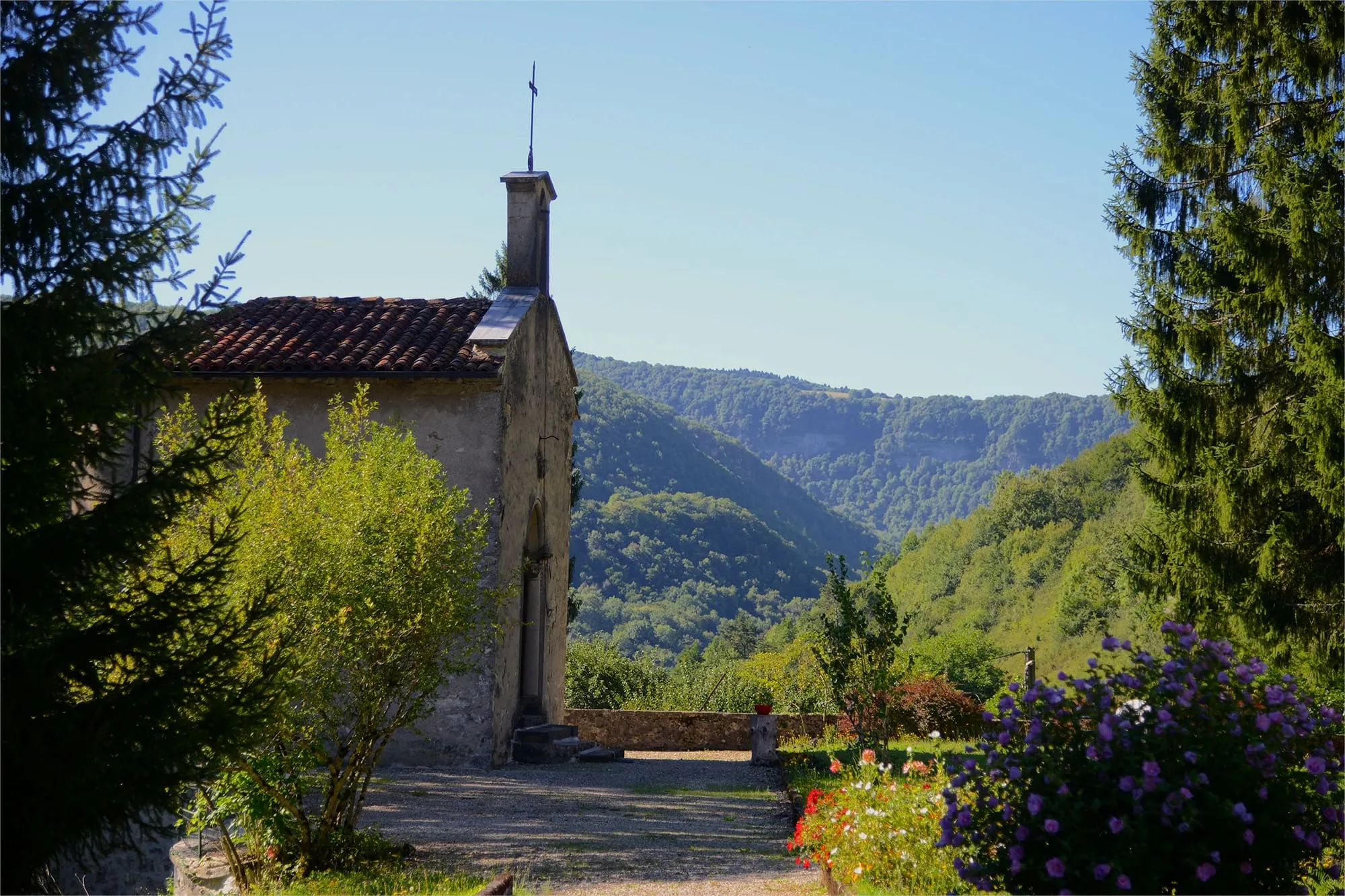
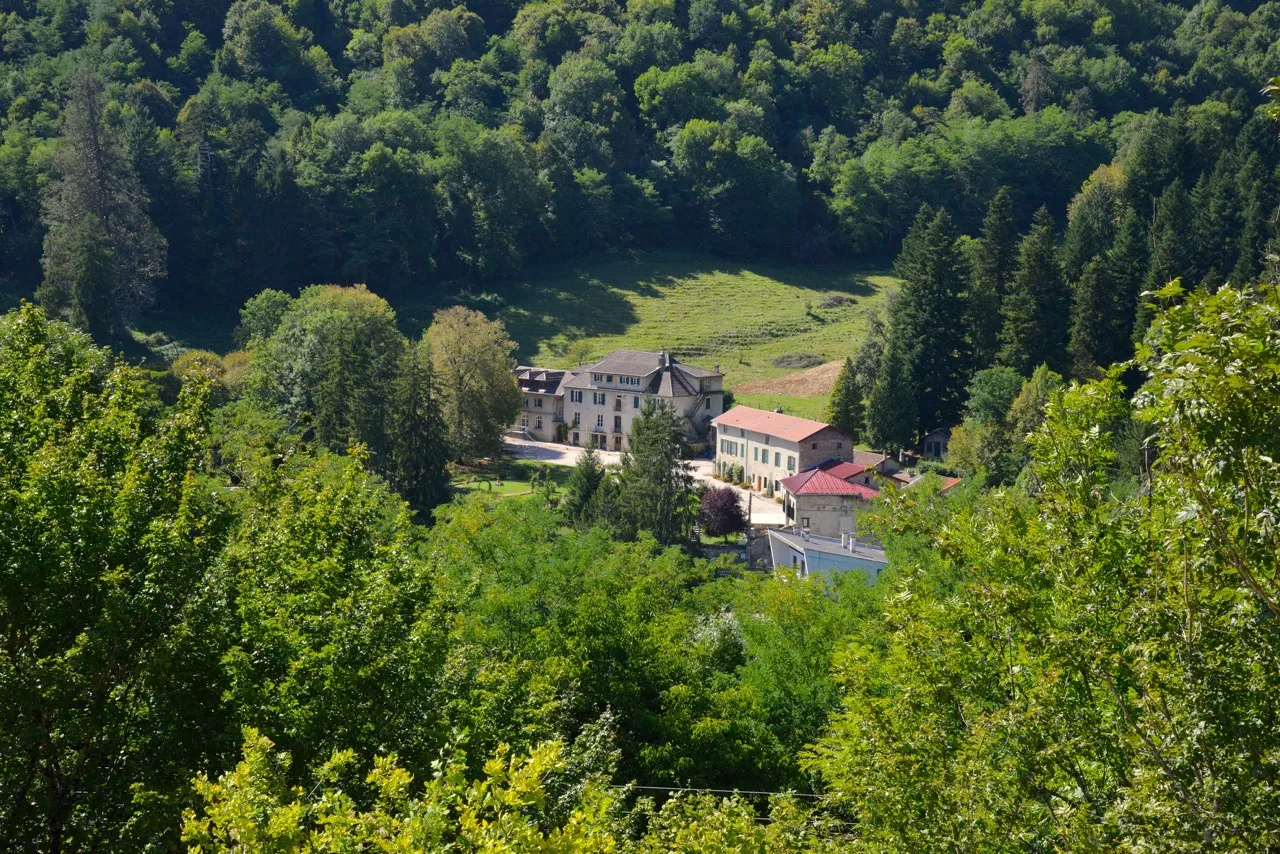
Perched in the heights of the Bugey region, Saint-Rambert Abbey has been a sacred place of prayer since Gallo-Roman times. Between bucolic landscapes and picturesque villages, the Sisters of Our Lady of the Missions welcome you for a time of retreat.
Retreats organized by the community
From Saint-Rambert's ancient origins to Our Lady of the Missions
Saint-Rambert is an ancient place of prayer dating back to the 5th century, when Saint Domitian came to settle in the Albarine Valley. Followed by several companions, he founded a monastery there which later, in 683, took the name of Saint-Rambert. From the 9th century onward, the abbey became a center of pastoral influence for about twenty priories and churches on the road to Lyon and up to the gates of Maurienne. Two remnants of this ancient Benedictine abbey remain: a crypt and the monks' warming room, which can still be visited today.
In 1788, the abbey was secularized, then destroyed between 1792 and 1793, while its estate was divided into several parcels and sold as national property. Two brothers native to Saint-Rambert, Aimé and Étienne Martin, both physicians in Lyon, built the current buildings and fortuitously discovered the crypt in 1838. Several different owners succeeded the Martin family starting in 1893 until 1949, when the Federation of French Childhood Works of Indochina (whose headquarters were in Saigon) acquired the buildings.
Rose Bichon, known in religious life as Mother Marie Jeanne d'Arc, a native of Saint-Rambert, served as Superior of the community of Sisters of Our Lady of the Missions and as a missionary in Vietnam for 25 years. She welcomed more than five hundred young Eurasian girls born in Vietnam between 1949 and 1979. And so it was that in 1977, as a sign of gratitude for the educational work undertaken voluntarily by the sisters for thirty years, the property was given to the Congregation of Our Lady of the Missions.
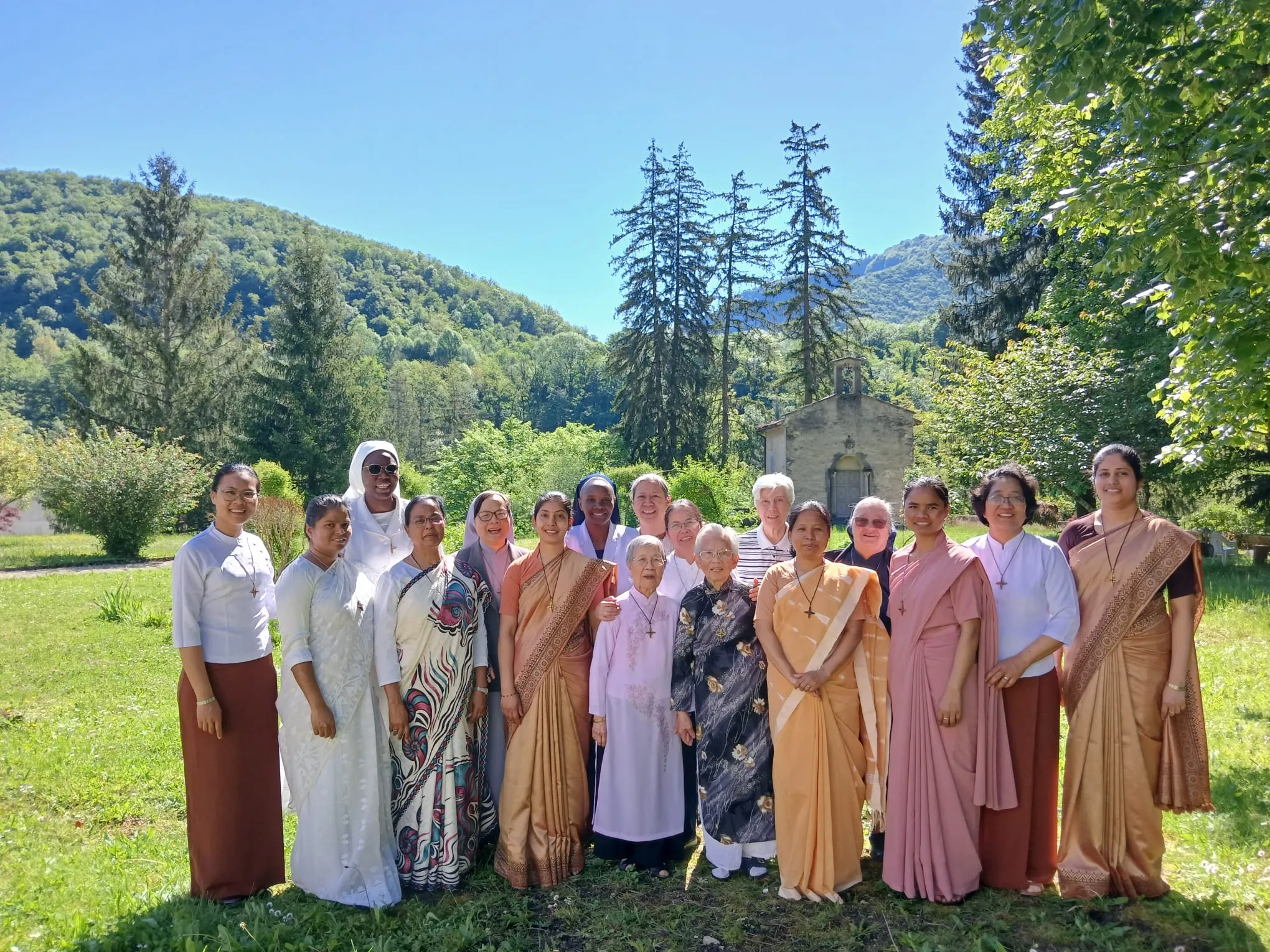
Today, the sisters are renewing their hospitality mission in completely renovated and upgraded facilities, in the same spirit of openness that has always characterized them. The community is engaged in various pastoral and missionary activities, aimed at helping people in need and spreading the word of God. The sisters' way of life is simple and austere, they share their daily life and spirituality in a fraternal spirit of solidarity and mutual support. Many parishes and charitable organizations in the surrounding area call on them for their support.
The short history of the Sisters of Our Lady of the Missions
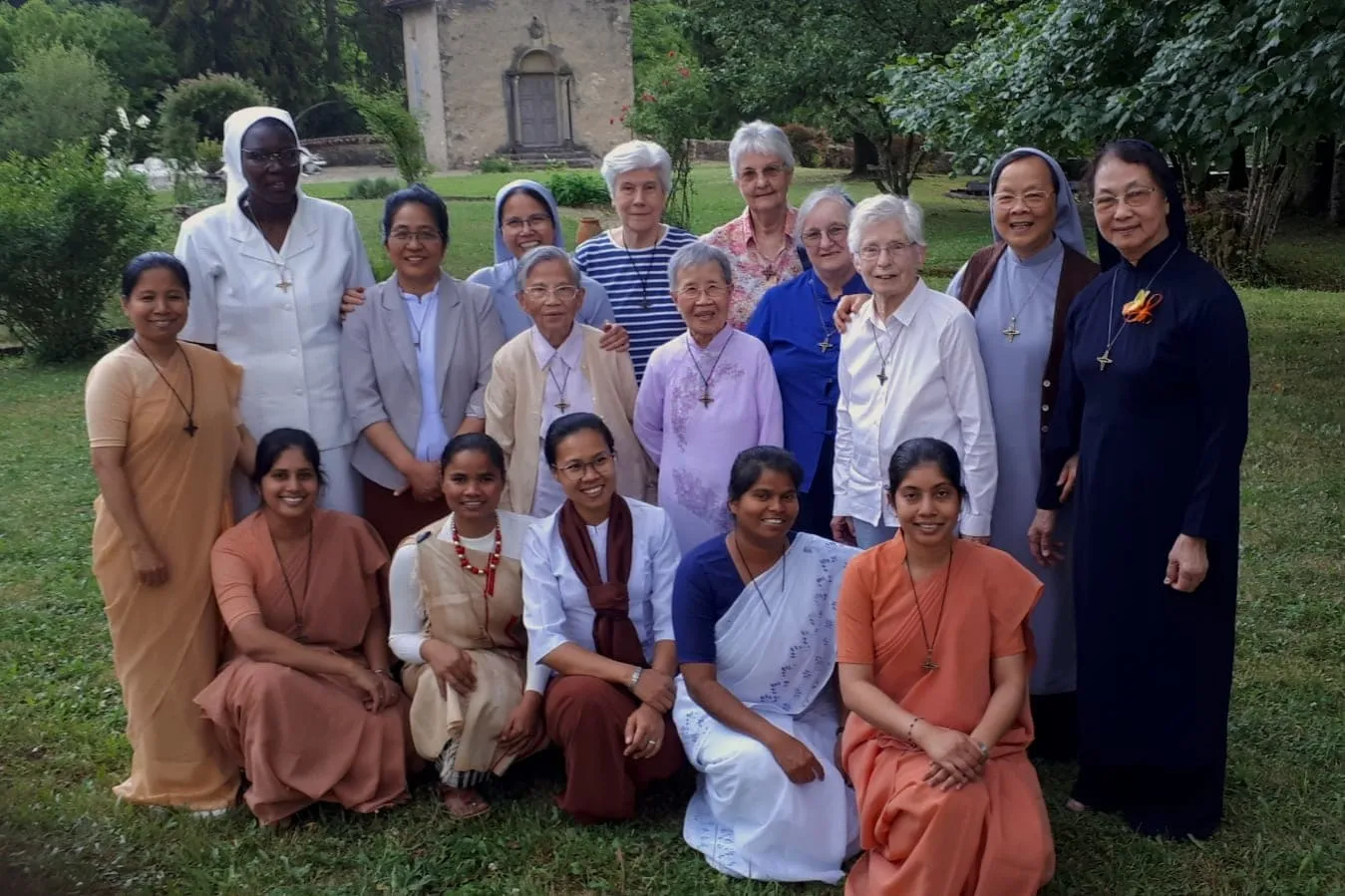
The Sisters of Our Lady of the Missions were founded on August 15, 1861, in Lyon by Adèle Euphrasie Barbier (1829-1893), who took the name Sister Marie of the Heart of Jesus. The foundress chose the Rule of Saint Augustine with constitutions inspired by those of the Society of Mary, and the ceremonies for taking the habit, religious profession, and choir were modeled on those of the Benedictines. The first diocesan approval was granted as early as December 25, 1861, by the Archbishop of Lyon, Cardinal de Bonald, while Pius IX gave pontifical approval in 1869. However, it was not until July 6, 1906, that the congregation received definitive approval from the Holy See.
The motherhouse is now located in Rome, and the congregation numbers more than 900 sisters spread across 237 houses. But the current congregation is quite different from its ancestor: it is now marked by its multicultural character, with sisters from every continent. At the same time, the congregation has established itself on five continents with missions in education, healthcare, social development, and pastoral animation. The most recent communities have opened, for example, in Kazakhstan, Laos, Orissa (eastern province of India), and Thailand.
A missionary identity: "Missionaries beyond all borders"
The Congregation of the Sisters of Our Lady of the Missions is both Trinitarian and Marian. They passionately place themselves at the service of God's marginalized people and listen to the cry of the Earth, our common home. Their evangelical charism comprises three distinct aspects: contemplation (a gaze upon God, history, the cosmos, and the other), communion (welcoming, listening, respecting differences), and mission (being present to the contemporary world, proclaiming the Gospel through their lives, allowing themselves to be touched by events). The passion and apostolic zeal of Adèle Euphrasie Barbier inspired the congregation's missionary and international identity, encouraging the sisters to respectfully embrace different cultures and serve as witnesses to God's universal love.
Their missions are extremely varied and include:
- Education and catechesis.
- Healthcare and prevention (care for the sick).
- Support for women's advancement and development among the marginalized.
- Care for the environment and respect for the Earth.
- Spiritual and human accompaniment.
- Welcoming groups for spiritual retreats, prayer groups, families, parishes, and formation sessions.
The sisters' presence extends from Italy to Ireland, from Bolivia to Canada, from Taiwan to Bangladesh, and from Senegal to Kenya, not to mention a significant presence in Oceania (Australia, New Zealand, Papua New Guinea, Samoa). A new foundation has also recently been established in the United States.
What to expect during your stay
The sisters welcome you with open arms!
The Sisters of Our Lady of the Missions, assisted by a dedicated team, welcome you to Saint-Rambert for a time of retreat.
Whether alone or in a group, the abbey welcomes anyone wishing to experience a retreat:
- Couples
- Families
- Students
- Religious (priests, deacons, sisters, etc.)
- Chaplaincies
- Church movements
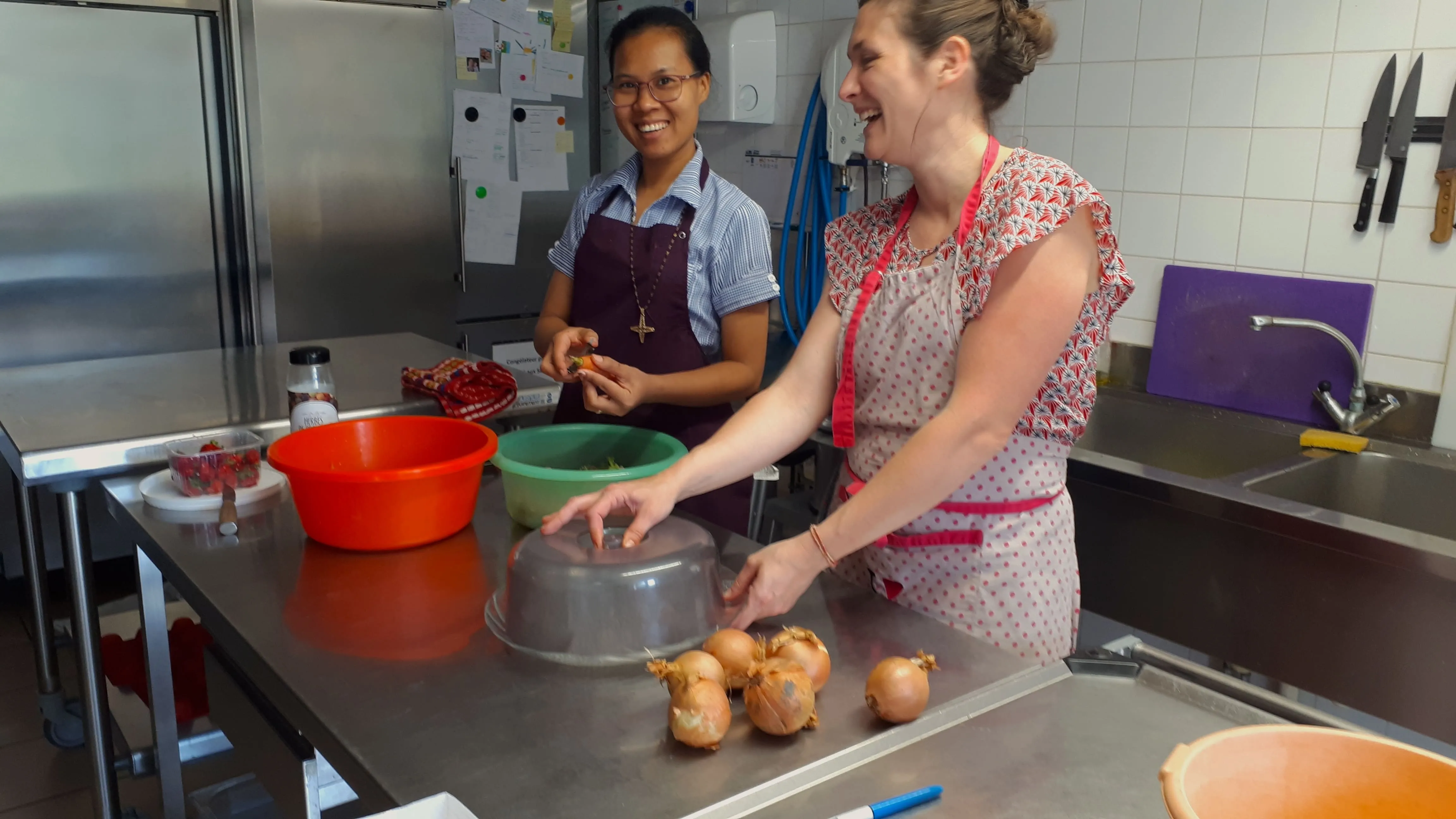
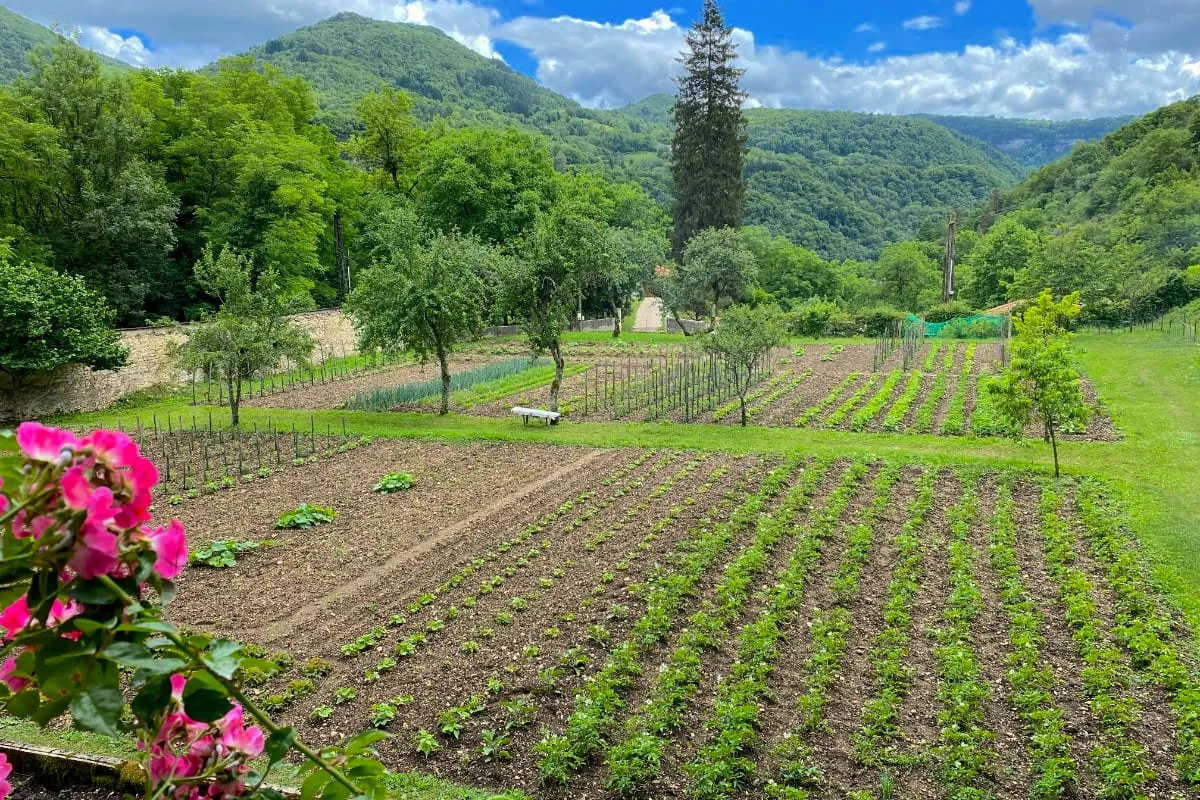
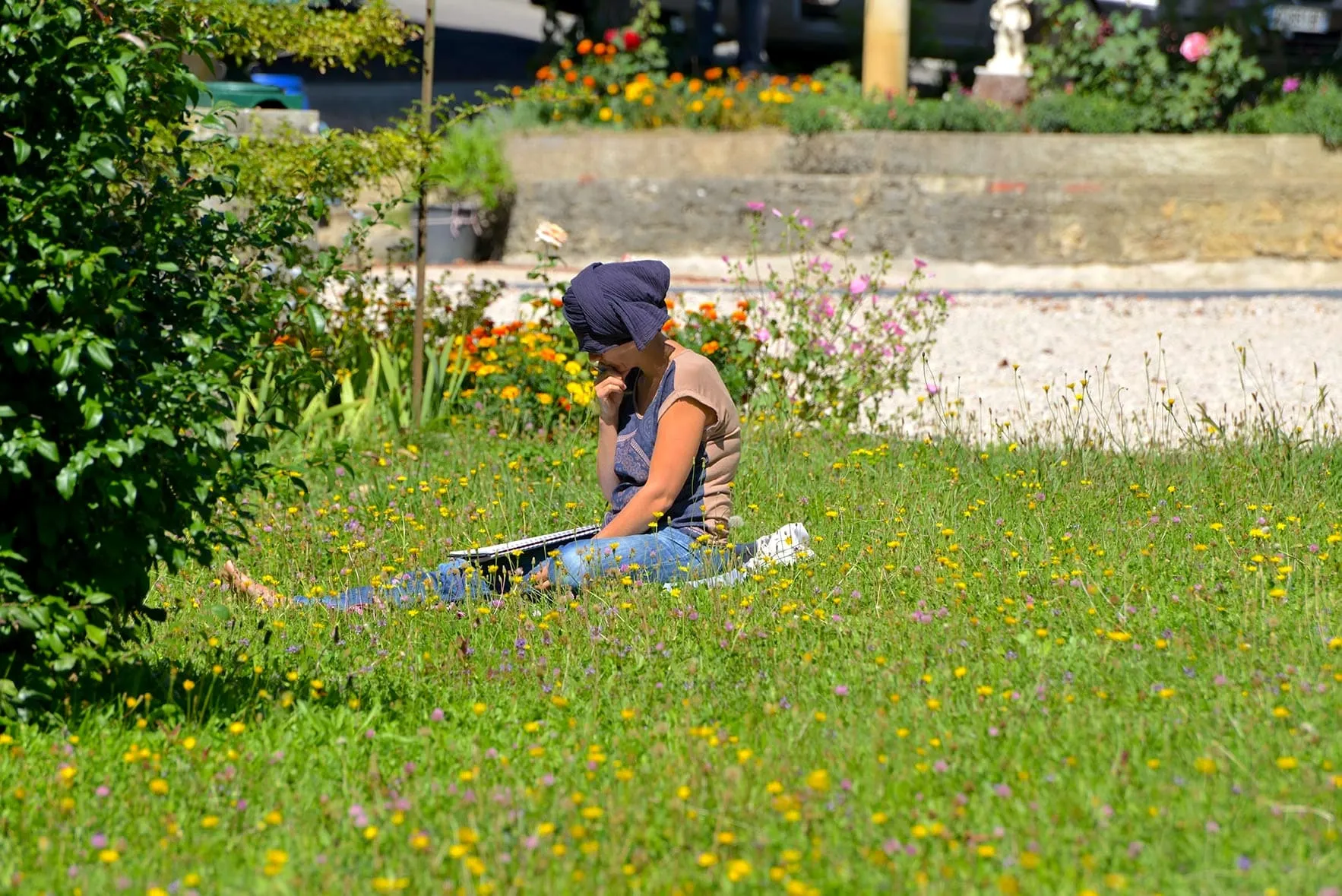
At Saint-Rambert, you will find an ideal setting to find renewal, make new connections, and take time to rest in a verdant mountain setting. During your stay, you can participate in the community's prayers, lend a hand with manual work (particularly gardening), venture out on the surrounding hiking trails, read, study, or simply meditate in the Saint Domitian crypt, dating from the 9th century.
The setting for your next retreat
Perched at 350 meters altitude, Saint-Rambert Abbey is an enchanting place. The attached guest house has 28 rooms, all completely renovated, including 14 single rooms, 12 double rooms, and two rooms adapted for people with reduced mobility. All rooms are equipped with WiFi, and linens and towels are provided.
Guests have access to a large wooded and peaceful park, a library, a chapel, and a lounge, as well as several meeting rooms (by reservation). Meals are carefully prepared on-site by the sisters and served in a common dining room. It is always possible, for a family gathering or more festive meal, to arrange a special menu in consultation with the community (specific quote). The sisters strive to cultivate an atmosphere of serenity and conviviality, conducive to reflection, collaborative work, meditation, and prayer.
Geography and activities
The Bugey region
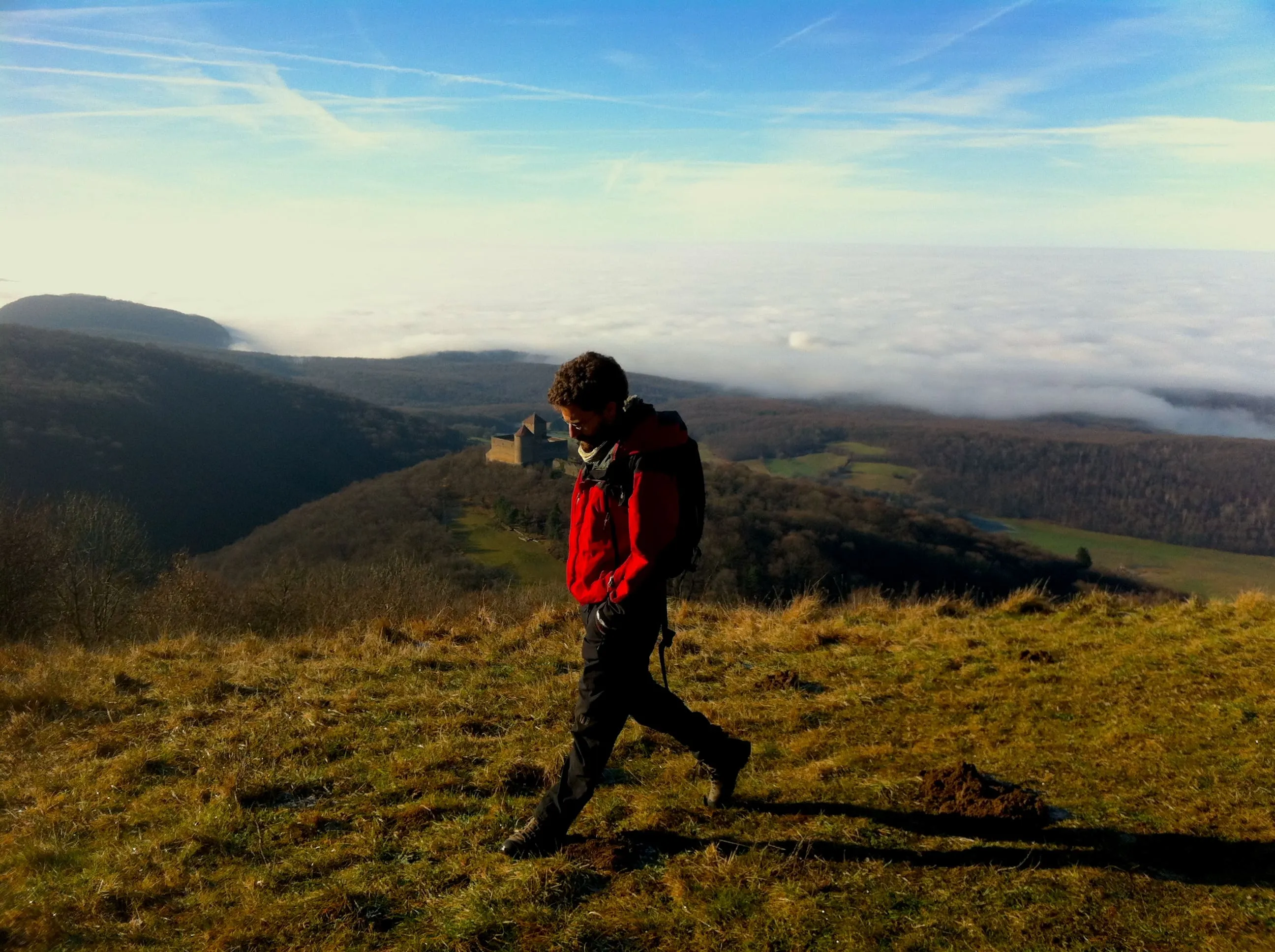
The abbey, located in the Bugey region, offers abundant opportunities for outdoor activities, peaceful or more athletic depending on everyone's tastes and ages: walking, hiking (250 kilometers of marked trails), cycling, rock climbing, via ferrata, fishing (first-category river), etc. The Bugey and neighboring Dombes territories compete with landscapes of varied terrain mixing slopes and verticality, and breathtaking viewpoints. The Bas-Bugey (Lower Bugey) in particular is a charming region where nature and history meet among rolling landscapes. The small towns and picturesque villages, forests, rivers, and numerous waterfalls promise a peaceful and gentle stay.
In winter, the Bugey dons a white blanket that allows you to practice various winter sports, including snowshoeing, cross-country skiing, and even downhill skiing less than an hour from the abbey.
But the Bugey is also a region rich in history. In the surrounding area, you will find:
- The Château de Cornillon.
- The Château des Allymes.
- The medieval city of Pérouges.
- Ambronay Abbey and its famous festival.
- The caves of La Balme or Cerdon.
- The Cerdon copperworks.