Notre-Dame d'Argentan Abbey
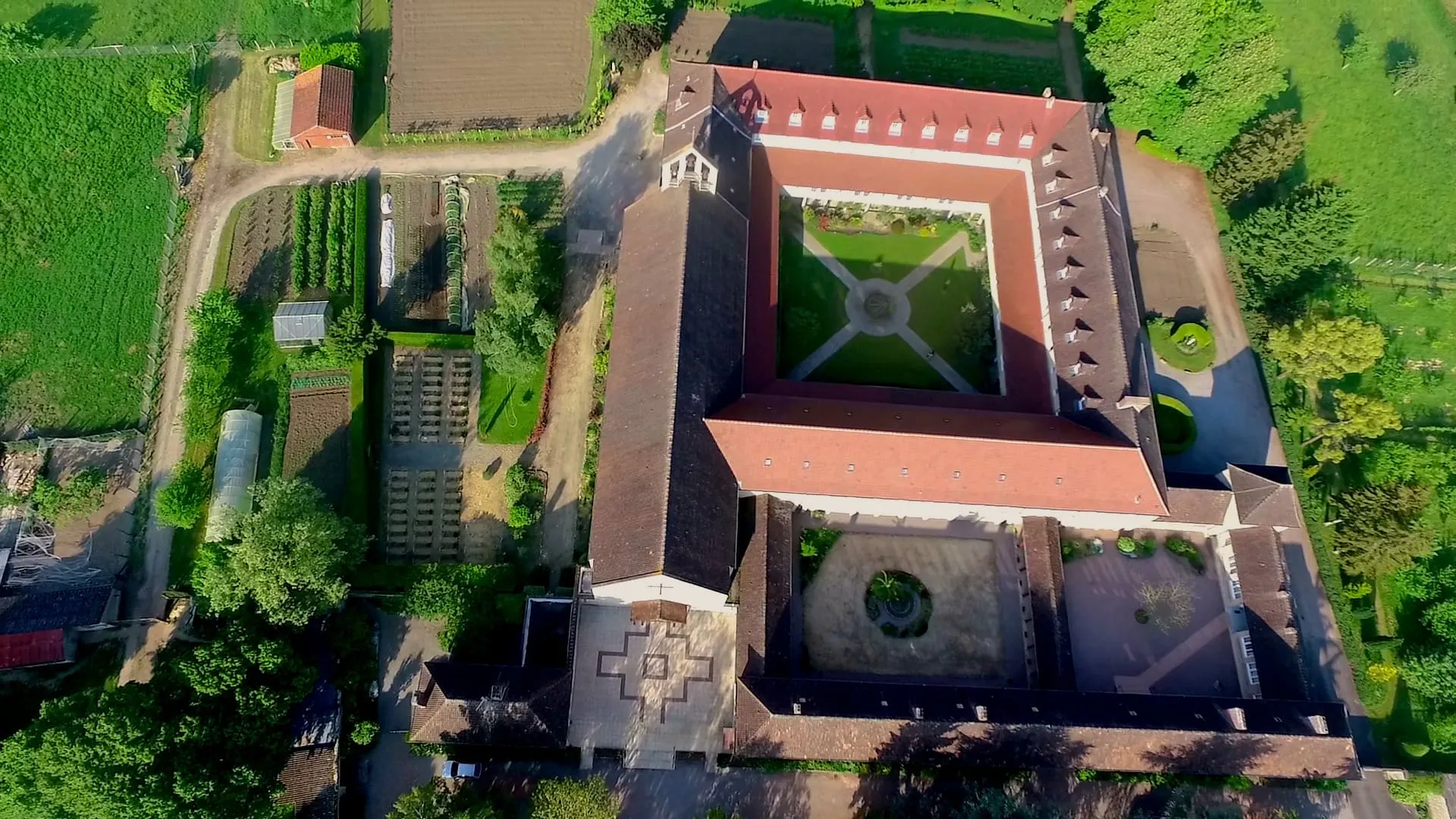
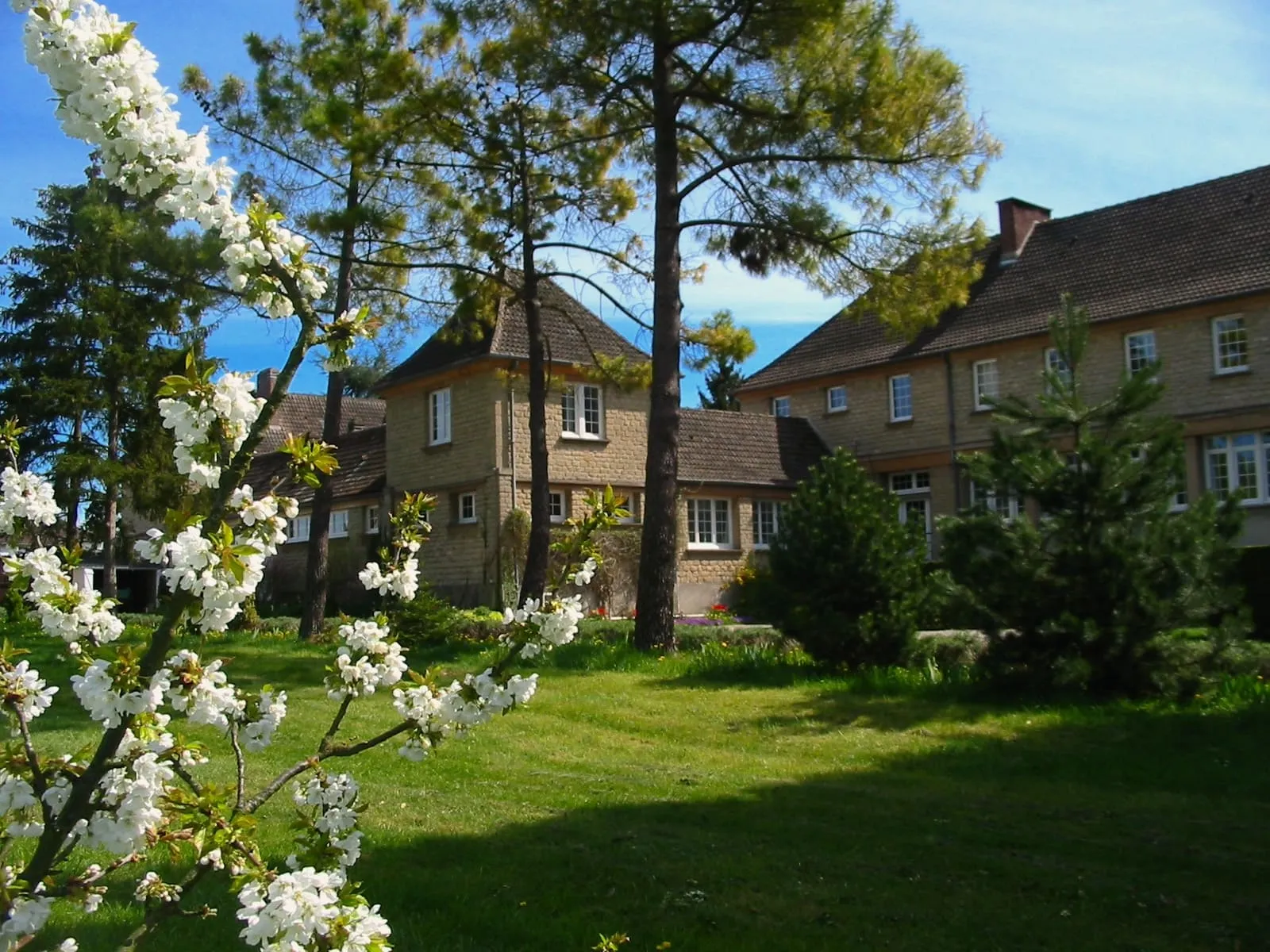
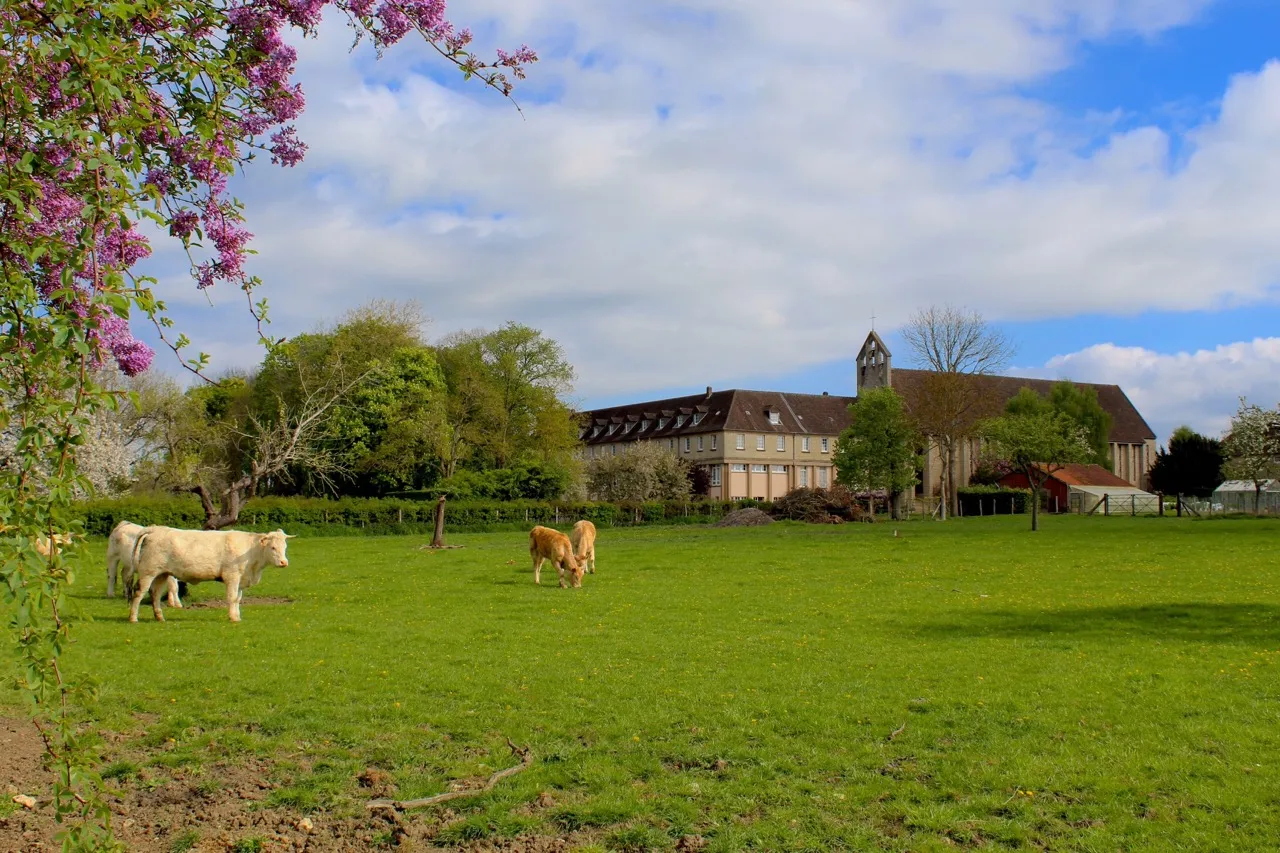
Nestled in Normandy's Swiss region, Notre-Dame d'Argentan Abbey traces its history back to Merovingian times. The contemplative Benedictine nuns who watch over this sanctuary welcome female retreatants year-round to share their fraternal, prayerful, and industrious life.
Retreats organized by the community

A history reaching far back
The abbey's current buildings do not reveal its centuries-old origins that make it one of the oldest women's abbeys in France. Indeed, it was at the end of the 6th century that the first congregation was established in Almenèches, about ten kilometers from Argentan. In the 7th century, the monastery was governed by Saint Opportuna. Two centuries later, the abbey was razed during the Norman invasions.
But in 1066, Roger II de Montgommery, called the Great, relative and loyal supporter of William the Conqueror, raised Almenèches from its ashes. The monastery then began a new era, which would be marked by a succession of periods of fervor and decline. Each period of decline gave way to a reform movement to restore the monastery's spiritual and temporal vocation. It was during one of these reforms that a priory was founded in 1623 in Argentan. The abbess conceived this dependency as a place of formation for young nuns to allow them, from the beginning of their monastic life, to lead their lives in a more recollected and serious manner.
It was in 1736 that Louis XV, by a decision of the Royal Commission, transferred the monastery from Almenèches to Argentan. It was then that the abbey opened a small boarding school for the education of young girls.
In 1792, the Revolution rumbled and the law of April 6 suppressed all congregations, forcing the nuns to disperse. Two of them were imprisoned. In 1822, the survivors regrouped in Vimoutiers (a town also located in Orne) and permanently returned to Argentan in 1830. To ensure their subsistence, the nuns reopened the boarding school. Quickly, the community managed to found an orphanage, as well as a nursery school, and finally a lace-making school. This last endeavor aimed to revive the forgotten tradition of "Point d'Argentan" whose secret the abbey keeps to this day.
In the wake of anticlerical laws, the monastery's schools were all shut down in 1907. The community thus renewed its exclusively contemplative vocation and survived as best it could until the bombings of June 1944 forced the nuns to leave their home once again, which was completely razed. Two nuns lost their lives there, while the survivors took refuge in Sées for an exile of 14 years.
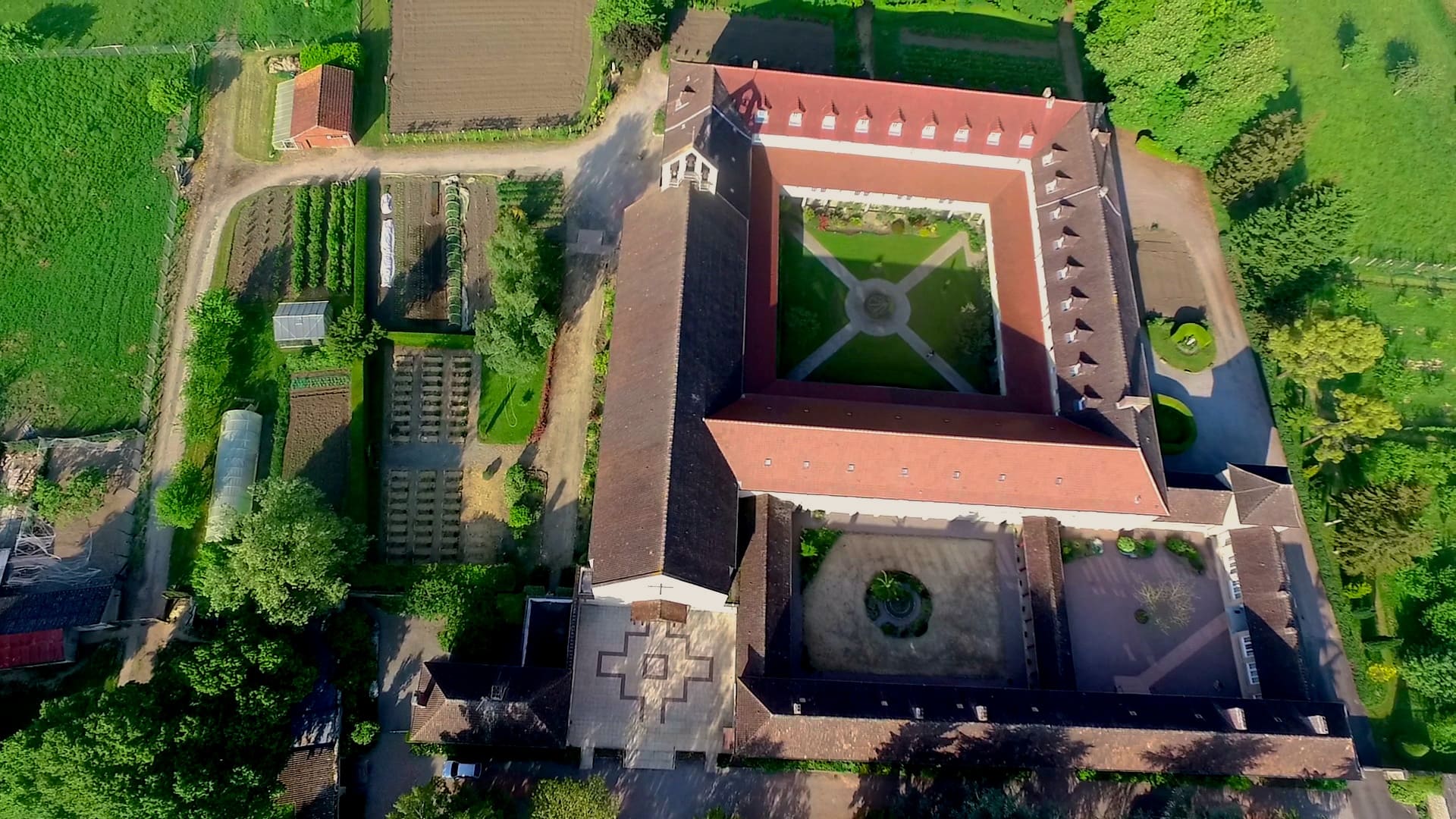
On July 26, 1958, the nuns resettled in Argentan in completely new buildings, on the outskirts of the town. Today, 32 contemplative Benedictine nuns live in Argentan, two of whom are in formation.
The Benedictines of Argentan in the 21st century
The Benedictine nuns' life revolves around three major pillars: prayer life, community life, and work life.
Each day, the community gathers for Mass as well as seven daytime offices and one night office. According to the liturgy renewed by the Second Vatican Council, Gregorian chant magnifies these consecrated moments. Through these prayers, the Benedictines raise their voices to praise God and to intercede for all the intentions of the Church and the world.
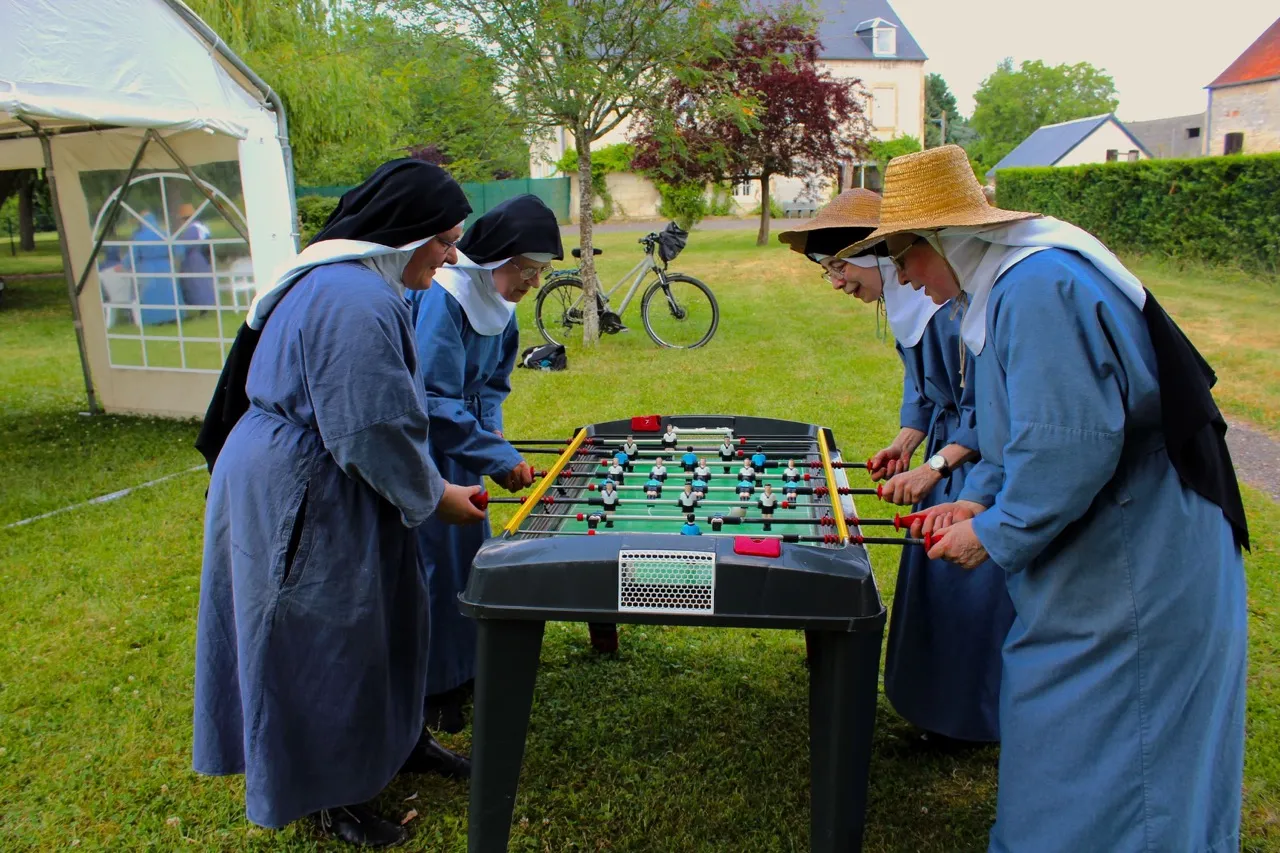
In a family spirit, fraternal life is fundamental to learning to love in humility and obedience the sisters who are given to them by Christ. The vow of stability allows the Benedictines to be rooted in a particular community for the duration of their earthly life. Thus, this intense community life draws from the Eucharist the delicate and concrete charity to joyfully serve one another in the multiple occupations of daily life. Recreation periods and the sharing of family news help strengthen the bonds between the nuns.
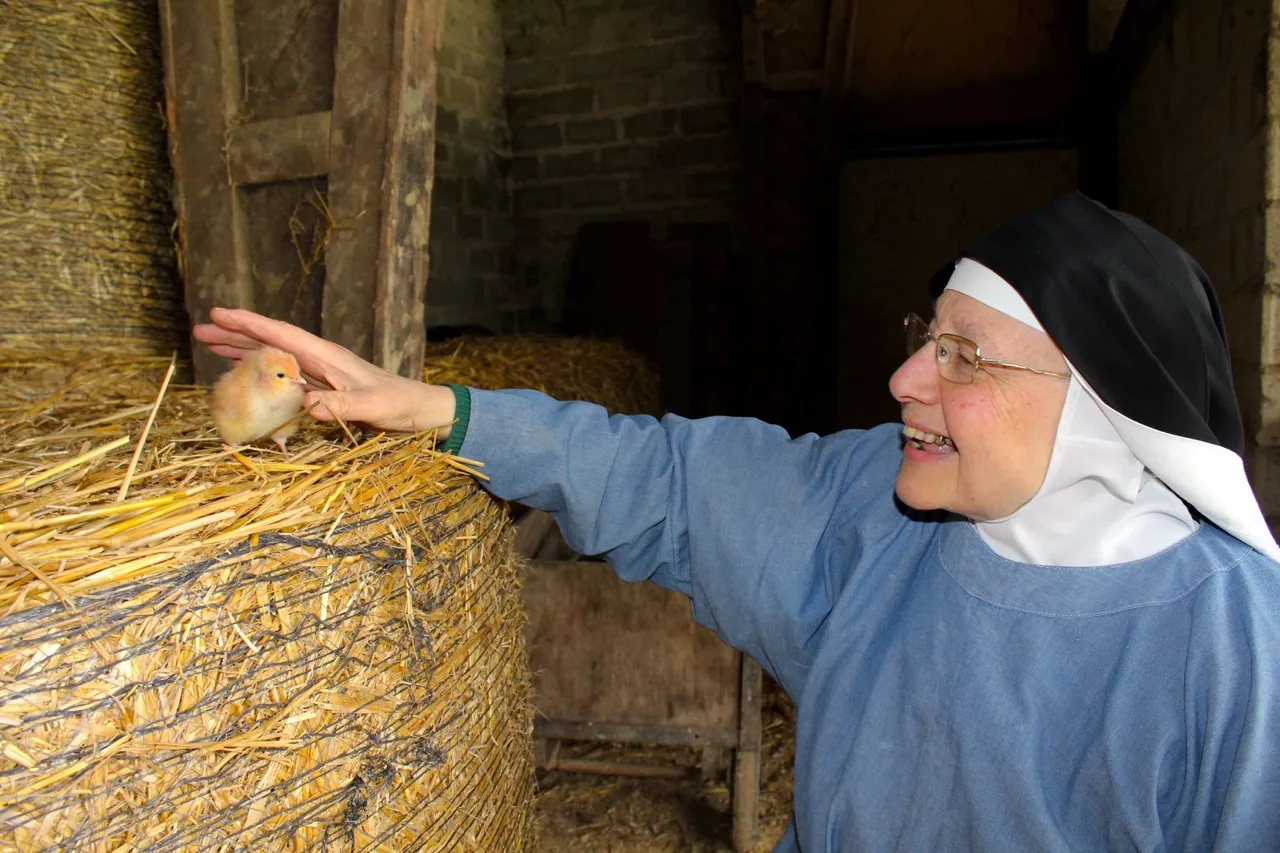
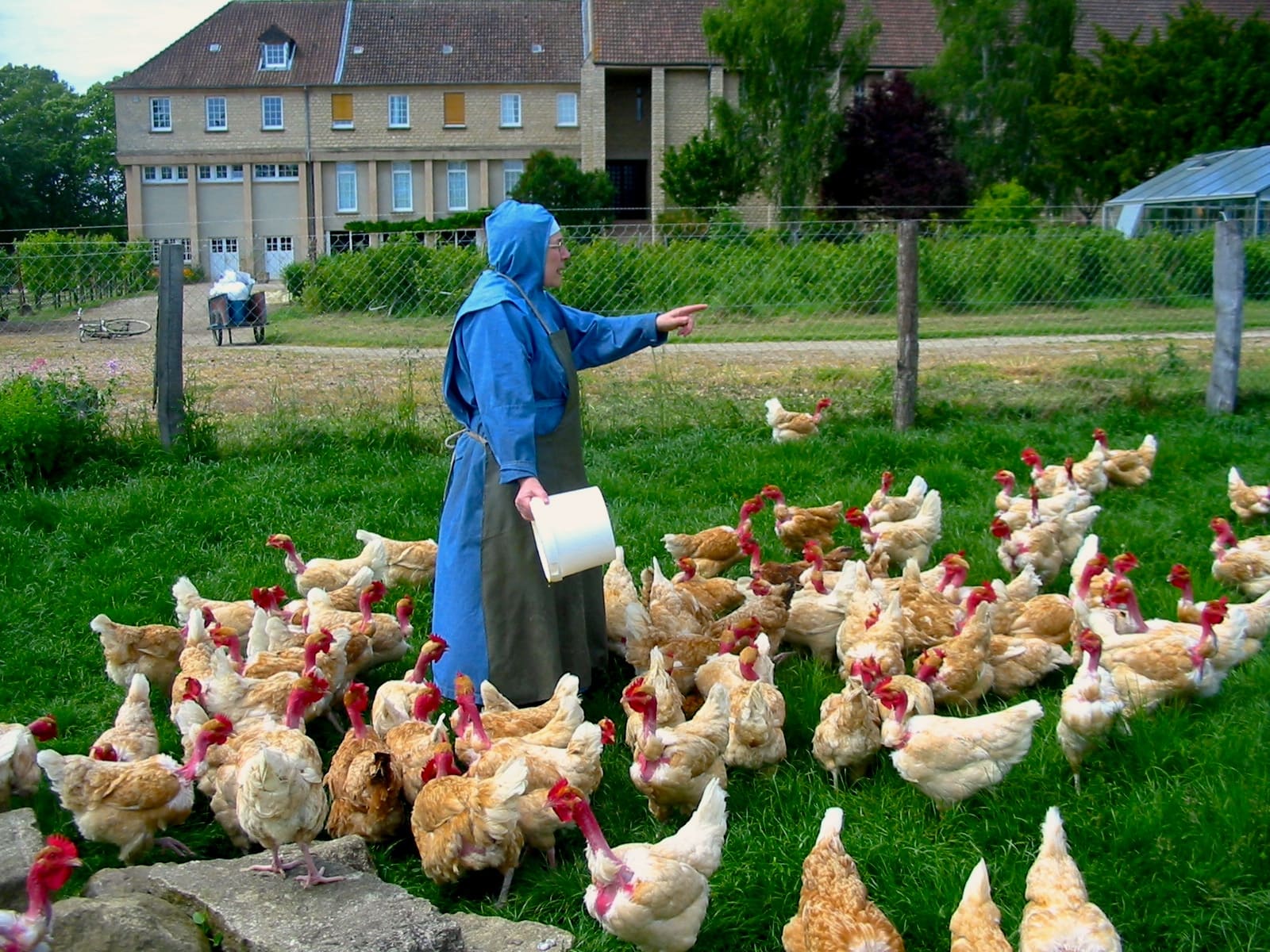
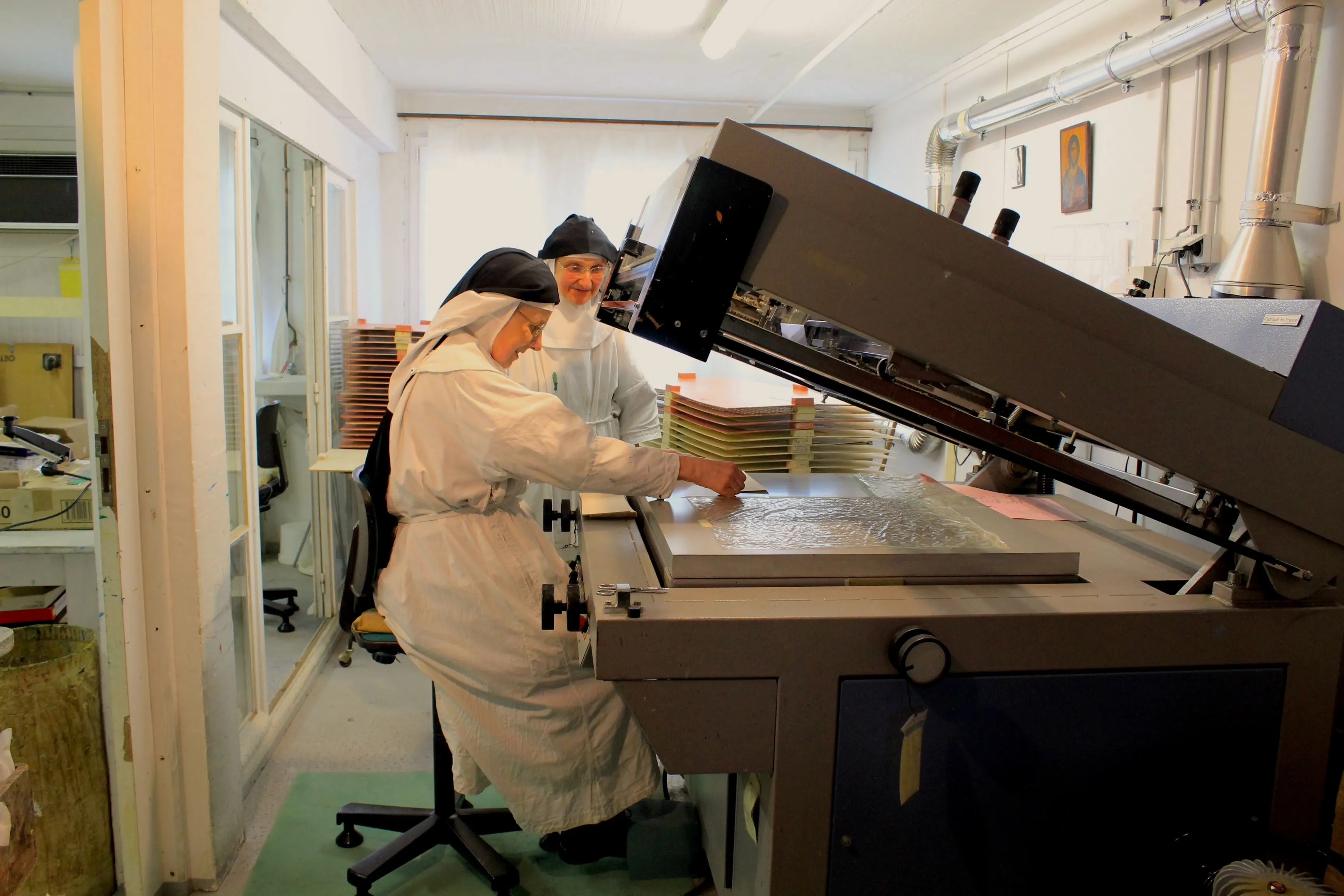
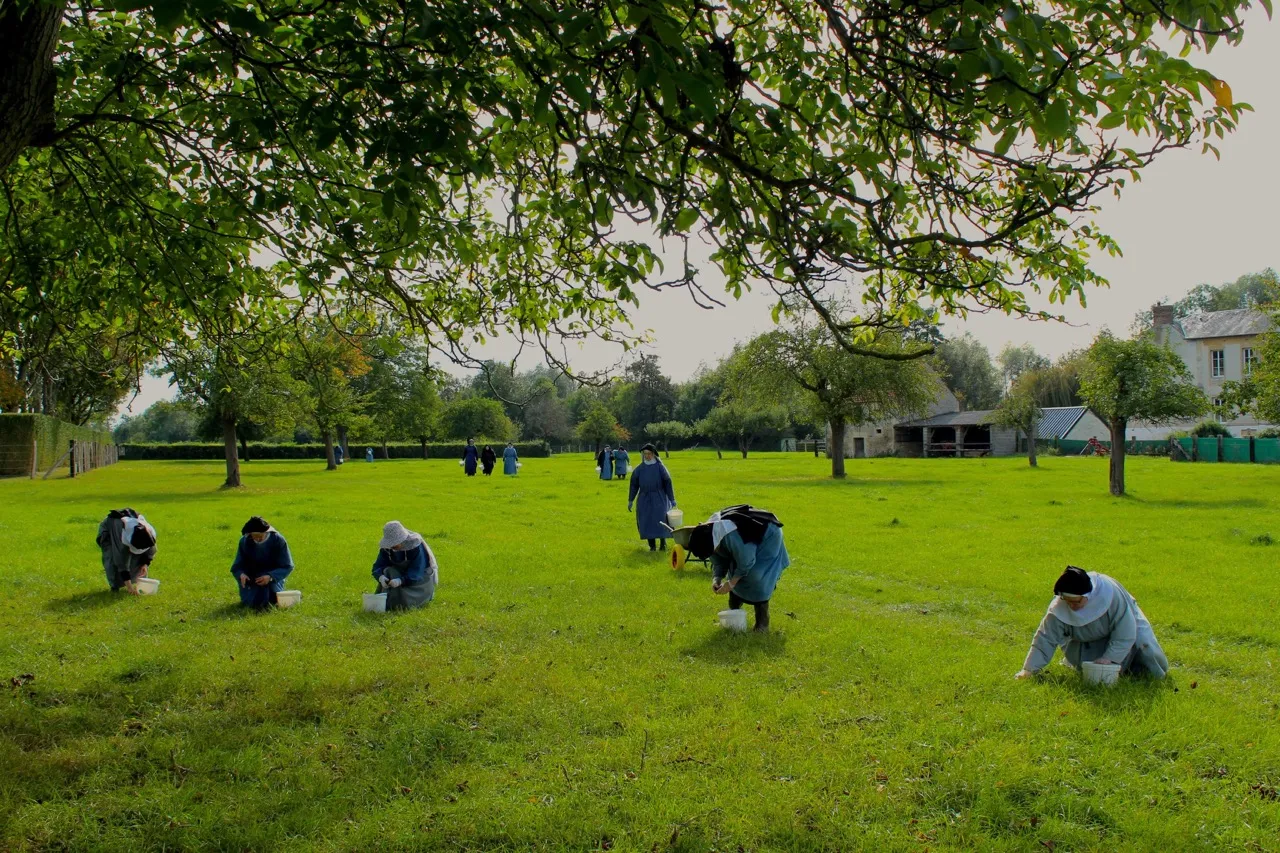
Monastic asceticism is expressed notably through work, which allows them to escape the idleness that Saint Benedict calls "the enemy of the soul." The Benedictines' schedule is therefore organized so that they can always devote themselves to manual work, prayer, or study, without being overworked. Managing the farm which includes orchards and a large vegetable garden on a property of about ten hectares occupies the sisters daily. However, it is not productivity or economic yield that is sought but rather a balance of life. Finally, a screen printing workshop (printing through a silk screen) and digital reproduction allow them to create and market religious images and cards.
What to expect during your stay
Gentlemen, please move along, ladies first!
The Benedictine nuns organize customized stays for young women wishing to take a break in silence and prayer. These retreats are flexible according to each person's wishes: individual stay or in a small group, throughout the year.
Retreatants on individual stays can be welcomed for a duration ranging from a few days to a week.
Preached retreats
To respond to the thirst for formation, both doctrinal and spiritual, of young people, the nuns organize four times a year retreats for young women on a specific theme.
Drawing from the rich Benedictine tradition as well as the teachings of the Church, both ancient and more recent, the Benedictines have developed teachings on various themes (theological, liturgical, spiritual or philosophical, etc.). Recent retreats focused on the following subjects: the Mysteries of the life of Jesus, the various liturgical seasons, Prayer, Mental Prayer, lectio divina, the Vocation of women, or Is there such a thing as truth?
These presentations, solid in doctrinal terms, are both simple and profound, accessible to all: what is sought above all is to nourish one's life of faith and the desire to deepen one's spiritual life.
Prayer life in Argentan
The Benedictines' prayer day begins at 6am with Lauds and ends at 9:30pm with Vigils. The essential part of the retreat requires participation in daily Mass and, ideally, in one or two offices (or more for enthusiasts!).
The guest mistress initiates those who wish into the liturgy of the sung offices to allow them intelligent and peaceful participation in the nuns' prayer.
If retreatants express the desire, they can be spiritually accompanied by a sister, or occasionally meet with a priest.
Your schedule in Argentan
What you won't fail to experience in Argentan:
- Participate in the liturgy.
- Take time for silent prayer.
- Enjoy the calm to recharge.
- Have spiritual conversations.
- Devote time to reading.
- Those who wish can receive teaching provided by a nun.
Discover what your future accommodations will be like
The Sainte-Anne guest house consists of two single rooms and two double rooms (each with its own sink), sharing a shower and toilet in the hallway. A small interior garden is accessible to get some fresh air in silence and contemplation, or for a time of reading.
As for the "Lorette" Pavilion, it is a small, perfectly appointed house located across from the abbey on the other side of the street. It includes a double room, a twin room, and a single room. An equipped kitchen and a dining room allow breakfast to be taken there.
A library is available to guests with works on the teaching of the Magisterium, Christian doctrine, spirituality, prayer, and testimonies of faith.
The abbey church, in its part outside the enclosure, is always accessible. A crypt is set up there and allows for contemplation in solitude.
Meals (breakfast, lunch, and supper) take place in a convivial manner in the guest dining room. The dishes are prepared by the sisters in the enclosed kitchen and are brought by the guest mistress. A group of retreatants may consider eating in silence. But there cannot be two different services, the usual practice is a fraternal and family atmosphere. Help with the dishes is appreciated during retreats.
Location of the abbey
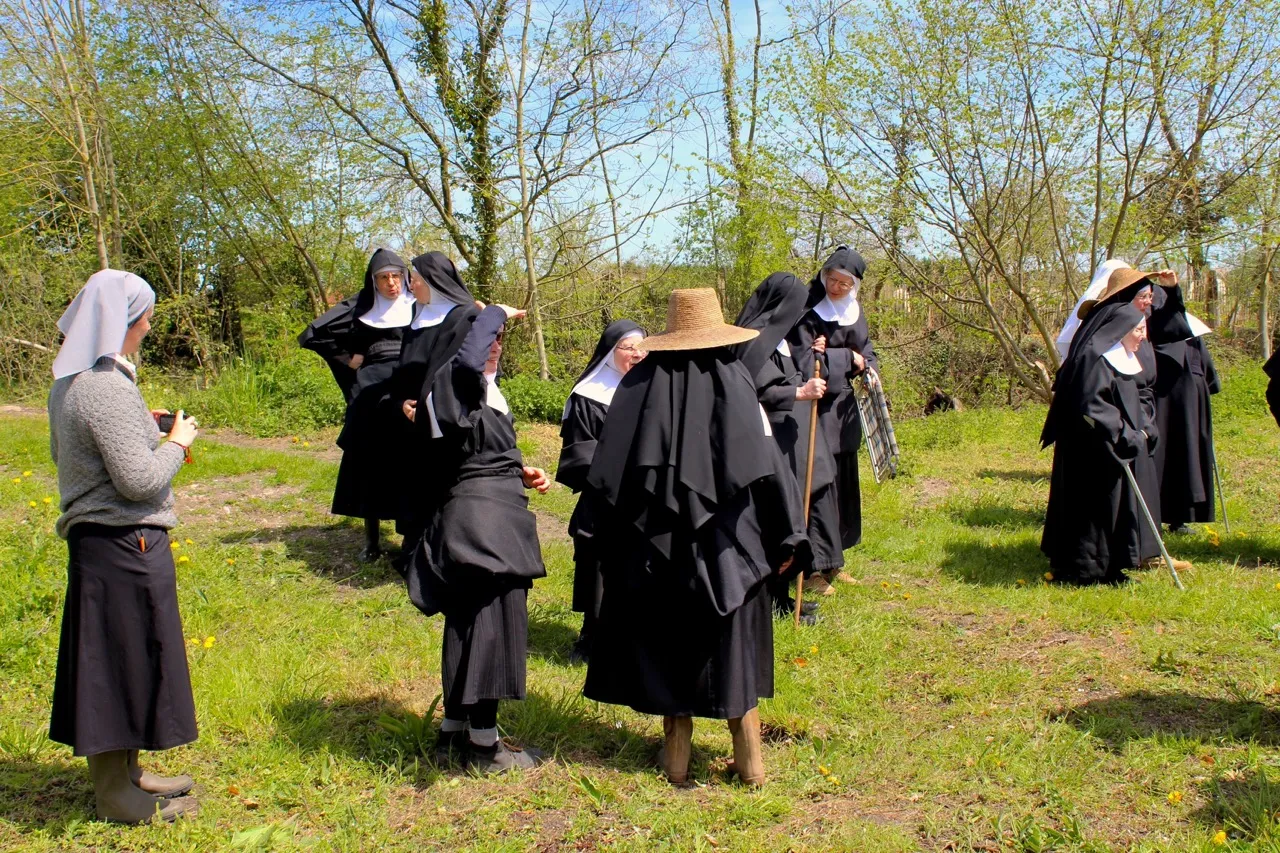
The abbey is located next to the Orne river, which, dividing into two arms, forms a small island on which the nuns grow vegetables and which can be accessed, upon request, by retreatants. Although we are close to the town, the abbey is surrounded on three sides by green expanses, which really gives the impression of being in the countryside.
Geography and activities
An abbey nestled in Normandy's Swiss region
If you come by car, three pilgrimage excursions are nearby (on the return route):
- The sanctuary of Lisieux (45 minutes).
- The sanctuary of Saints Louis and Zélie Martin in Alençon (45 minutes).
- The sanctuary of Montligeon, in the heart of the Perche regional park, is a place of consolation for people afflicted by bereavement (1 hour).
For tourism, Argentan Abbey is not far from:
- The Haras du Pin, in the heart of Pays d'Auge Ornais (in Orne, Normandy), is located about 15 km from Argentan. The Haras country is marked and secured with riding paths and majestic forest avenues. A visit to the Haras, discovery of the workshops, saddlery, stables, or even a presentation of horses and carriages are offered.